
Kidney Stones: Causes, Signs, and Management
Kidney stones are one of the more common, and famously painful, urinary conditions, affecting a significant portion of adults at some point in their lives. They form when minerals and salts in the urine crystallize into hard deposits, which can range from as small as a grain of sand to as large as a golf ball. Understanding the signs, risk factors, and management options can help you recognize a kidney stone early and know when a symptom crosses the line from “wait and see” into “seek care now.”
What Causes Kidney Stones
Kidney stones form when urine becomes concentrated enough that minerals, most commonly calcium, oxalate, and uric acid, crystallize and stick together. Several factors contribute to this process:
Concentrated urine, often from inadequate fluid intake, which allows stone-forming substances to become more concentrated
Excess stone-forming substances, such as high levels of calcium, oxalate, or uric acid in the urine, which can be influenced by diet, certain medical conditions, or genetics
Low urine volume, which reduces the dilution effect that normally helps keep these substances dissolved and moving through the urinary tract
Signs and Symptoms of a Kidney Stone
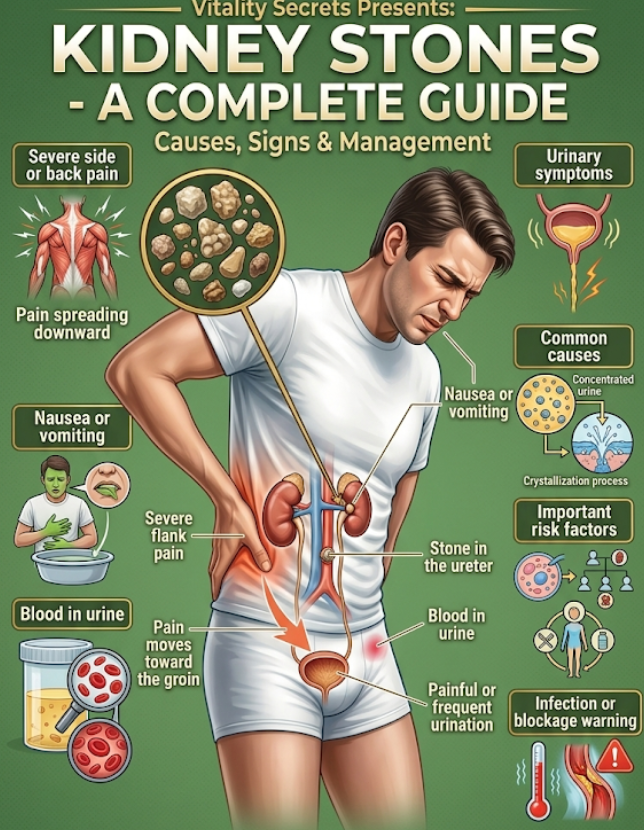
Severe Side or Back Pain
Sharp pain may begin below the ribs and occur in intense waves, often referred to as renal colic. This pain is frequently described as one of the most severe types of pain a person can experience, and it typically originates in the flank area, on either side of the lower back.
Pain Spreading Downward
As a stone moves through the urinary tract, pain may travel through the lower abdomen toward the groin, following the path of the ureter, the tube that carries urine from the kidney to the bladder.
Nausea or Vomiting
Severe renal colic pain commonly causes nausea or vomiting, which is thought to be related to shared nerve pathways between the kidneys and the digestive system.
Blood in Urine
Urine may appear pink, red, or brown as a stone irritates the lining of the urinary tract, and this symptom always needs medical assessment, even if the associated pain seems to be improving.
Urinary Symptoms
Burning, urgency, or frequent urination may occur when the stone moves lower into the urinary tract, particularly as it approaches or enters the bladder.
Pain Moving Toward the Groin
As the stone progresses through the ureter toward the bladder, the location of pain often shifts accordingly, which can actually help indicate how far the stone has traveled.
Common Causes and Risk Factors
Several factors are known to increase the risk of developing kidney stones:
Dehydration, one of the most significant and modifiable risk factors, since inadequate fluid intake leads to more concentrated urine
A history of previous stones, since people who have had one kidney stone have a notably increased risk of developing another
Family history, since a genetic predisposition can influence how the body processes stone-forming substances
Diet, particularly diets high in sodium, animal protein, or oxalate-rich foods, which can contribute to stone formation in susceptible individuals
Obesity, which has been associated with an increased risk of kidney stone formation
Certain medical conditions, including some digestive disorders, gout, and conditions affecting calcium metabolism, which can increase stone risk
When Symptoms Signal Infection or Blockage
Fever, chills, reduced urine output, or uncontrolled pain alongside kidney stone symptoms requires urgent medical care. These signs can indicate that a stone is causing a urinary blockage combined with an infection, a combination that can become a medical emergency if not treated promptly, since infection behind an obstruction can spread quickly and cause serious complications.
How Kidney Stones Are Diagnosed
Confirming the diagnosis typically involves a combination of:
Urine testing, which can detect blood, signs of infection, and provide clues about the type of stone
Blood testing, which can assess kidney function and identify metabolic factors contributing to stone formation
CT scan or ultrasound imaging, which can confirm the presence, size, and location of a stone, and is often considered the most definitive way to diagnose kidney stones
How Kidney Stones Are Managed
Controlling Pain and Nausea
Clinician-advised medications can help relieve the intense pain and nausea associated with renal colic while a stone is passing or being treated.
Maintaining Appropriate Fluids
For most people, drinking normally and staying well-hydrated supports the passage of small stones, though fluid intake may need to be medically restricted in certain situations, such as if a blockage is present, which is why this should be guided by your doctor rather than assumed.
Allowing Small Stones to Pass
Many small stones pass naturally on their own with appropriate monitoring and symptom control, particularly stones under about 4 to 5 millimeters, which have a relatively high likelihood of passing without intervention.
Removing Obstructing Stones
Larger or more complicated stones may require procedures such as lithotripsy (using sound waves to break up the stone), ureteroscopy (using a small scope to remove or break up the stone), or other surgical procedures, depending on the stone’s size, location, and how it’s affecting the urinary tract.
Preventing Recurrence
For those with a history of kidney stones, stone analysis (to determine what type of stone it was), urine testing, hydration strategies, and tailored dietary or medication changes can all help reduce the risk of future stones, since prevention strategies often depend on the specific type of stone a person tends to form.
When to Seek Urgent Medical Assessment
Severe flank pain accompanied by fever, chills, reduced urine output, repeated vomiting, or severe weakness needs urgent medical assessment. These combined symptoms can indicate a more serious complication, such as an infected, obstructed kidney, which requires prompt treatment to prevent more serious harm.
Beyond this specific combination, you should also seek medical care if you experience:
Pain so severe you can’t find a comfortable position
Visible blood in your urine
Inability to urinate
Signs of dehydration from persistent vomiting
How to Reduce Your Risk of Kidney Stones
Stay well-hydrated throughout the day, aiming for pale yellow urine as a general hydration indicator, unless your doctor has advised otherwise
Moderate sodium intake, since high sodium levels can increase calcium excretion in urine, contributing to stone formation
Be mindful of oxalate-rich foods if you’re prone to calcium oxalate stones specifically, a conversation worth having with your doctor since restriction isn’t necessary for everyone
Maintain a healthy weight through balanced diet and regular physical activity
Follow up with your doctor if you’ve had a stone before, since understanding your specific stone type can guide more targeted prevention strategies
Frequently Asked Questions
How long does it take for a kidney stone to pass?
This varies significantly based on the size and location of the stone, ranging anywhere from a few days to a few weeks for stones that are able to pass on their own. Your doctor can help estimate a reasonable timeline based on your specific stone’s size and position.
Can drinking more water actually prevent kidney stones?
Yes, adequate hydration is one of the most well-established, modifiable ways to reduce kidney stone risk, since it helps keep urine dilute enough that stone-forming minerals are less likely to crystallize.
Is kidney stone pain really as severe as people say?
Yes, renal colic pain is frequently described by patients as among the most severe pain they’ve ever experienced, often compared to labor pain in intensity. This is one of the reasons kidney stones prompt so many emergency room visits.
Do I need surgery for every kidney stone?
No, many kidney stones, particularly smaller ones, pass on their own with supportive care like hydration and pain management. Surgical or procedural intervention is generally reserved for larger stones, stones causing significant blockage, or stones that aren’t passing despite adequate time and supportive treatment.
This article is intended for general informational purposes and is not a substitute for professional medical advice, diagnosis, or treatment. If you’re experiencing symptoms of a kidney stone, especially with fever, chills, or severe pain, seek medical evaluation promptly.