
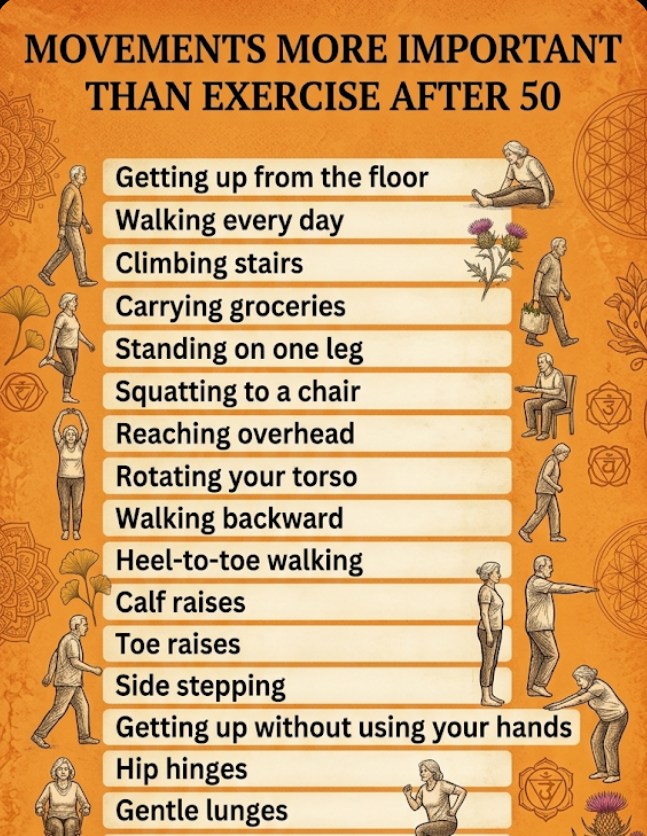
20 Functional Movements That Matter as Much as Exercise After 50
Structured exercise, whether it’s a gym session, a run, or a fitness class, absolutely matters at any age. But after 50, another category of movement deserves just as much attention: the everyday, functional movements that keep you independent, mobile, and confident in your own body. These are the movements involved in getting up off the floor, carrying groceries, reaching a top shelf, or catching your balance on uneven ground, the physical skills that structured workouts don’t always specifically train, but that matter enormously for daily life.
Below, we break down 20 functional movements worth practicing regularly, why each one matters, and simple ways to build them into your routine.
Why Functional Movement Deserves Its Own Focus
Traditional exercise, like cardio or weightlifting, builds general strength and endurance, but it doesn’t always translate directly into the specific movement patterns you rely on every day. Functional movement training focuses on practicing those exact patterns, balance, getting up and down, reaching, twisting, so that your body stays capable of handling real-world demands, not just performing well in a gym setting. This distinction becomes increasingly important with age, since the ability to get up from the floor without assistance, for example, has actually been studied as a meaningful predictor of long-term health outcomes.
Foundational Floor and Ground Movements
Getting Up From the Floor
The ability to get up and down from the floor without using your hands or arms for support involves strength, balance, and coordination working together, and research has specifically linked this ability to overall longevity and functional independence.
Getting Up Without Using Your Hands
A more advanced variation of the movement above, practicing this specifically helps maintain the leg strength and balance needed to rise from a seated or lying position using your legs and core, rather than relying on your arms to compensate.
Everyday Walking Movements
Walking Every Day
Regular walking supports cardiovascular health, joint mobility, and overall functional capacity, and it remains one of the most accessible, sustainable forms of movement at any age.
Climbing Stairs
Stair climbing combines cardiovascular effort with leg strength and balance, making it a practical, everyday way to maintain the lower body power needed for daily tasks.
Walking Backward
Walking backward challenges balance and coordination differently than forward walking, engaging muscles and neural pathways that don’t get much use otherwise.
Heel-to-Toe Walking
Also known as tandem walking, this movement, placing one foot directly in front of the other, is a classic balance assessment used by physical therapists and a genuinely useful practice for improving stability.
Side Stepping
Moving laterally, rather than always forward and backward, engages the hip stabilizer muscles that are essential for balance and injury prevention but often neglected in typical daily movement.
Walking After Meals
A short walk after eating supports digestion and healthy blood sugar regulation, while also adding an easy, low-impact movement break into your day.
Balance and Stability
Standing on One Leg
Single-leg balance is one of the simplest, most telling tests of overall stability, and practicing it regularly helps maintain the balance reflexes that naturally decline with age if not actively maintained.
Ankle Mobility
Good ankle mobility supports balance, walking mechanics, and injury prevention, since restricted ankle movement can throw off your entire gait pattern.
Strength-Based Functional Movements
Squatting to a Chair
Practicing a controlled sit-to-stand movement, essentially a squat using a chair as a target, builds the leg strength needed for sitting down and standing up safely, one of the most frequently repeated movements in daily life.
Carrying Groceries
Carrying loaded bags engages grip strength, core stability, and overall functional strength in a way that mimics real-world demands better than many isolated gym exercises.
Gentle Lunges
Lunges build single-leg strength and balance simultaneously, which is particularly relevant since most daily movements, like walking and climbing stairs, happen on one leg at a time rather than both together.
Hip Hinges
The hip hinge movement pattern, bending at the hips while keeping the back relatively straight, is the foundation of safe lifting mechanics and helps protect the lower back during everyday tasks like picking something up off the ground.
Calf Raises
Calf raises strengthen the muscles that support ankle stability and push-off power during walking, both of which become increasingly important for fall prevention.
Toe Raises
Lifting the toes while keeping the heels grounded strengthens the muscles on the front of the lower leg, helping balance out the calf muscles and supporting better overall gait control.
Grip-Strength Movements
Grip strength has been studied as a broader marker of overall physical health and function, and activities like carrying, squeezing, or hanging help maintain the hand and forearm strength needed for countless daily tasks.
Mobility and Flexibility
Reaching Overhead
Overhead reaching maintains shoulder mobility, which is essential for tasks like reaching a top shelf, getting dressed, or lifting items above your head.
Rotating Your Torso
Torso rotation supports spinal mobility and is involved in countless daily movements, from looking over your shoulder while driving to reaching across your body.
Shoulder Mobility
Beyond just overhead reaching, general shoulder mobility work helps maintain the range of motion needed for dressing, reaching behind your back, and other everyday tasks that become noticeably harder if shoulder mobility declines.
Stretching Your Calves and Hips
Tight calves and hips can significantly affect walking mechanics, posture, and balance, making regular stretching in these areas a practical way to support overall mobility.
Taking Frequent Movement Breaks
Beyond any single movement, simply avoiding long, uninterrupted periods of sitting supports joint mobility, circulation, and muscle activation throughout the day.
How to Build These Movements Into Your Routine
Practice getting up from the floor a few times a week as a specific, dedicated practice, not just something you do by accident
Add single-leg balance work to an existing routine, like brushing your teeth while standing on one leg
Incorporate a squat-to-chair movement into your day, such as when getting up from a seated position
Take the stairs when reasonably possible, and build in a daily walk if you don’t already have one
Set a reminder to move every 30 to 60 minutes if you have a desk job or spend long periods sitting
The Bigger Picture
None of this is meant to suggest that structured exercise, like strength training or cardio, doesn’t matter after 50, it absolutely does, and building general strength and cardiovascular fitness remains an important part of healthy aging. Functional movements like these are best understood as a complementary layer, ensuring that the specific movement patterns you rely on every day stay strong, mobile, and confident, not just your overall fitness level in a general sense.
Frequently Asked Questions
Do I need special equipment to practice these movements?
No, nearly all of these movements can be practiced using just your body weight, a chair, or items you already have at home, like a bag of groceries or a set of stairs.
How often should I practice these functional movements?
Incorporating a few of these movements into your daily routine, rather than treating them as a separate, formal workout, tends to be the most sustainable approach. Many of them, like taking the stairs or squatting to a chair, can simply become part of how you already move through your day.
Is it safe to practice these movements if I have joint pain or a health condition?
Many of these movements can be modified to accommodate joint pain or mobility limitations, but if you have a specific health condition, recent injury, or significant balance concerns, it’s worth consulting a physical therapist or doctor first to ensure you’re practicing these safely and appropriately for your situation.
Can practicing these movements actually prevent falls?
Balance and strength-focused functional movements, particularly single-leg balance work and lower body strength exercises, have been associated with reduced fall risk in research on older adults, though no single set of exercises can eliminate fall risk entirely, especially in the presence of other risk factors like certain medications or vision changes.
This article is intended for general informational purposes and is not a substitute for professional medical advice. If you have joint pain, balance concerns, or a health condition, consult a doctor or physical therapist before starting a new movement routine.