
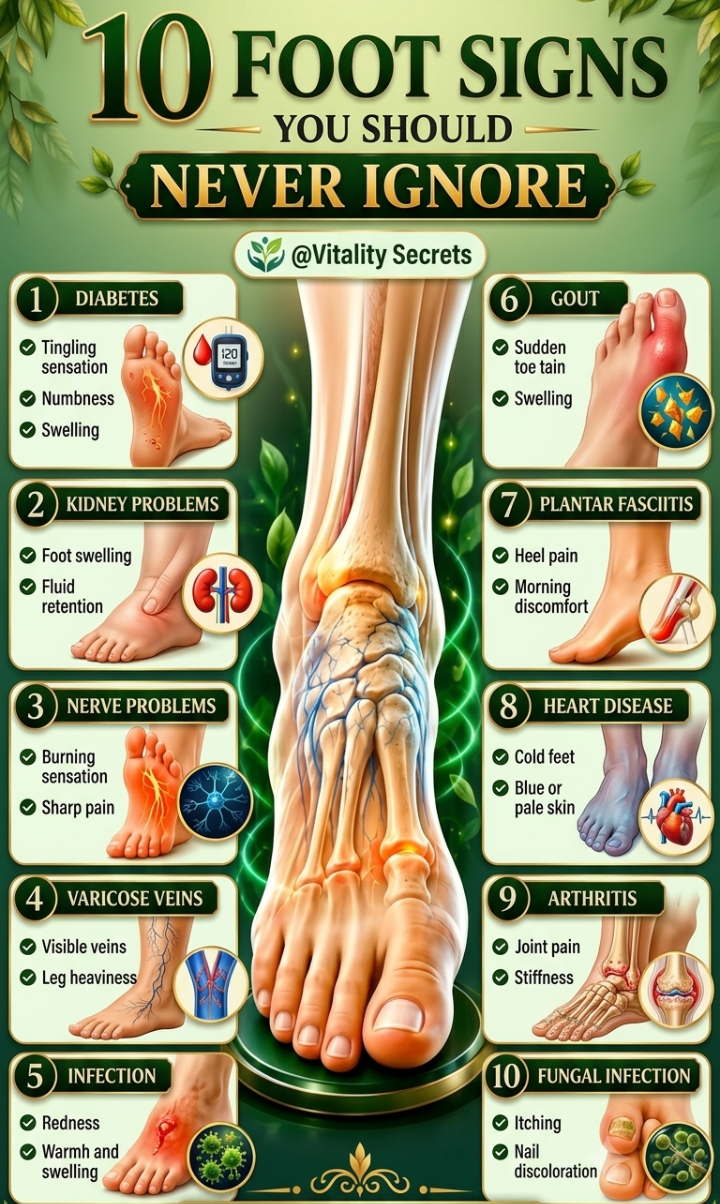
10 Foot Signs You Should Never Ignore
Your feet can offer a surprising amount of insight into what’s happening elsewhere in your body. Because they’re farthest from the heart and rely on healthy nerves, blood vessels, and joints to function properly, foot symptoms are sometimes among the first noticeable signs of an underlying condition, ranging from diabetes to heart disease to arthritis. Below, we walk through 10 foot signs worth paying attention to, what they may indicate, and when it’s time to see a doctor.
As with any symptom-based guide, it’s worth remembering that these are potential associations, not diagnoses. A proper medical evaluation is the only reliable way to determine what’s actually behind a specific foot symptom.
1. Diabetes
Signs to watch for: Tingling sensation, numbness, and swelling.
Diabetes can affect the feet in several ways, most notably through diabetic neuropathy, nerve damage caused by prolonged high blood sugar, which often first appears as tingling or numbness in the toes and feet. Swelling can also occur related to circulation changes associated with diabetes. Because diabetic neuropathy can reduce sensation, people with diabetes are often advised to check their feet daily for cuts or sores they might not otherwise feel.
2. Kidney Problems
Signs to watch for: Foot swelling and fluid retention.
When the kidneys aren’t filtering fluid and waste as effectively as they should, fluid can build up in the lower extremities, causing noticeable swelling in the feet and ankles. This type of swelling, known as edema, often appears gradually and may be more pronounced by the end of the day or after long periods of standing or sitting.
3. Nerve Problems
Signs to watch for: Burning sensation and sharp pain.
Nerve-related foot symptoms, broadly known as peripheral neuropathy, can stem from several causes beyond diabetes, including vitamin deficiencies, certain medications, alcohol use, or other underlying conditions. A burning or sharp, shooting pain, sometimes worse at night, is a hallmark symptom that’s worth having evaluated to identify the underlying cause.
4. Varicose Veins
Signs to watch for: Visible veins and leg heaviness.
Varicose veins occur when the valves inside veins weaken, allowing blood to pool rather than flow efficiently back toward the heart. This often results in visibly bulging, twisted veins along with a sensation of heaviness or fatigue in the legs, particularly after long periods of standing.
5. Infection
Signs to watch for: Redness and warmth and swelling.
A localized area of redness, warmth, and swelling on the foot can indicate a skin or soft tissue infection, sometimes starting from a small cut, blister, or ingrown toenail that allowed bacteria to enter. Infections can progress quickly, especially in people with diabetes or compromised circulation, making early attention important.
6. Gout
Signs to watch for: Sudden toe pain and swelling.
Gout is a form of inflammatory arthritis caused by a buildup of uric acid crystals in the joints, and it classically affects the big toe first, causing sudden, intense pain, redness, and swelling that can develop within just a few hours. Gout attacks often occur at night and can be severe enough that even light contact, like a bedsheet, feels painful.
7. Plantar Fasciitis
Signs to watch for: Heel pain and morning discomfort.
Plantar fasciitis involves inflammation of the plantar fascia, the band of tissue running along the bottom of the foot from the heel to the toes. A hallmark sign is sharp heel pain that’s worse with the first steps in the morning or after periods of rest, often easing somewhat with continued movement throughout the day.
8. Heart Disease
Signs to watch for: Cold feet and blue or pale skin.
Persistently cold feet, or skin that appears blue or unusually pale, can indicate reduced blood flow, which in some cases relates to underlying cardiovascular issues, including peripheral artery disease, a condition in which narrowed arteries reduce circulation to the extremities. This is a symptom worth taking seriously, especially if it’s persistent or paired with other symptoms like chest discomfort or shortness of breath.
9. Arthritis
Signs to watch for: Joint pain and stiffness.
Both osteoarthritis and rheumatoid arthritis can affect the many small joints in the feet, causing pain, stiffness, and sometimes visible swelling or joint changes over time. Morning stiffness that improves with movement is a common pattern, though the specific presentation can vary depending on the type of arthritis involved.
10. Fungal Infection
Signs to watch for: Itching and nail discoloration.
Fungal infections of the skin (athlete’s foot) or nails (onychomycosis) are common and often start with itching, redness, or peeling skin between the toes, or yellowing and thickening of the toenails. While generally not dangerous, fungal infections can be persistent and are worth treating both for comfort and to prevent spreading to other areas or people.
Why Foot Symptoms Deserve Attention
Because the feet are the farthest point from the heart and rely on a complex network of small nerves, blood vessels, and joints, they’re often among the first places where circulation problems, nerve damage, or inflammatory conditions become noticeable. This is particularly relevant for people with diabetes, who are frequently advised to perform daily foot checks specifically because reduced sensation can allow small problems to go unnoticed until they become more serious.
When to See a Doctor
While some foot symptoms are minor and resolve on their own, you should see a doctor if you experience:
Sudden, severe swelling, especially if it’s one-sided
Signs of infection, such as spreading redness, warmth, fever, or pus
Persistent numbness, tingling, or burning that doesn’t improve
Cold feet paired with pale or blue skin, especially with other cardiovascular symptoms
Sudden, severe joint pain, particularly if it resembles a gout flare
Any wound, especially in someone with diabetes, that isn’t healing properly
Frequently Asked Questions
Can foot symptoms alone diagnose a specific condition?
No, foot symptoms can offer helpful clues, but many different conditions can cause overlapping symptoms. A proper diagnosis typically requires a physical exam, and sometimes bloodwork or imaging, from a healthcare provider.
Why are people with diabetes told to check their feet every day?
Diabetes can cause nerve damage that reduces sensation in the feet, meaning injuries, sores, or infections can develop and worsen without being felt. Daily foot checks help catch these problems early, when they’re much easier to treat, reducing the risk of more serious complications.
Is it normal for feet to swell occasionally?
Mild, occasional swelling after long periods of standing, sitting, or air travel is common and not necessarily concerning. Sudden, severe, or persistent swelling, especially if it’s one-sided or paired with other symptoms, is more worth having evaluated.
How is a fungal foot infection different from other skin issues?
Fungal infections typically cause itching, peeling, or scaling, often starting between the toes, and toenail fungal infections cause gradual yellowing, thickening, or crumbling of the nail. If you’re unsure whether a skin issue on your foot is fungal or something else, a doctor or dermatologist can confirm with a simple examination or test.
This article is intended for general informational purposes and is not a substitute for professional medical advice, diagnosis, or treatment. If you’re experiencing persistent or concerning foot symptoms, consult your healthcare provider for proper evaluation.