
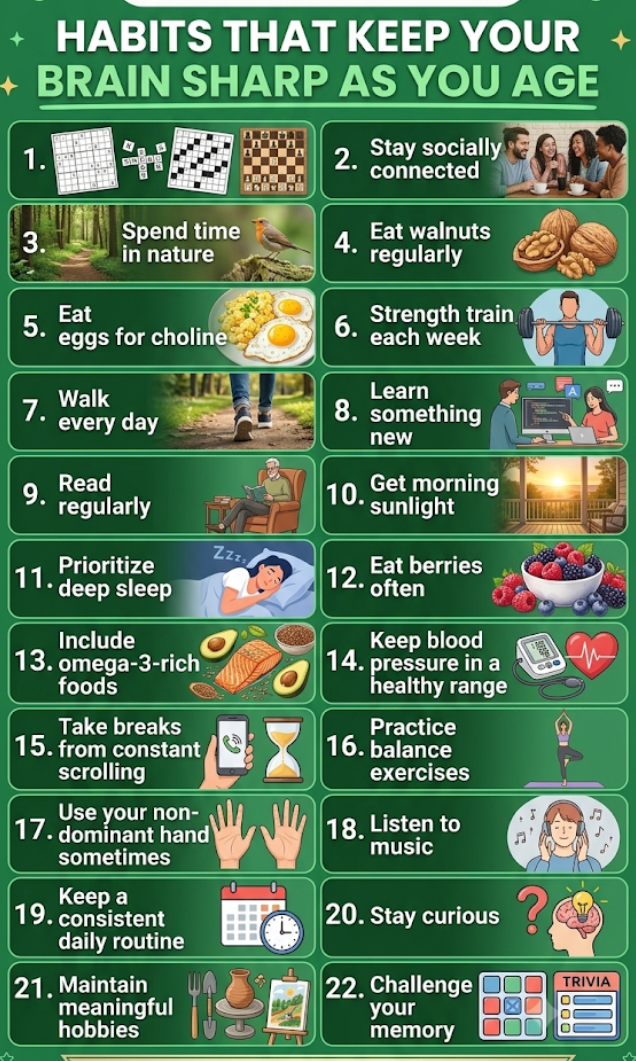
21 Habits That Keep Your Brain Sharp As You Age
Cognitive health isn’t determined by a single factor, it’s shaped by a combination of daily habits that, together, support brain function over the long term. Research on brain health consistently points to the same broad categories, mental stimulation, physical activity, social connection, quality sleep, and good nutrition, as the pillars that matter most. The good news is that none of these require anything extreme or complicated. Small, consistent habits, repeated over years, are what actually add up.
Below, we break down 21 habits linked to supporting cognitive health as you age, organized by category, along with the reasoning behind each one.
Mental Stimulation
Do Puzzles and Brain Games
Engaging in puzzles, crosswords, or brain training games challenges your brain to form new neural connections, and consistent mental engagement has been associated with supporting cognitive function over time.
Learn Something New
Picking up a new skill, whether it’s a language, an instrument, or a new hobby, requires your brain to build new pathways, which is thought to support what researchers call cognitive reserve, a kind of buffer against age-related decline.
Read Regularly
Reading engages multiple cognitive processes at once, including memory, comprehension, and focus, making it one of the simplest, most accessible habits for ongoing mental stimulation.
Stay Curious
Approaching life with curiosity, asking questions, seeking out new information, and staying open to learning, keeps your brain actively engaged rather than running on autopilot.
Use Your Non-Dominant Hand Sometimes
Simple tasks like brushing your teeth or eating with your non-dominant hand require extra focus and coordination, which can serve as a small, novel challenge for your brain.
Challenge Your Memory
Actively trying to recall information, rather than immediately reaching for your phone, gives your brain practice at retrieval, a skill that benefits from regular use, much like a muscle.
Physical Activity
Strength Train Each Week
Resistance training has been associated with supporting cognitive function, likely related to its broader effects on cardiovascular health, blood flow, and the release of growth factors that support brain health.
Walk Every Day
Regular walking supports healthy blood flow to the brain and has been consistently associated with better cognitive outcomes in research on aging populations.
Practice Balance Exercises
Balance-focused activities, like tai chi or simple standing exercises, engage the brain’s coordination and spatial awareness systems, and also help reduce fall risk, which is itself connected to long-term cognitive and physical health.
Social and Lifestyle Habits
Stay Socially Connected
Regular social interaction has been strongly associated with better cognitive outcomes in aging research, and social isolation, on the other hand, is considered a notable risk factor for cognitive decline.
Spend Time in Nature
Time spent outdoors has been associated with reduced stress and improved mood, both of which play a supporting role in overall brain health.
Listen to Music
Music engages multiple areas of the brain simultaneously, including memory and emotional processing, and has even been used therapeutically to support cognitive engagement in people with memory-related conditions.
Keep a Consistent Daily Routine
A predictable daily structure supports better sleep, reduces cognitive load from constant decision-making, and has been associated with better overall well-being, particularly in older adults.
Maintain Meaningful Hobbies
Hobbies that involve ongoing engagement, whether creative, physical, or social, provide sustained mental stimulation and a sense of purpose, both of which support cognitive health over time.
Take Breaks From Constant Scrolling
Constant digital stimulation and fragmented attention from scrolling have been associated with reduced sustained focus, making regular breaks a reasonable habit for supporting deeper, more focused thinking.
Sleep and Recovery
Get Morning Sunlight
Morning sunlight exposure helps regulate your circadian rhythm, supporting better sleep quality at night, which in turn plays a direct role in memory consolidation and overall brain function.
Prioritize Deep Sleep
Deep sleep stages are when the brain performs much of its overnight maintenance, including clearing metabolic waste products, a process that’s been specifically studied in relation to long-term brain health.
Nutrition
Eat Walnuts Regularly
Walnuts provide omega-3 fatty acids and antioxidants, both of which have been studied for their potential role in supporting cognitive function.
Eat Eggs for Choline
Eggs are one of the richest dietary sources of choline, a nutrient involved in producing acetylcholine, a neurotransmitter important for memory and learning.
Eat Berries Often
Berries are rich in anthocyanins and other antioxidants that have been studied specifically in relation to cognitive health and memory performance in aging research.
Include Omega-3-Rich Foods
Beyond walnuts, foods like fatty fish are rich sources of omega-3 fatty acids, which are structural components of brain cell membranes and have been associated with supporting cognitive function.
Cardiovascular Health
Keep Blood Pressure in a Healthy Range
High blood pressure is one of the more well-established risk factors for cognitive decline, since it affects blood flow to the brain over time. Managing blood pressure through diet, activity, and medical care when needed is one of the more impactful habits on this entire list.
How to Build These Habits Into Your Routine
Trying to adopt all 21 habits at once is unrealistic and likely to lead to burnout before any of them stick. Instead:
Start with two or three habits that feel most realistic for your current lifestyle
Pair new habits with existing routines, like listening to music during your daily walk, or reading before bed as part of your wind-down routine
Build a consistent sleep and morning routine first, since sleep and circadian rhythm support nearly every other habit on this list
Layer in nutrition changes gradually, such as adding walnuts or berries to a meal you already eat regularly
Prioritize social connection intentionally, since it’s easy to let this habit slip without deliberate effort, especially later in life
The Bigger Picture on Brain Health
No single habit on this list is a guarantee against cognitive decline, and genetics, underlying health conditions, and other factors outside of lifestyle also play a meaningful role. That said, research consistently shows that people who combine several of these habits, staying physically active, socially connected, mentally engaged, and metabolically healthy, tend to have better cognitive outcomes as they age compared to those who don’t. It’s the combination and consistency that matters most, not any single “magic” habit.
Frequently Asked Questions
Which habit has the biggest impact on brain health?
There isn’t a single most important habit, since cardiovascular health, social connection, sleep, and mental stimulation all interact with and support one another. Managing blood pressure and staying physically active are among the most consistently supported by research, but a well-rounded combination matters more than optimizing any one habit alone.
Is it too late to start these habits if I’m already older?
No, research on cognitive health generally shows that starting these habits at any age can offer benefits, and the brain retains a degree of adaptability, sometimes called neuroplasticity, throughout life.
Can these habits prevent conditions like dementia or Alzheimer’s disease?
These habits are associated with supporting overall cognitive health and may help reduce certain modifiable risk factors, but they cannot guarantee prevention of dementia or Alzheimer’s disease, which involve a combination of genetic, biological, and environmental factors, some of which aren’t within an individual’s control.
How long does it take to notice a difference from these habits?
Some benefits, like improved mood from social connection or better focus from quality sleep, can be noticeable within days to weeks. The broader, long-term cognitive benefits of these habits are typically studied over years of consistent practice, reinforcing that this is a long-term investment rather than a quick fix.
This article is intended for general informational purposes and is not a substitute for professional medical advice. If you have concerns about memory changes or cognitive health, consult your healthcare provider.