
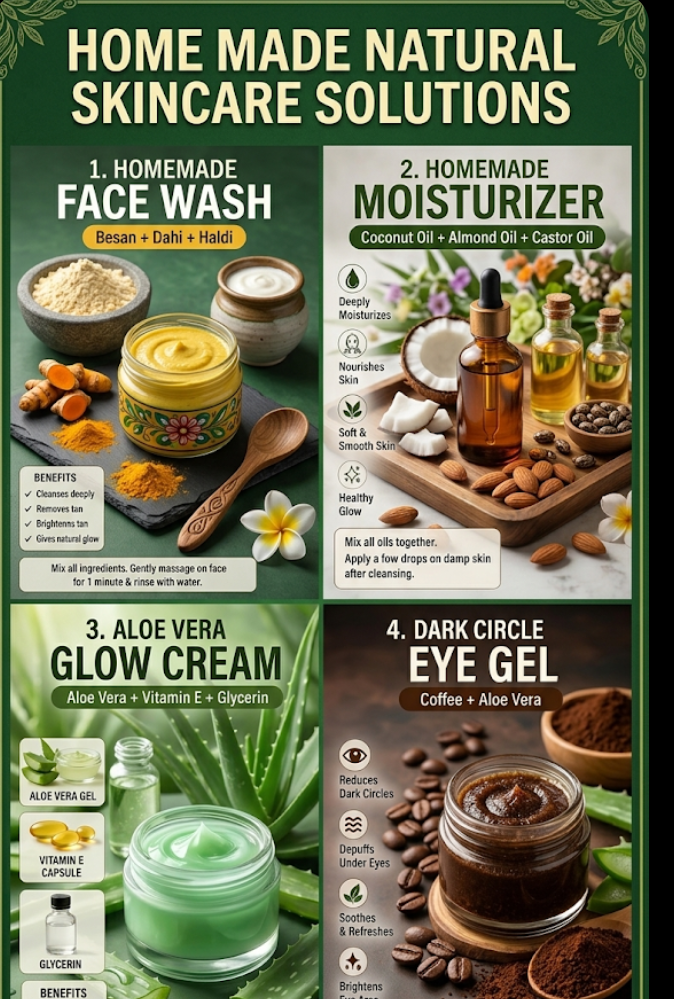
4 Homemade Natural Skincare Recipes You Can Make Tonight
There’s something genuinely satisfying about making your own skincare products using ingredients you can pronounce, and often ones already sitting in your kitchen. Below are 4 simple, natural skincare recipes: a traditional besan (gram flour) face wash, a nourishing oil-based moisturizer, an aloe vera glow cream, and a coffee-based eye gel for tired-looking under-eyes. Each one is easy to make, budget-friendly, and built around ingredients with real, if modest, benefits for the skin.
As with any DIY skincare, it’s worth setting realistic expectations. These recipes can be a lovely, gentle addition to your routine, especially for general cleansing, hydration, and a soothing self-care ritual, but they aren’t a replacement for dermatologist-recommended treatments if you’re dealing with a specific, persistent skin concern.
1. Homemade Face Wash (Besan, Dahi, and Haldi)
This traditional face wash combines besan (gram/chickpea flour), dahi (yogurt), and haldi (turmeric), a combination widely used in South Asian skincare traditions for generations.
Ingredients
- 2 tablespoons besan (gram flour)
- 1 tablespoon plain dahi (yogurt)
- A pinch of haldi (turmeric powder)
How to Make It
In a small bowl, combine the besan, yogurt, and turmeric.
Mix until you have a smooth, spreadable paste, adding a touch more yogurt if it feels too thick.
How to Use It
Gently massage the paste onto damp skin for about 1 minute, avoiding the eye area, then rinse thoroughly with water.
What It May Offer
Cleanses deeply: Besan acts as a gentle, natural exfoliant that can help lift away dirt and excess oil.
May help even out tan lines: The mild exfoliating action can help remove dead surface skin cells, which may make sun-related discoloration appear less pronounced over time, though it won’t lighten your natural skin tone.
Brightening effect: Turmeric contains curcumin, an antioxidant compound that some people find gives skin a temporary, healthy-looking glow after use.
Natural glow: The combination of gentle exfoliation and cleansing can leave skin looking fresher immediately after use.
A note on turmeric: It can temporarily stain the skin yellow, especially on lighter skin tones, so use a small amount and rinse thoroughly. A patch test is a good idea if you haven’t used turmeric on your skin before.
2. Homemade Moisturizer (Coconut Oil, Almond Oil, and Castor Oil)
This oil-based moisturizer blends three complementary oils, each contributing something slightly different to the final formula.
Ingredients
- 2 tablespoons coconut oil
- 2 tablespoons almond oil
- 1 tablespoon castor oil
How to Make It
Combine all three oils in a small glass jar or bottle and mix well. If your coconut oil is solid, gently warm it first until it liquefies before combining with the other oils.
How to Use It
Apply a few drops to slightly damp skin after cleansing, gently pressing or massaging it in.
What It May Offer
Deeply moisturizes: The combination of oils helps form a barrier that locks in moisture, particularly effective when applied to damp skin.
Nourishes skin: Almond oil provides vitamin E and fatty acids that support the skin’s natural barrier.
Soft and smooth skin: Regular use can leave skin feeling noticeably softer, particularly helpful for dry patches.
Healthy glow: The natural sheen from the oils can give skin a dewy, healthy-looking finish.
A note on oil-based moisturizers: Coconut oil can be comedogenic (pore-clogging) for some skin types, particularly those prone to acne. If you have oily or acne-prone skin, consider patch testing on a small area first, or reducing the coconut oil ratio in favor of lighter oils like almond oil.
3. Aloe Vera Glow Cream (Aloe Vera, Vitamin E, and Glycerin)
This lightweight cream combines the soothing properties of aloe vera with the antioxidant benefits of vitamin E and the humectant properties of glycerin.
Ingredients
- 3 tablespoons fresh or store-bought aloe vera gel
- 1 vitamin E capsule (oil squeezed out)
- 1/2 teaspoon glycerin
How to Make It
In a small bowl, combine the aloe vera gel with the oil from the pierced vitamin E capsule.
Add the glycerin and mix thoroughly until well combined.
Transfer to a small clean jar for storage.
How to Use It
Apply a small amount to clean skin, morning or evening, and gently massage in until absorbed.
What It May Offer
Aloe vera is well known for its soothing, hydrating properties, and has been used for skin comfort for a very long time.
Vitamin E provides antioxidant support, helping protect skin from everyday environmental exposure.
Glycerin is a humectant, meaning it draws moisture into the skin, supporting overall hydration.
Storage note: Since this cream contains no preservatives, store it in the refrigerator and use within about a week, discarding it sooner if you notice any change in smell, color, or texture.
4. Dark Circle Eye Gel (Coffee and Aloe Vera)
This eye gel combines finely ground coffee with aloe vera gel, a combination some people use specifically for the tired, puffy look of under-eye circles.
Ingredients
- 1 tablespoon finely ground coffee
- 2 tablespoons aloe vera gel
How to Make It
Mix the ground coffee thoroughly into the aloe vera gel until well combined.
Transfer to a small jar for storage.
How to Use It
Apply a very small amount gently under the eyes using your ring finger (which naturally applies the lightest pressure), avoiding direct contact with the eyes themselves. Leave on for 10 to 15 minutes, then rinse gently with cool water.
What It May Offer
Reduces the appearance of dark circles: Caffeine, found in coffee, has been studied for its ability to temporarily constrict blood vessels, which may reduce the appearance of dark circles related to blood pooling under the eyes.
De-puffs under eyes: The cooling, gentle massage action combined with caffeine’s effects may help temporarily reduce puffiness.
Soothes and refreshes: Aloe vera’s naturally soothing properties can make this a comfortable, refreshing treatment.
Brightens the eye area: Regular, gentle use may contribute to a fresher-looking appearance around the eyes over time.
Important caution: This mixture should be used very gently and kept away from direct contact with the eyes, since the eye area has thin, sensitive skin and coffee grounds are gritty and can be irritating if applied too roughly or too close to the eye itself.
General Tips for DIY Skincare Safety
Always patch test any new DIY skincare product on your inner forearm and wait 24 hours before applying it to your face, to check for irritation or allergic reaction.
Use clean tools and containers to reduce the risk of introducing bacteria into your homemade products.
Store products without preservatives in the refrigerator and use them within about a week, since they lack the shelf-stable preservatives found in commercial products.
Introduce one new product at a time so you can identify what’s working, or what might be causing irritation, for your specific skin.
Be especially cautious around the eye area, which has thinner, more sensitive skin than the rest of the face.
Setting Realistic Expectations
These DIY recipes are best thought of as a gentle, enjoyable, and generally low-cost addition to your skincare routine, offering genuine benefits like cleansing, hydration, and soothing comfort. They aren’t a replacement for dermatologist-recommended treatments if you’re dealing with a specific, persistent skin concern, like significant dark circles, hyperpigmentation, or acne, which often benefit from evidence-based ingredients like retinoids, vitamin C serums, or professional treatment.
Frequently Asked Questions
Can I use these recipes if I have sensitive or acne-prone skin?
It depends on the recipe and your specific skin type. Coconut oil in the moisturizer recipe can be pore-clogging for some people, so those with acne-prone skin may want to patch test carefully or adjust the oil ratio. Turmeric in the face wash can occasionally cause irritation in very sensitive skin, so a patch test is recommended for all four recipes if you haven’t used these ingredients before.
How long do these homemade products last?
Since none of these recipes contain preservatives, they should generally be stored in the refrigerator and used within about a week. Always check for any change in smell, color, or texture before use, and discard if anything seems off.
Will the coffee eye gel permanently get rid of dark circles?
No, this remedy may temporarily reduce the appearance of dark circles related to blood pooling or puffiness, but it won’t address dark circles caused by other factors, like genetics, thinning skin, or pigmentation, which are more effectively treated with dermatologist-recommended options.
Can I substitute ingredients in these recipes?
Yes, many of these ingredients can be adjusted based on what you have on hand or your specific skin needs, for example, using jojoba oil instead of almond oil if you have a nut allergy. Just be sure to patch test any new ingredient combination before applying it to your full face.
This article is intended for general informational purposes related to DIY beauty and skincare. If you have a skin condition, sensitive skin, or specific skincare concerns, consult a dermatologist before trying new topical ingredients.