
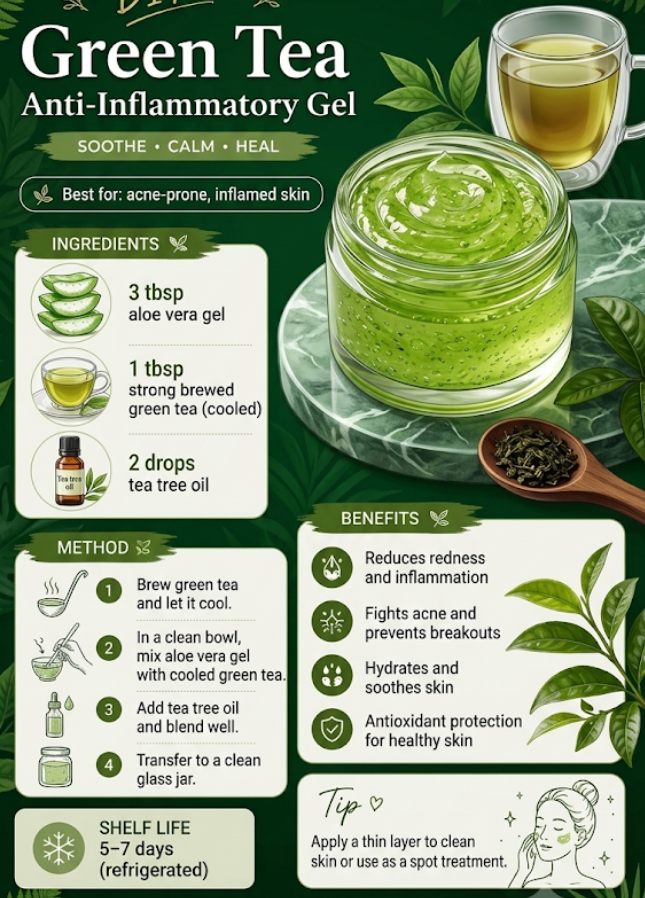
DIY Green Tea Anti-Inflammatory Gel for Acne-Prone Skin
This simple three-ingredient gel combines aloe vera, brewed green tea, and a small amount of tea tree oil into a soothing treatment designed specifically for acne-prone or inflamed skin. It’s easy to make, uses ingredients you may already have on hand, and offers a gentle way to help calm redness and support your skin’s overall comfort as part of your routine.
Why This Combination Works
Aloe vera gel is well known for its soothing, hydrating properties and forms the base of this recipe, helping calm irritated skin while providing lightweight moisture.
Green tea is rich in catechins, particularly EGCG, a compound that’s been studied specifically for its antioxidant and anti-inflammatory properties, including some research looking at its potential topical benefits for acne-prone skin.
Tea tree oil has genuine antimicrobial properties and has been studied in clinical research for its effectiveness in reducing acne lesions, making it one of the more evidence-supported natural ingredients for this specific purpose.
Ingredients
- 3 tablespoons aloe vera gel
- 1 tablespoon strong brewed green tea, cooled
- 2 drops tea tree oil
Method
Step 1: Brew Green Tea and Let It Cool
Brew a strong cup of green tea and allow it to cool completely to room temperature before using, since adding warm tea to the gel can affect its texture and the stability of the other ingredients.
Step 2: Mix Aloe Vera Gel With Cooled Green Tea
In a clean bowl, combine the aloe vera gel with the cooled green tea, stirring until well blended.
Step 3: Add Tea Tree Oil and Blend Well
Add the tea tree oil and mix thoroughly to ensure it’s evenly distributed throughout the gel, rather than concentrated in one spot.
Step 4: Transfer to a Clean Glass Jar
Pour the finished gel into a clean glass jar for storage, and refrigerate to help extend its usable life.
How to Use This Gel
Apply a thin layer to clean skin, or use it as a spot treatment directly on areas of concern. Since this recipe is specifically formulated with acne-prone, inflamed skin in mind, many people find it works well as a targeted treatment on active breakouts rather than as an all-over daily gel, though it can be used either way depending on your skin’s tolerance.
What This Gel May Offer
May help reduce the appearance of redness and inflammation: The combination of aloe vera’s soothing properties and green tea’s antioxidant compounds may help calm visibly irritated skin.
May help support acne-prone skin: Tea tree oil has real clinical research behind its use for acne, making this one of the more evidence-backed combinations in DIY skincare, though it works best as a complementary approach alongside, not necessarily a replacement for, other acne treatments if you’re dealing with moderate to severe breakouts.
Hydrates and soothes skin: Aloe vera provides lightweight hydration without feeling heavy, which is particularly helpful for skin already dealing with inflammation.
Antioxidant protection: Green tea’s catechin content offers genuine antioxidant support, helping protect skin from everyday environmental stress.
An Important Note on Tea Tree Oil
Tea tree oil is a potent essential oil, and while this recipe uses it in a well-diluted amount, it’s still worth taking a few precautions:
Always patch test first. Apply a small amount of the finished gel to your inner forearm and wait 24 hours before using it on your face, since tea tree oil can cause irritation or allergic reactions in some people, even when diluted.
Don’t increase the amount. Using more tea tree oil than this recipe calls for increases the risk of skin irritation without necessarily improving results, undiluted or overly concentrated tea tree oil can cause redness, dryness, or a burning sensation.
Avoid the eye area and any broken or significantly irritated skin.
Discontinue use if irritation occurs, and consider consulting a dermatologist if a reaction is persistent or severe.
Tips for Best Results
Store it properly. Since this gel contains no synthetic preservatives, refrigerate it and use it within the recommended shelf life to reduce the risk of bacterial growth.
Use clean hands or a clean applicator each time you use the gel to avoid introducing bacteria into the jar.
Apply a thin layer. More product doesn’t necessarily mean better results, and a thin, even layer is generally sufficient, especially given the active tea tree oil content.
Be patient. Like most skincare approaches, consistent use over several weeks is more likely to show a noticeable difference than a single application.
Shelf Life
This gel should be stored in the refrigerator and used within 5 to 7 days, since it contains no preservatives and is made with fresh, water-based ingredients that are more prone to bacterial growth over time. Discard it sooner if you notice any change in smell, color, or texture.
Who This Recipe Is Best For
This gel is specifically formulated with acne-prone, inflamed skin in mind, making it a reasonable option for many people dealing with occasional breakouts or general redness. That said, tea tree oil isn’t suitable for everyone, those with very sensitive skin, certain skin conditions, or known essential oil sensitivities may want to skip this recipe or consult a dermatologist first. If you’re dealing with moderate to severe acne, this gel can be a helpful complementary addition, but it isn’t a substitute for dermatologist-recommended treatments like topical retinoids or prescription options, which generally have more robust evidence for significant acne concerns.
Frequently Asked Questions
Is tea tree oil actually effective for acne, or is this just a popular claim?
Tea tree oil has genuine clinical research behind it, with several studies showing it can help reduce acne lesions, likely due to its antimicrobial properties against acne-causing bacteria. It’s considered one of the more evidence-supported natural ingredients for this specific purpose, though it generally works more gradually than prescription treatments.
Can I use this gel every day?
This depends on how your skin responds. Some people use it daily as a light treatment layer, while others prefer using it as a targeted spot treatment only on active breakouts. Start with less frequent use and adjust based on how your skin tolerates it.
Why does this recipe need to be refrigerated?
Because it’s made with water-based ingredients, aloe vera and brewed tea, and contains no synthetic preservatives, it’s more susceptible to bacterial growth at room temperature. Refrigeration slows this process and helps the gel stay usable for its recommended shelf life.
Can I substitute a different essential oil for tea tree oil?
Tea tree oil is specifically chosen here for its antimicrobial and acne-fighting properties, which are well documented in research. If you want to avoid tea tree oil due to sensitivity, you could omit it and use the aloe vera and green tea combination on its own for a gentler, though less specifically acne-targeted, soothing gel.
This article is intended for general informational purposes related to DIY beauty and skincare. If you have a skin condition, sensitive skin, or persistent acne concerns, consult a dermatologist before trying new topical ingredients.