
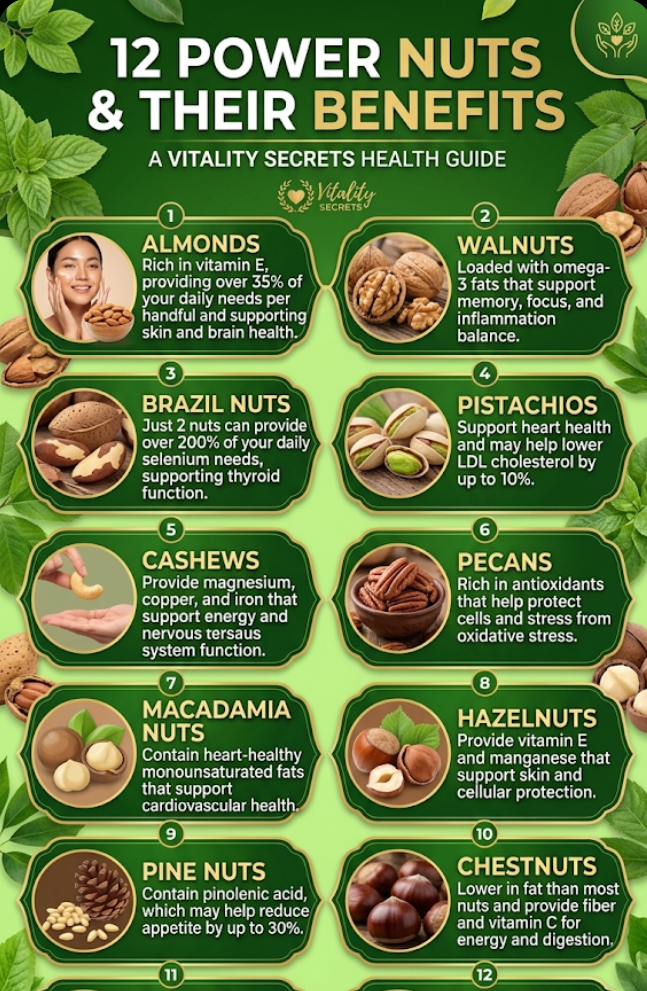
12 NUTS AND WHAT THEY DO: THE ULTIMATE NUTRITIONAL GUIDE
Nuts are nutrient-dense powerhouses packed with healthy fats, vitamins, plant protein, and essential minerals. Incorporating a daily handful about 1 ounce or 30 grams supports cardiovascular health, brain function, and cellular defense.
NUTRITIONAL BREAKDOWN BY VARIETY
Almonds (Skin & Brain Health)
Key Nutrients: Vitamin E, calcium, dietary fiber, monounsaturated fats.
Health Benefits: A single portion provides over 35% of the daily value of vitamin E, acting as a potent antioxidant that protects skin cells against oxidative stress while supporting cognitive health.
Daily Serving: ~23 nuts (1 oz).
Walnuts (Memory & Brain Focus)
Key Nutrients: Alpha-linolenic acid (ALA plant-based omega-3), polyphenols.
Health Benefits: Walnuts contain the highest concentration of plant-based omega-3 fatty acids among tree nuts. They help balance systemic inflammation, boost working memory, and protect blood vessel structure.
Daily Serving: ~14 halves (1 oz).
Brazil Nuts (Thyroid Support)
Key Nutrients: Selenium, magnesium, copper.
Health Benefits: Consuming just 2 Brazil nuts yields over 200% of the recommended daily intake of selenium. Selenium is crucial for thyroid hormone synthesis and active antioxidant defense mechanisms. Limit intake to 1–3 nuts daily to avoid selenium toxicity.
Daily Serving: 1–3 nuts max.
Pistachios (Heart Health & Cholesterol Balance)
Key Nutrients: Lutein, zeaxanthin, vitamin B6, fiber, potassium.
Health Benefits: Rich in phytosterols and fiber, pistachios actively support cardiovascular integrity and assist in lowering LDL (bad) cholesterol levels by up to 10% when integrated into a low-saturated-fat diet.
Daily Serving: ~49 pistachios (1 oz).
Cashews (Energy & Nervous System)
Key Nutrients: Magnesium, copper, iron, zinc.
Health Benefits: Copper and iron drive cellular energy production and red blood cell formation, while high magnesium levels regulate nerve signal transmission and muscle relaxation.
Daily Serving: ~18 nuts (1 oz).
Pecans (Antioxidant Protection)
Key Nutrients: Monounsaturated fats, manganese, gamma-tocopherol (vitamin E).
Health Benefits: Pecans rank among the highest tree nuts in total antioxidant capacity. They shield cellular DNA and lipophilic tissue from free radical-induced oxidative damage.
Daily Serving: ~19 halves (1 oz).
Macadamia Nuts (Cardiovascular Support)
Key Nutrients: Oleic acid (monounsaturated fat), thiamine (vitamin B1).
Health Benefits: Packed with heart-healthy monounsaturated fatty acids, macadamias assist in blood lipid management and lower markers of arterial inflammation.
Daily Serving: ~10 to 12 nuts (1 oz).
Hazelnuts (Cell Protection)
Key Nutrients: Manganese, vitamin E, folate, proanthocyanidins.
Health Benefits: Provide a balance of manganese and vitamin E to aid connective tissue repair, preserve skin elasticity, and protect lipid membranes.
Daily Serving: ~21 nuts (1 oz).
Pine Nuts (Appetite Regulation)
Key Nutrients: Pinolenic acid, magnesium, pinolenic polyunsaturated fatty acids.
Health Benefits: Pinolenic acid triggers satiety hormones in the gut, which can help suppress appetite and curb calorie intake by up to 30%.
Daily Serving: ~167 nuts (1 oz).
Chestnuts (Energy & Digestion)
Key Nutrients: Complex carbohydrates, dietary fiber, vitamin C.
Health Benefits: Unique among nuts for being low in fat and calorie-dense in complex carbohydrates. They provide steady glucose energy and dietary fiber to aid gut motility.
Daily Serving: ~8 to 10 roasted nuts.
Peanuts (Brain Function & Energy)
Key Nutrients: Plant protein, niacin (vitamin B3), folate, resveratrol.
Health Benefits: High protein combined with niacin and folate supports neural synthesis, maintains energy metabolism, and guards against cognitive fatigue.
Daily Serving: ~28 peanuts (1 oz).
Tiger Nuts (Gut Microbiome Health)
Key Nutrients: Resistant starch, prebiotic fiber, potassium.
Health Benefits: Though botanically small tubers, tiger nuts act as powerful prebiotics. Their high resistant starch content bypasses stomach digestion to feed beneficial gut bacteria.
Daily Serving: ~30 grams (1 oz).
MAXIMIZING NUT BIOAVAILABILITY
To extract maximum nutritional value, choose raw or dry-roasted, unsalted varieties over oil-roasted options. Soaking raw nuts in water for 4–8 hours reduces phytates (anti-nutrients), improving mineral absorption in the digestive tract. Consume a rotation of 3 to 4 types of nuts weekly to ensure a full spectrum of plant proteins, minerals, and fatty acids.
FREQUENTLY ASKED QUESTIONS ABOUT NUTS & NUTRITION
What is the best time of day to eat nuts?
Eating nuts in the morning or early afternoon yields the best benefits. Consuming them with breakfast or as a mid-morning snack provides steady energy, curbs mid-day sugar cravings, and stabilizes blood sugar levels throughout the day due to their blend of healthy fats and protein.
Should I eat nuts raw or roasted?
Both options retain most of their core nutritional value, but raw or dry-roasted nuts without added oils or heavy salt are optimal. Avoid commercially fried or heavily oil-roasted nuts, as high-heat processing can oxidize delicate fatty acids and add unnecessary extra calories.
Can eating nuts daily help with weight loss?
Yes. Although nuts are high in calories and healthy fats, studies show that their combination of protein, fiber, and unsaturated fats increases satiety. Eating them in controlled portions (around 1 ounce per day) helps reduce overall calorie intake by keeping you fuller for longer.
How should nuts be stored to keep them fresh?
Because nuts contain high amounts of unsaturated fats, they can go rancid when exposed to heat, light, and air over time. Store them in an airtight container in a cool, dark place for short-term use, or keep them in the refrigerator or freezer to extend their shelf life for up to a year.
Is it safe to eat Brazil nuts every single day?
Due to their exceptionally high selenium content, it is best to limit Brazil nut intake to just 1 to 2 nuts per day. Eating too many Brazil nuts regularly can lead to selenium toxicity (selenosis), which causes symptoms like hair loss, brittle nails, and digestive issues.
Why is soaking nuts beneficial before eating them?
Soaking raw nuts in water for 4 to 8 hours helps break down phytic acid and enzyme inhibitors. Phytic acid can bind to essential minerals like iron, zinc, and calcium, reducing their absorption. Soaking improves both digestion and overall mineral bioavailability.