
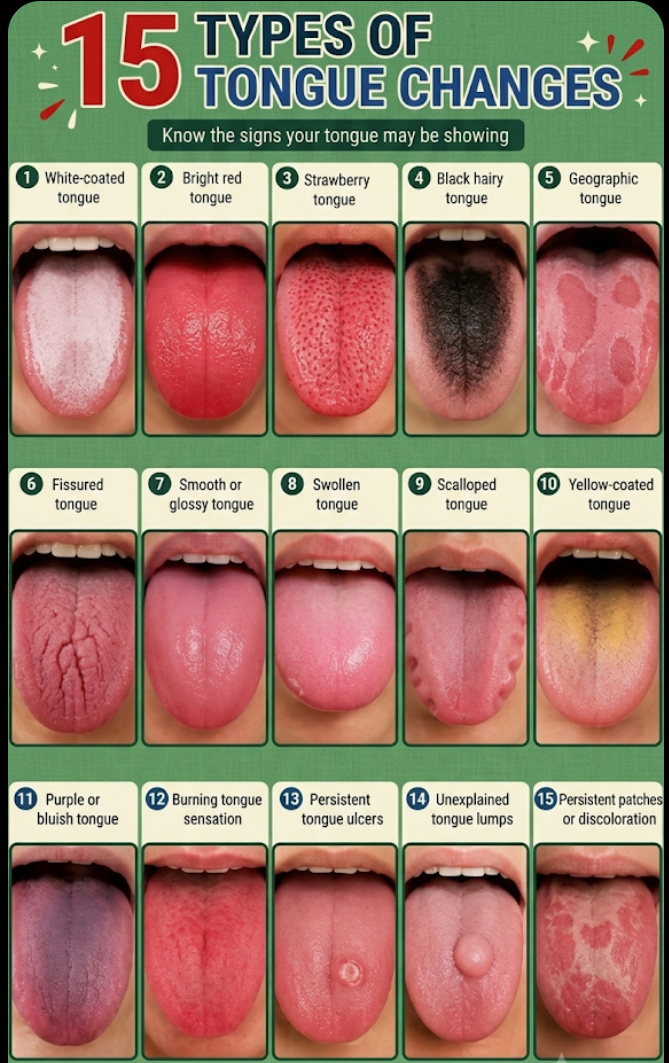
15 Types of Tongue Changes: What Your Tongue Color and Texture Say About Your Health
Discover the 15 most common tongue changes from white coating to black hairy tongue what causes each one, and when to see a doctor. Complete tongue health guide.
Why Your Tongue Is a Window Into Your Health
Your tongue does a lot more than help you taste food and speak. For centuries, doctors in both Western and Traditional Chinese Medicine have used the tongue’s color, texture, coating, and shape as a diagnostic tool. A healthy tongue is typically pink, moist, and covered with small nodules called papillae. When something changes — a new coating, an unusual color, a swollen edge, or a persistent sore — it can be an early sign of anything from mild dehydration to a nutritional deficiency, an infection, or in rare cases something more serious.
Below, we break down 15 types of tongue changes, what they usually mean, common causes, and when it’s time to book an appointment with your doctor or dentist. This guide is for informational purposes and is not a substitute for professional medical advice.
1. White-Coated Tongue
A white-coated tongue happens when dead cells, bacteria, and debris get trapped between the enlarged and inflamed papillae on the surface of the tongue.
Common causes:
- Poor oral hygiene
- Dehydration or dry mouth
- Oral thrush (a yeast infection caused by Candida albicans)
- Smoking
Leukoplakia (a thickened white patch linked to chronic irritation)
What to do: Gently brush your tongue twice daily, stay hydrated, and see a dentist if the coating doesn’t clear up within a week or is accompanied by pain or white patches that won’t scrape off.
2. Bright Red Tongue
A tongue that looks unusually red sometimes described as “beefy” or “raw” often points to a nutrient shortfall or inflammatory condition.
Common causes:
- Vitamin B12 or folate deficiency
- Iron deficiency anemia
- Kawasaki disease (in children)
- Scarlet fever
- Niacin (vitamin B3) deficiency
What to do: A blood test can confirm nutritional deficiencies. Persistent redness, especially with fatigue or a sore mouth, warrants a doctor’s visit.
3. Strawberry Tongue
Named for its bumpy, red, strawberry-like appearance, this occurs when the taste buds (papillae) become swollen and inflamed, standing out against a red background.
Common causes:
- Scarlet fever
- Kawasaki disease
- Toxic shock syndrome
- Severe allergic reactions
What to do: Strawberry tongue is often a red flag for a systemic illness, particularly in children with fever. Seek medical attention promptly, especially if paired with a rash or high fever.
4. Black Hairy Tongue
Despite its alarming appearance, black hairy tongue is usually harmless. It occurs when the papillae grow longer than normal and don’t shed as they should, trapping bacteria, food, and pigments that turn them black or brown.
Common causes:
- Poor oral hygiene
- Smoking or tobacco use
- Excessive coffee or black tea consumption
- Antibiotic use (which disrupts normal bacterial balance)
- Dry mouth
What to do: Improve tongue-brushing habits and stay hydrated. It typically resolves on its own once the underlying trigger is removed.
5. Geographic Tongue
Geographic tongue (benign migratory glossitis) creates smooth, red, map-like patches surrounded by slightly raised white or yellow borders. The pattern can change location and shape over days or weeks.
Common causes:
- Unknown exact cause; considered an inflammatory condition
- May be linked to psoriasis, stress, or hormonal changes
- Genetics can play a role
What to do: Geographic tongue is not contagious or dangerous, though some people experience mild burning with spicy or acidic foods. No treatment is usually necessary.
6. Fissured Tongue
A fissured (or “scrotal”) tongue has deep grooves or cracks running across its surface, sometimes resembling a cracked riverbed.
Common causes:
- Genetics (often present from childhood)
- Aging
- Associated with geographic tongue
Linked to conditions like Down syndrome or Melkersson-Rosenthal syndrome in some cases
What to do: Fissures are usually harmless, but food debris can get trapped in the grooves, so gentle cleaning helps prevent bad breath or irritation.
7. Smooth or Glossy Tongue
A tongue that appears unusually smooth or shiny has lost its normal papillae, giving it a glossy, almost varnished look.
Common causes:
- Vitamin B12, iron, or folate deficiency
- Celiac disease
- Sjögren’s syndrome (an autoimmune condition causing dry mouth)
- Certain medications
What to do: Loss of papillae is often linked to nutritional deficiencies or autoimmune conditions, so blood work is recommended if this persists.
8. Swollen Tongue
A swollen tongue can range from mild puffiness to significant enlargement that affects speech, swallowing, or breathing.
Common causes:
- Allergic reactions (including food or medication allergies)
- Angioedema
- Infections
- Hypothyroidism
Insect stings
What to do: Sudden, severe swelling especially with difficulty breathing or swallowing is a medical emergency. Call emergency services immediately. Mild, chronic swelling should still be evaluated by a doctor.
9. Scalloped Tongue
A scalloped tongue has wavy, ridged edges that look like they’ve been imprinted with teeth marks, usually because the tongue has swollen slightly and is pressing against the teeth.
Common causes:
- Tongue swelling (see above)
- Sleep apnea or mouth breathing
- Hypothyroidism
- Nutrient deficiencies
- Chronic teeth clenching (bruxism)
What to do: If you notice scalloping along with fatigue, weight changes, or poor sleep, mention it to your doctor it can be a subtle clue for thyroid or sleep issues.
10. Yellow-Coated Tongue
A yellowish coating on the tongue, often concentrated down the center, is typically a buildup of bacteria and dead cells that has darkened from white to yellow.
Common causes:
- Poor oral hygiene
- Smoking
- Dry mouth
- Acid reflux (GERD)
Jaundice (liver-related, in rarer cases) usually accompanied by yellowing of the skin or eyes
What to do: Improve oral hygiene first. If yellowing appears alongside yellow skin or eyes, seek medical care right away, as this could indicate a liver issue.
11. Purple or Bluish Tongue
A purple or blue tinge to the tongue (cyanosis) suggests the blood isn’t carrying enough oxygen, or there’s poor circulation.
Common causes:
- Poor blood oxygenation (respiratory or cardiac issues)
- Cold exposure
- Vitamin B2 (riboflavin) deficiency
- Certain congenital heart conditions
What to do: A bluish tongue paired with shortness of breath, chest pain, or bluish lips/fingertips is a medical emergency. Seek immediate care.
12. Burning Tongue Sensation
Burning mouth syndrome causes a persistent burning, tingling, or scalding sensation on the tongue, often with no visible changes to its appearance.
Common causes:
- Menopause and hormonal changes
- Nutritional deficiencies (B vitamins, iron, zinc)
- Dry mouth
- Acid reflux
- Nerve-related conditions
- Certain medications
What to do: Because the tongue often looks normal, diagnosis relies on ruling out other causes through blood tests and a review of medications. See a doctor or dentist if the burning persists for more than a few weeks.
13. Persistent Tongue Ulcers
Occasional canker sores are common and heal within a week or two. But ulcers that don’t heal, keep recurring, or grow larger deserve attention.
Common causes:
- Minor trauma (biting the tongue)
- Canker sores (aphthous ulcers)
- Vitamin deficiencies
- Viral infections (like herpes simplex)
- In rare, persistent cases: oral cancer
What to do: Any tongue ulcer lasting longer than two to three weeks should be checked by a doctor or dentist to rule out serious causes.
14. Unexplained Tongue Lumps
A new lump, bump, or nodule on the tongue especially one that’s firm, growing, or painless should never be ignored.
Common causes:
- Irritation fibromas (harmless scar-like bumps from biting or friction)
- Enlarged papillae
- Cysts
- Warts (HPV-related)
- Oral cancer (in rarer, persistent cases)
What to do: Most lumps are benign, but any lump that persists beyond two weeks, grows, or doesn’t have an obvious cause should be evaluated promptly.
15. Persistent Patches or Discoloration
Red or white patches that don’t wipe away, don’t heal, and stick around for weeks are one of the most important warning signs to watch for.
Common causes:
- Leukoplakia (white patches, often linked to tobacco or alcohol use)
- Erythroplakia (red patches, higher risk of precancerous changes)
- Oral lichen planus
- Early-stage oral cancer
What to do: Persistent patches lasting more than two to three weeks should always be examined by a healthcare provider. Early detection makes a significant difference in treatment outcomes for oral cancers.
When Should You See a Doctor About Tongue Changes?
While many tongue changes are harmless and resolve with better hydration or oral hygiene, you should schedule a medical or dental evaluation if you notice:
Any change lasting longer than two to three weeks
Unexplained lumps, ulcers, or patches
Sudden swelling, especially with trouble breathing or swallowing
Persistent pain or burning
Unexplained bleeding
Color changes paired with other symptoms (fatigue, fever, weight loss)
How to Keep Your Tongue Healthy
Brush your tongue gently every time you brush your teeth, or use a tongue scraper
Stay well hydrated throughout the day
Limit tobacco, alcohol, and excessive caffeine
Eat a balanced diet rich in iron, B vitamins, and folate
Treat acid reflux and dry mouth promptly
Schedule regular dental checkups, which often catch tongue abnormalities early
Frequently Asked Questions
Is a white tongue always a sign of infection?
Not always. It’s often just trapped debris and bacteria from dehydration or poor oral hygiene, but persistent white patches that don’t scrape off should be checked for thrush or leukoplakia.
Can stress cause tongue changes?
Yes. Stress has been linked to geographic tongue flare-ups, canker sores, and burning mouth syndrome.
Is a black hairy tongue dangerous?
No, it’s a harmless, reversible condition typically caused by bacteria buildup, tobacco use, or certain medications.
What does it mean if my tongue has ridges on the sides?
This is called scalloped tongue and often relates to mild swelling from causes like sleep apnea, thyroid issues, or dehydration.
Disclaimer: This article is for general informational purposes only and does not constitute medical advice. Always consult a qualified healthcare provider or dentist for diagnosis and treatment of any tongue or oral health concern.