
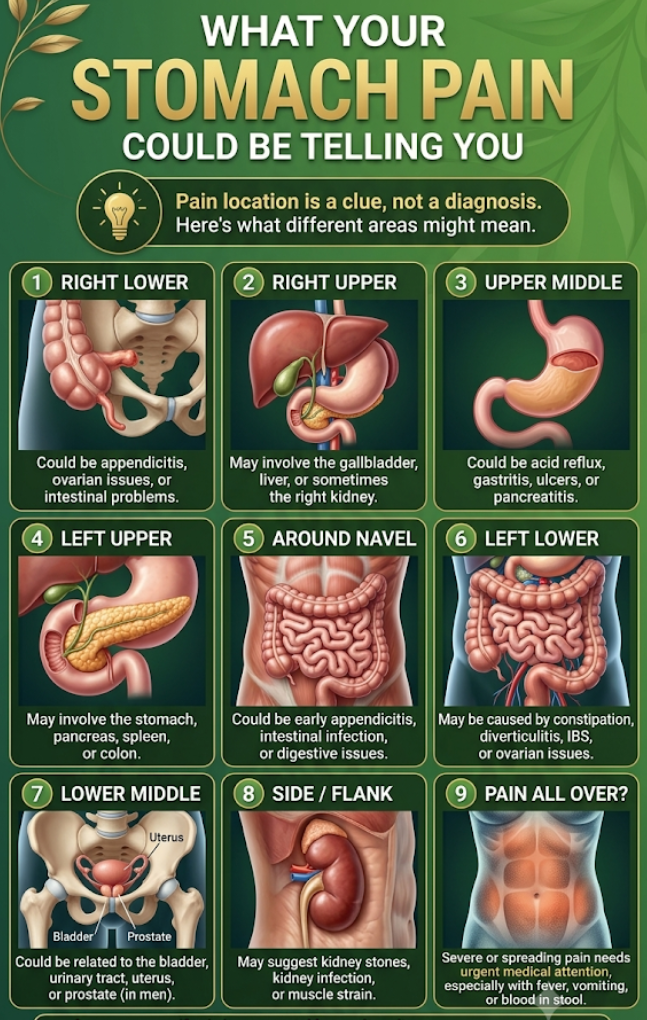
What Your Stomach Pain Location Could Be Telling You
Abdominal pain is one of the most common reasons people seek medical care, and where the pain is located can offer real, useful clues about what might be going on. That said, it’s important to understand upfront: pain location is a clue, not a diagnosis. Many conditions can cause pain in overlapping areas, and the only way to get an accurate diagnosis is through a proper medical evaluation.
Below, we walk through 9 general abdominal regions, what pain in each area might indicate, and when it’s time to seek urgent medical care rather than waiting it out at home.
Why Pain Location Matters, But Isn’t Everything
The abdomen contains many different organs packed into a relatively small space, and pain signals from these organs can sometimes overlap, radiate to nearby areas, or even refer to a completely different part of the body. This is why doctors use pain location as just one piece of a larger diagnostic picture, combined with the type of pain (sharp, dull, cramping), what makes it better or worse, associated symptoms, and physical examination findings, to figure out what’s actually happening.
1. Right Lower Abdomen
Pain in the right lower abdomen could be appendicitis, ovarian issues, or intestinal problems.
What’s in this area: The appendix, part of the small and large intestine, and in women, the right ovary and fallopian tube.
Worth knowing: Appendicitis is one of the more urgent possibilities here, and it often starts as pain around the navel that migrates to the right lower abdomen, sometimes accompanied by fever, nausea, or loss of appetite. Sudden, worsening, or severe pain in this area warrants prompt medical attention.
2. Right Upper Abdomen
Pain in the right upper abdomen may involve the gallbladder, liver, or sometimes the right kidney.
What’s in this area: The liver, gallbladder, and the upper portion of the right kidney.
Worth knowing: Gallbladder issues, like gallstones or gallbladder inflammation, often cause pain that worsens after eating fatty foods and can radiate to the right shoulder or back. Liver-related pain is often more of a dull ache, while kidney-related pain in this region tends to be sharper and can come in waves.
3. Upper Middle Abdomen
Pain in the upper middle abdomen could be acid reflux, gastritis, ulcers, or pancreatitis.
What’s in this area: The stomach, part of the pancreas, and the lower esophagus.
Worth knowing: This region is commonly associated with digestive issues related to stomach acid, and burning or gnawing pain here, especially related to eating or an empty stomach, often points toward reflux, gastritis, or ulcers. More severe, persistent pain that radiates to the back can be a sign of pancreatitis, which requires prompt medical evaluation.
4. Left Upper Abdomen
Pain in the left upper abdomen may involve the stomach, pancreas, spleen, or colon.
What’s in this area: Part of the stomach, the pancreas, the spleen, and the upper portion of the colon.
Worth knowing: The spleen is a less commonly discussed organ, but it can become enlarged or, in rare cases involving trauma, injured, both of which can cause pain in this region. Pancreatic issues can also cause pain here, sometimes in addition to or instead of upper middle abdominal pain.
5. Around the Navel
Pain around the navel could be early appendicitis, an intestinal infection, or general digestive issues.
What’s in this area: The small intestine and the beginning stages of pain referred from the appendix.
Worth knowing: As mentioned earlier, appendicitis classically starts as vague pain around the navel before localizing to the right lower abdomen over several hours. This migration pattern is actually one of the more recognizable signs doctors look for when evaluating possible appendicitis.
6. Left Lower Abdomen
Pain in the left lower abdomen may be caused by constipation, diverticulitis, IBS, or ovarian issues.
What’s in this area: Part of the large intestine (colon), and in women, the left ovary and fallopian tube.
Worth knowing: Diverticulitis, inflammation or infection of small pouches that can form in the colon wall, is a particularly common cause of pain specifically in this region, especially in older adults. It often comes with fever, changes in bowel habits, and tenderness when the area is pressed.
7. Lower Middle Abdomen
Pain in the lower middle abdomen could be related to the bladder, urinary tract, uterus, or prostate (in men).
What’s in this area: The bladder, uterus (in women), and prostate (in men).
Worth knowing: Urinary tract infections, bladder issues, and in women, menstrual or reproductive-related pain, commonly show up in this region. In men, prostate-related issues can also cause discomfort here. Burning with urination, urinary urgency, or pelvic pressure alongside this pain are worth mentioning to a doctor.
8. Side / Flank
Pain in the side or flank area may suggest kidney stones, a kidney infection, or muscle strain.
What’s in this area: The kidneys, positioned toward the back and sides of the abdomen.
Worth knowing: Kidney stone pain is often described as one of the most intense types of pain a person can experience, typically sharp, severe, and coming in waves, sometimes radiating from the back toward the groin. A kidney infection often causes a more constant ache, frequently accompanied by fever and urinary symptoms. Muscle strain in this area tends to worsen with movement or specific positions rather than coming in the waves typical of kidney stones.
9. Pain All Over (Diffuse Abdominal Pain)
Severe or spreading pain across the entire abdomen needs urgent medical attention, especially if accompanied by fever, vomiting, or blood in the stool.
Worth knowing: Widespread, severe abdominal pain, particularly if it comes on suddenly, is rigid or hard to the touch, or is accompanied by these additional symptoms, can indicate a serious condition, such as a ruptured appendix, bowel obstruction, or peritonitis (inflammation of the abdominal lining). This combination of symptoms should prompt an emergency room visit rather than a wait-and-see approach.
Other Factors That Matter Beyond Location
When evaluating abdominal pain, doctors also consider:
The type of pain — sharp, dull, cramping, burning, or colicky (coming in waves)
What makes it better or worse — eating, movement, lying down, or specific positions
Associated symptoms — fever, nausea, vomiting, changes in bowel habits, or urinary symptoms
Duration and progression — sudden onset versus gradual, and whether it’s worsening or staying the same
Personal medical history — prior surgeries, chronic conditions, and family history
When to Seek Emergency Care
Seek immediate medical attention if abdominal pain is accompanied by any of the following:
Severe, sudden, or rapidly worsening pain
A rigid, hard abdomen
High fever alongside abdominal pain
Persistent vomiting, especially if unable to keep fluids down
Blood in the stool or vomit
Signs of shock, such as rapid heartbeat, dizziness, or confusion
Pain following a significant injury or trauma to the abdomen
These symptoms can indicate a medical emergency, and prompt evaluation is important for the best possible outcome.
Frequently Asked Questions
Can stomach pain location alone diagnose the cause?
No, pain location is a helpful starting clue, but many conditions can cause overlapping symptoms in similar areas. A proper diagnosis typically requires a physical exam, and often imaging or lab tests, performed by a healthcare provider.
How do I know if my stomach pain is serious enough for the emergency room versus a regular doctor’s visit?
Severe, sudden, or rapidly worsening pain, especially with fever, persistent vomiting, blood in the stool, or a rigid abdomen, warrants an emergency room visit. Milder, gradual, or intermittent pain without these warning signs can often be evaluated by your regular doctor, though it’s still worth having any persistent abdominal pain checked out.
Why does appendicitis pain start near the navel and then move?
This migration pattern happens because the early inflammation of the appendix initially triggers a more generalized pain signal near the navel, and as inflammation progresses and irritates the surrounding abdominal lining, the pain becomes more localized and intense in the right lower abdomen, where the appendix is actually located.
Can abdominal pain be caused by something outside the digestive system?
Yes. Conditions affecting the reproductive organs, urinary tract, kidneys, and even, in some cases, the heart or lungs, can all cause pain that’s felt in the abdomen, which is part of why a thorough medical evaluation, rather than assumptions based on location alone, is so important.
This article is intended for general informational purposes and is not a substitute for professional medical advice, diagnosis, or treatment. If you’re experiencing concerning or severe abdominal pain, seek medical attention promptly.