
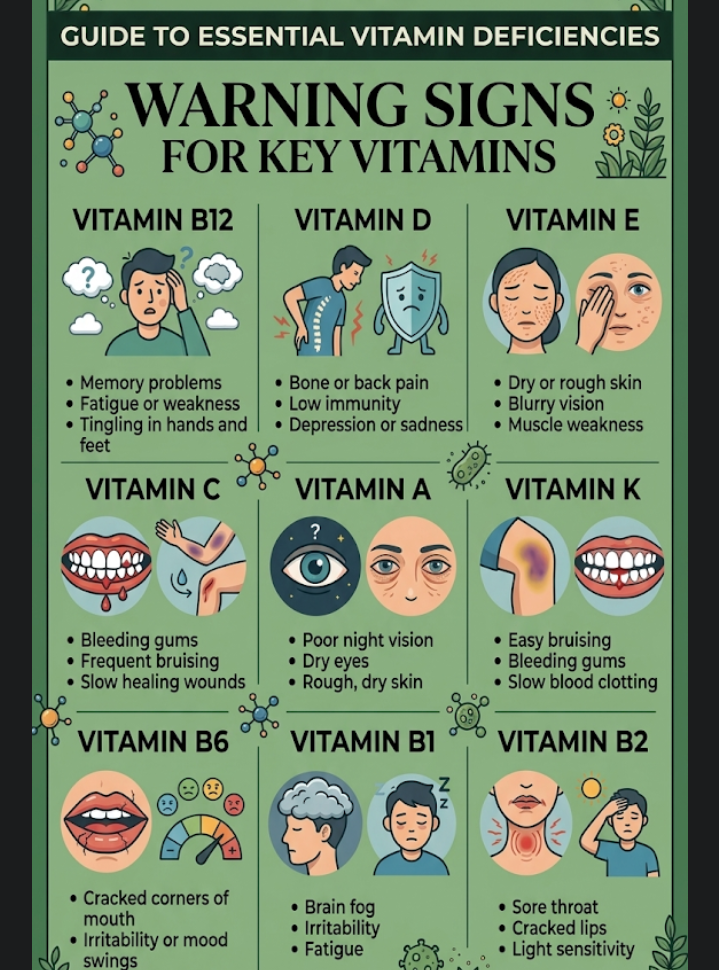
Warning Signs of Vitamin Deficiencies: A Complete Guide to 9 Key Vitamins
Vitamin deficiencies often develop gradually, which means the early warning signs can be easy to dismiss as everyday tiredness, stress, or just “getting older.” But many of these symptoms are your body’s way of signaling that something specific is missing from your diet, or that something is interfering with how well you absorb certain nutrients. Recognizing these patterns is the first step toward getting properly tested and, if needed, treated.
Below, we walk through the warning signs associated with 9 key vitamins, what each vitamin actually does in the body, and what steps to take if you recognize these symptoms in yourself.
Why Vitamin Deficiencies Can Be Easy to Miss
Many vitamin deficiency symptoms overlap with common, everyday complaints, fatigue, irritability, or minor skin changes, which makes it easy to attribute them to stress, poor sleep, or simply having a busy week. Deficiencies also tend to build slowly, especially for vitamins the body can store for a while, like B12 and vitamin A, meaning symptoms often don’t appear until a deficiency has been developing for months. This is why understanding specific symptom patterns, rather than just generic tiredness, can be a useful first step in figuring out whether a deficiency might be behind how you’re feeling.
Vitamin B12
Warning signs: Memory problems, fatigue or weakness, and tingling in the hands and feet.
Vitamin B12 is essential for red blood cell production and nerve function. Deficiency is more common in older adults, vegans and vegetarians, and people with certain digestive conditions that affect absorption. The tingling sensation specifically relates to B12’s role in maintaining the protective coating around nerves.
Vitamin D
Warning signs: Bone or back pain, low immunity, and depression or sadness.
Vitamin D supports calcium absorption for bone health and plays a role in immune function. Because it’s produced by the skin in response to sunlight, deficiency is more common in people with limited sun exposure, darker skin tones (which require more sun exposure to produce the same amount of vitamin D), and those living in northern climates, especially during winter months.
Vitamin E
Warning signs: Dry or rough skin, blurry vision, and muscle weakness.
Vitamin E is a fat-soluble antioxidant that helps protect cells from oxidative damage. Deficiency is relatively uncommon in people eating a varied diet, but it can occur in people with fat malabsorption conditions, since vitamin E requires dietary fat to be properly absorbed.
Vitamin C
Warning signs: Bleeding gums, frequent bruising, and slow healing wounds.
Vitamin C is essential for collagen production, which supports skin, blood vessel, and connective tissue health, as well as proper wound healing. Severe, prolonged deficiency can lead to scurvy, though this is rare in developed countries with access to fresh produce.
Vitamin A
Warning signs: Poor night vision, dry eyes, and rough, dry skin.
Vitamin A plays a critical role in vision, particularly in low-light conditions, as well as skin health and immune function. Deficiency is more common in areas with limited access to vitamin A-rich foods, though certain digestive conditions can also increase risk regardless of diet.
Vitamin K
Warning signs: Easy bruising, bleeding gums, and slow blood clotting.
Vitamin K is essential for proper blood clotting, and deficiency can lead to excessive bleeding or bruising even from minor injuries. Deficiency is relatively uncommon in adults with a typical diet, but can occur with certain medications, like long-term antibiotic use, or malabsorption conditions.
Vitamin B6
Warning signs: Cracked corners of the mouth, irritability or mood swings, and tingling hands or feet.
Vitamin B6 plays a role in neurotransmitter production, which affects mood regulation, as well as nerve function more broadly. It’s also involved in immune function and red blood cell production.
Vitamin B1 (Thiamine)
Warning signs: Brain fog, irritability, and fatigue.
Vitamin B1 is essential for converting food into energy and supports proper nerve function. Deficiency is more common in people with high alcohol intake, since alcohol interferes with B1 absorption, as well as in those with restrictive diets.
Vitamin B2 (Riboflavin)
Warning signs: Sore throat, cracked lips, and light sensitivity.
Vitamin B2 plays a role in energy production and supports healthy skin and eye function. Deficiency often occurs alongside deficiencies in other B vitamins, since these nutrients are commonly found together in similar food sources.
How Vitamin Deficiencies Are Diagnosed
The only reliable way to confirm a vitamin deficiency is through blood testing ordered by a doctor. While the symptoms above can offer helpful clues, many of them overlap across different deficiencies, and some can also be caused by entirely unrelated conditions. If you recognize several symptoms from one vitamin category, it’s worth bringing them up with your doctor rather than starting supplementation based on symptoms alone.
Common Risk Factors for Vitamin Deficiencies
Restrictive diets, including vegan, vegetarian, or very limited eating patterns
Digestive conditions, such as celiac disease, Crohn’s disease, or a history of certain gastric surgeries, which can impair nutrient absorption
Age, since older adults often absorb certain nutrients, like B12, less efficiently
Limited sun exposure, a key risk factor specifically for vitamin D deficiency
Alcohol use, which can interfere with the absorption of several B vitamins
Certain medications, including long-term acid reducers, metformin, and some antibiotics, which can affect nutrient absorption
What to Do If You Recognize These Symptoms
Track your symptoms over a couple of weeks to see if a consistent pattern emerges, rather than reacting to a single off day.
Talk to your doctor about your symptoms and risk factors, and ask about blood testing for the specific vitamins that match what you’re experiencing.
Avoid self-diagnosing and high-dose supplementation without guidance, since some vitamins, particularly fat-soluble ones like A, D, E, and K, can build up in the body and cause harm in excessive amounts.
Focus on a varied, whole-foods diet as a foundation, since most vitamin needs can be met through food for people without absorption issues or significant dietary restrictions.
Follow up after treatment if a deficiency is confirmed and treated, since your doctor will likely want to recheck levels to confirm improvement.
Frequently Asked Questions
Can I have more than one vitamin deficiency at the same time?
Yes, this is actually quite common, especially for B vitamins, which tend to occur together since they’re often found in similar food sources and can be affected by the same underlying issues, like restrictive diets or absorption problems.
Is it safe to take a multivitamin instead of getting tested?
A general multivitamin can be a reasonable safety net for many people, but it isn’t a substitute for identifying and properly treating a specific, significant deficiency, which often requires higher, more targeted doses than a standard multivitamin provides. If you’re experiencing clear symptoms, testing is a better first step than guessing.
How long does it take to correct a vitamin deficiency?
This varies significantly by vitamin and by the severity of the deficiency. Water-soluble vitamins like vitamin C and the B vitamins often show symptom improvement within weeks of treatment, while deficiencies involving nerve-related symptoms, such as B12, can take longer to fully resolve, and in severe or prolonged cases, some nerve-related symptoms may not fully reverse.
Can eating a healthy diet completely prevent all vitamin deficiencies?
For most people without absorption issues or significant dietary restrictions, a varied, balanced diet can meet the vast majority of vitamin needs. However, certain factors, like limited sun exposure for vitamin D or a vegan diet for vitamin B12, mean that diet alone isn’t always sufficient, even when eating habits are otherwise healthy.
This article is intended for general informational purposes and is not a substitute for professional medical advice, diagnosis, or treatment. If you’re experiencing symptoms of a vitamin deficiency, consult your healthcare provider for proper testing and guidance.