
What Your Feet May Reveal About Your Health: 9 Signs to Know
Your feet are farther from your heart than almost any other part of your body, which makes them especially sensitive to changes in circulation, nutrition, and nerve function. Because of this, certain foot symptoms, swelling, cracking, tingling, or unusual coldness, can sometimes be an early clue that something else in the body needs attention.
Below, we walk through 9 common foot symptoms, what they’re commonly associated with, and when it’s worth bringing them up with a doctor. It’s important to understand that these are potential associations, not diagnoses. Foot symptoms can have many possible causes, and the only way to know what’s actually behind yours is a proper medical evaluation.
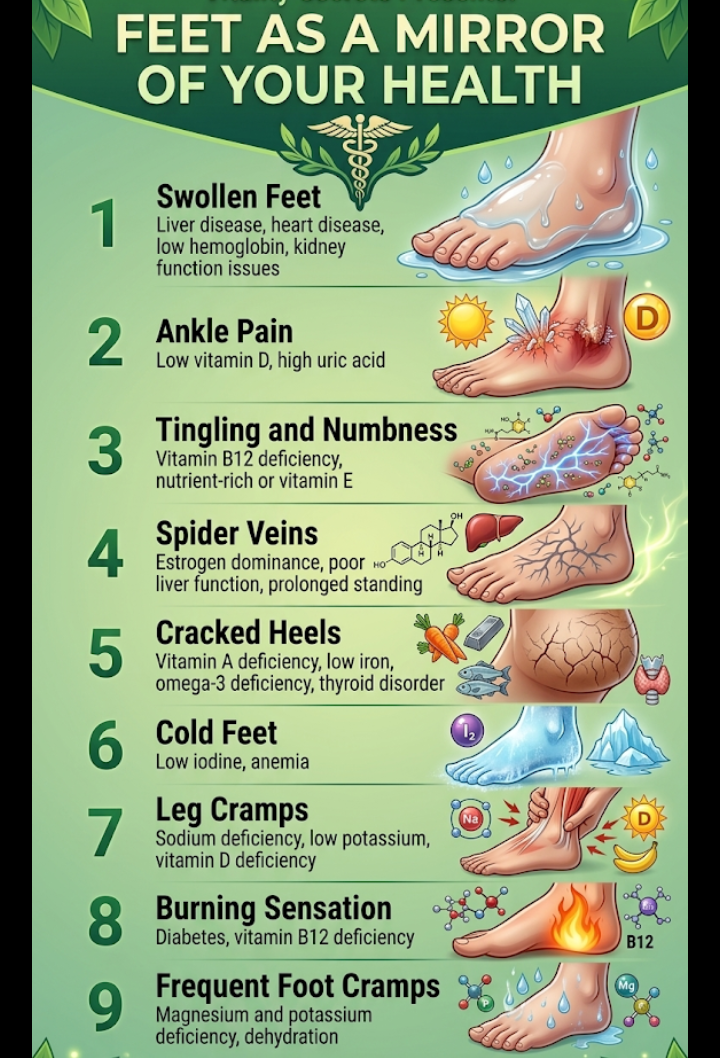
1. Swollen Feet
Swelling in the feet, medically known as edema, can be associated with several underlying conditions, including liver disease, heart disease, low hemoglobin, or kidney function issues. Swelling occurs when fluid builds up in the tissues, which can happen when the heart, kidneys, or liver aren’t managing fluid balance as effectively as they should.
Worth knowing: Mild, occasional swelling after long periods of standing or sitting, or during pregnancy, is common and not necessarily a cause for concern. Sudden, severe, or one-sided swelling, especially with pain, warrants prompt medical attention.
2. Ankle Pain
Ankle pain that isn’t related to an obvious injury has been associated with low vitamin D levels and high uric acid, the latter of which is linked to gout, a form of inflammatory arthritis that commonly affects the joints of the feet and ankles.
Worth knowing: Gout-related ankle pain often comes on suddenly and can be quite intense, sometimes with visible redness and swelling. Vitamin D levels can be checked with a simple blood test if deficiency is suspected.
3. Tingling and Numbness
A pins-and-needles sensation or numbness in the feet has been associated with vitamin B12 deficiency, as well as other nutrient-related or vitamin E-related issues. B12 plays a direct role in maintaining the protective coating around nerves, and prolonged deficiency can lead to this type of nerve-related sensation.
Worth knowing: Tingling and numbness in the feet can also be related to diabetes-related nerve damage (peripheral neuropathy), so this symptom is worth mentioning to a doctor regardless of suspected cause, particularly if it’s persistent or worsening.
4. Spider Veins
Small, visible clusters of veins on the feet or ankles have been associated with estrogen dominance, poor liver function, and prolonged standing. Veins can become more visible when blood isn’t circulating as efficiently, and hormonal factors can influence vein health as well.
Worth knowing: Spider veins are extremely common and often relate simply to genetics, age, and time spent on your feet, rather than always signaling an underlying condition. However, if they appear suddenly alongside other symptoms, it’s worth a conversation with your doctor.
5. Cracked Heels
Dry, cracked heels have been associated with vitamin A deficiency, low iron, omega-3 deficiency, and thyroid disorders. Skin health depends heavily on adequate nutrient intake and proper hormone regulation, both of which can be affected by these underlying issues.
Worth knowing: In many cases, cracked heels are simply related to dry skin, friction, and a lack of moisturizing, especially in dry climates or with open-backed shoes. Persistent, severe, or unusually deep cracking that doesn’t respond to basic skincare is worth discussing with a doctor.
6. Cold Feet
Feet that consistently feel cold, even in warm environments, have been associated with low iodine levels and anemia. Both thyroid function (which iodine supports) and healthy red blood cell levels (impacted by anemia) play a role in how well the body regulates temperature and delivers warm, oxygenated blood to the extremities.
Worth knowing: Occasionally cold feet, especially in cold weather, are normal. Persistent coldness, especially paired with fatigue, hair thinning, or other symptoms, is worth checking with a doctor, since thyroid and anemia issues are both diagnosable with bloodwork.
7. Leg Cramps
Cramping in the legs and feet has been associated with sodium deficiency, low potassium, and vitamin D deficiency. Electrolytes like sodium and potassium play a direct role in muscle contraction and relaxation, and imbalances can trigger involuntary cramping.
Worth knowing: Leg cramps are also commonly related to dehydration, overexertion, or simply sitting or lying in one position for too long. Frequent, severe, or unexplained cramping is worth mentioning to a doctor, who can check your electrolyte and vitamin levels with bloodwork.
8. Burning Sensation
A burning sensation in the feet has been associated with diabetes and vitamin B12 deficiency. Diabetes-related nerve damage, in particular, is a well-documented cause of burning foot sensations, and it’s one of the more specific symptoms doctors look for when assessing diabetic neuropathy.
Worth knowing: A persistent burning sensation in the feet, especially if you have diabetes or risk factors for it, should be evaluated relatively promptly, since early management of neuropathy can help prevent it from worsening.
9. Frequent Foot Cramps
Ongoing, recurring foot cramps have been associated with magnesium and potassium deficiency, as well as dehydration. These minerals are essential for normal muscle and nerve function, and inadequate intake or excessive fluid loss can both contribute to cramping.
Worth knowing: Staying well-hydrated and eating a diet rich in magnesium and potassium (leafy greens, bananas, nuts, and seeds are all good sources) is a reasonable first step, but frequent cramping that doesn’t improve is worth discussing with a doctor.
Why Foot Symptoms Are Worth Paying Attention To
Because the feet are the farthest point from the heart, they’re often among the first places where circulation issues, nerve damage, or nutrient deficiencies become noticeable. This is particularly true for people with diabetes, who are often advised to check their feet daily, since foot symptoms can be an early warning sign of complications that are much easier to manage when caught early.
When to See a Doctor
While many foot symptoms are minor and resolve on their own, you should see a doctor if you experience:
Sudden or severe swelling, especially if it’s one-sided
Persistent numbness, tingling, or burning that doesn’t improve
Skin changes, sores, or cracks that don’t heal, particularly if you have diabetes
Cold feet paired with other symptoms like fatigue or unexplained weight changes
Frequent, unexplained cramping that disrupts your sleep or daily activities
Any foot symptom that is new, worsening, or paired with other concerning symptoms
A doctor can run bloodwork to check for nutrient deficiencies, thyroid function, blood sugar, and other markers that can help identify the actual cause behind your symptoms, rather than guessing based on symptoms alone.
Frequently Asked Questions
Can foot symptoms alone diagnose a vitamin deficiency?
No, foot symptoms can be a helpful clue, but they can’t confirm a specific diagnosis on their own. Bloodwork is the only reliable way to confirm a vitamin or mineral deficiency, since many different conditions can cause similar foot symptoms.
Are cold feet always related to a health condition?
Not necessarily. Cold feet are very commonly just related to normal circulation patterns, especially in cooler environments or for people who naturally run cold. It’s the persistent, unexplained pattern, especially alongside other symptoms, that’s more worth investigating.
Why are people with diabetes advised to check their feet daily?
Diabetes can cause both nerve damage (neuropathy) and reduced circulation in the feet, which means injuries, sores, or infections can go unnoticed and worsen more quickly than they would otherwise. Daily foot checks help catch problems early, when they’re much easier to treat.
What’s the difference between normal cracked heels and a medical concern?
Mild dryness and cracking that improves with regular moisturizing and proper footwear is usually just a skin issue. Deep, painful cracks that don’t respond to basic care, or that are paired with other symptoms like fatigue or hair changes, are more worth discussing with a doctor to rule out an underlying nutritional or thyroid-related cause.
This article is intended for general informational purposes and is not a substitute for professional medical advice, diagnosis, or treatment. If you’re experiencing persistent or concerning foot symptoms, consult your healthcare provider for proper evaluation.