
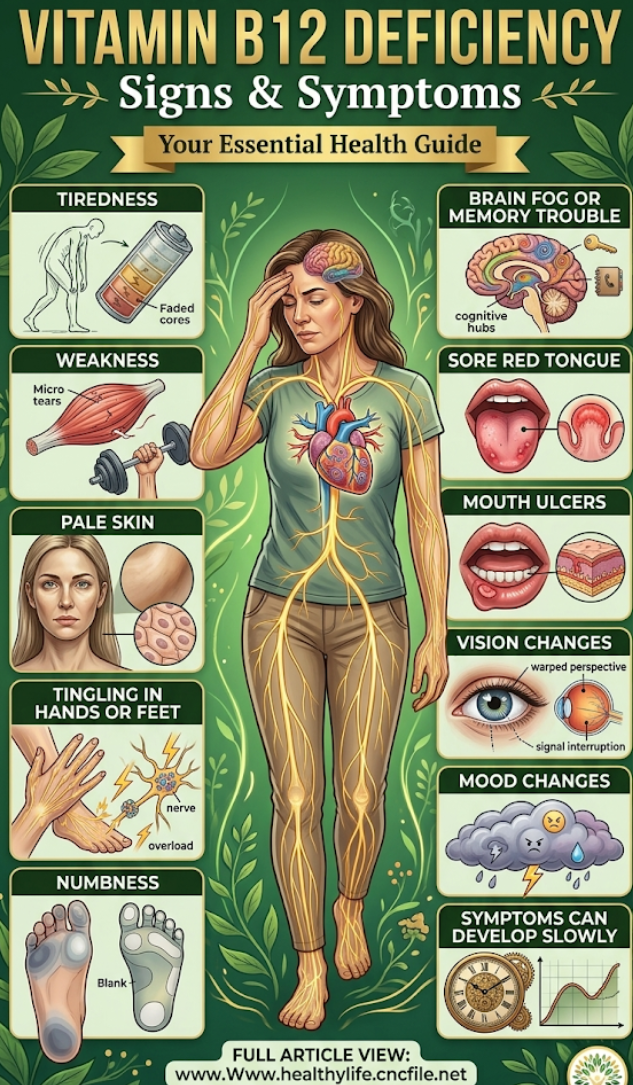
Vitamin B12 Deficiency: 12 Signs and Symptoms to Know
Vitamin B12 plays a critical role in nerve function, red blood cell production, and DNA synthesis, which is why a deficiency can affect so many different systems in the body at once. The tricky part is that B12 deficiency symptoms often develop slowly, sometimes over months or even years, which means they can be easy to dismiss as normal fatigue or just “getting older” rather than a nutritional issue that’s actually treatable.
Below, we walk through 12 common signs and symptoms of vitamin B12 deficiency, what’s happening in the body behind each one, and when it’s worth talking to a doctor about testing.
Why Vitamin B12 Matters
Vitamin B12 is essential for producing healthy red blood cells, maintaining the protective coating around nerves, and supporting normal brain function. Because the body stores B12 in the liver, a deficiency often takes a while to develop, but by the time symptoms appear, they can affect energy levels, cognitive function, mood, and even nerve sensation in the hands and feet.
Certain groups are at higher risk for B12 deficiency, including older adults, people following a vegan or vegetarian diet, people with digestive conditions that affect nutrient absorption (like celiac disease or Crohn’s disease), people who’ve had certain types of weight-loss surgery, and people taking medications like metformin or long-term acid reducers, which can interfere with B12 absorption.
12 Signs and Symptoms of Vitamin B12 Deficiency
1. Tiredness
Low B12 can leave you feeling very tired or low on energy, since B12 is essential for producing healthy red blood cells that carry oxygen throughout the body. When red blood cell production is impaired, tissues receive less oxygen, which can result in persistent fatigue even after adequate rest.
2. Weakness
Along with fatigue, the body may feel weak or less strong than usual. This can affect everyday tasks and is often one of the earlier, more generalized symptoms people notice.
3. Pale Skin
Some people with B12 deficiency look pale or washed out. This happens because B12 deficiency can lead to a specific type of anemia called megaloblastic anemia, in which red blood cells are larger than normal and less effective at carrying oxygen, which can affect skin tone.
4. Tingling in Hands or Feet
A pins-and-needles sensation in the hands or feet can occur when nerves are affected by prolonged B12 deficiency. B12 plays a direct role in maintaining the myelin sheath, the protective coating around nerves, and low levels over time can lead to nerve-related sensations like tingling.
5. Numbness
Similarly, a loss of feeling in the fingers, toes, hands, or feet can develop as nerve function becomes more significantly affected. This symptom, along with tingling, is one of the more specific signs that prompts doctors to consider B12 deficiency as a possible cause.
6. Balance Problems
Walking may start to feel less steady or awkward as nerve-related symptoms progress. This happens because B12 deficiency can affect the nerves involved in coordination and proprioception, your body’s sense of where it is in space.
7. Brain Fog or Memory Trouble
Thinking may feel slower, foggy, or less clear when B12 levels are low. B12 plays a role in normal brain and nervous system function, and deficiency has been associated with cognitive symptoms, particularly in older adults.
8. Sore, Red Tongue
The tongue may look red, sore, or smoother than usual, a symptom sometimes referred to as glossitis. This happens because B12 deficiency can affect the rapidly dividing cells of the tongue’s surface, leading to visible changes in its texture and color.
9. Mouth Ulcers
Some people with B12 deficiency develop mouth sores or soreness, which can occur alongside or separately from tongue changes, and is thought to be related to the same impact on rapidly dividing cells in the mouth.
10. Vision Changes
Blurred vision or visual problems can occur in some cases of significant, prolonged B12 deficiency, related to changes in the optic nerve. This is a less common symptom but is worth mentioning to a doctor if it occurs alongside other signs on this list.
11. Mood Changes
Some people feel low, irritable, or emotionally off when B12 levels are deficient. B12 is involved in the production of neurotransmitters that affect mood, and research has looked at the relationship between B12 status and symptoms of depression and irritability.
12. Symptoms That Develop Slowly Over Time
One of the most important things to understand about B12 deficiency is that symptoms can build gradually over months or even years before becoming noticeable, since the body stores a reserve of B12 in the liver. This slow progression is part of why the condition can go unrecognized for a long time.
Common Causes of Vitamin B12 Deficiency
Dietary intake B12 is found almost exclusively in animal products, so vegans and vegetarians who don’t supplement are at higher risk
Pernicious anemia :An autoimmune condition that affects the body’s ability to absorb B12
Digestive conditions : Conditions like celiac disease, Crohn’s disease, or prior gastric surgery can impair B12 absorption
Age-related changes : Stomach acid, which is needed to release B12 from food, naturally decreases with age
Certain medications : Long-term use of acid-reducing medications or metformin can interfere with B12 absorption
How Vitamin B12 Deficiency Is Diagnosed
B12 deficiency is diagnosed through a simple blood test that measures B12 levels, and sometimes related markers like methylmalonic acid or homocysteine, which can be elevated even when B12 levels appear borderline. If you’re experiencing several symptoms from this list, a doctor can order this testing and help determine whether B12 deficiency, or another cause entirely, is behind what you’re experiencing.
How Vitamin B12 Deficiency Is Typically Treated
Treatment depends on the cause and severity of the deficiency, and may include:
Oral B12 supplements, often used for mild deficiency or dietary causes
B12 injections, commonly used for more significant deficiency or absorption-related causes, like pernicious anemia
Dietary changes, incorporating more B12-rich foods like meat, fish, eggs, and dairy, or fortified foods for those following a plant-based diet
Most people see improvement in symptoms like fatigue relatively quickly after starting treatment, though nerve-related symptoms like tingling or numbness can take longer to resolve, and in cases of prolonged, severe deficiency, some nerve damage may be permanent, which is part of why early diagnosis and treatment matter.
When to See a Doctor
You should talk to a doctor about B12 testing if you’re experiencing several symptoms from this list, especially if you fall into a higher-risk group, such as older adults, those following a vegan or vegetarian diet, or those with a digestive condition affecting nutrient absorption. Symptoms like persistent tingling, numbness, balance problems, or noticeable cognitive changes are worth bringing up sooner rather than later, since early treatment gives the best chance of fully resolving symptoms.
Frequently Asked Questions
Can vitamin B12 deficiency be reversed?
In most cases, yes, especially when caught and treated early. Symptoms like fatigue and mood changes often improve within weeks of starting treatment, though nerve-related symptoms can take longer, and severe, long-standing deficiency may result in some symptoms that don’t fully resolve.
How common is vitamin B12 deficiency?
B12 deficiency is relatively common, particularly among older adults, vegans and vegetarians, and people with certain digestive conditions. Estimates vary, but it’s considered common enough that many doctors routinely screen for it in at-risk populations.
What foods are highest in vitamin B12?
Animal products are the primary natural source of B12, including meat, fish, poultry, eggs, and dairy products. Because B12 isn’t naturally found in plant foods, people following a vegan diet are generally advised to use fortified foods or take a B12 supplement.
Can I have a B12 deficiency even if I eat meat regularly?
Yes, deficiency isn’t only related to diet. Conditions that affect absorption, such as pernicious anemia, digestive disorders, or certain medications, can cause deficiency even in people who consume plenty of B12-rich foods, since the issue is with absorption rather than intake.
This article is intended for general informational purposes and is not a substitute for professional medical advice, diagnosis, or treatment. If you’re experiencing symptoms of vitamin B12 deficiency, consult your healthcare provider for proper testing and guidance.