
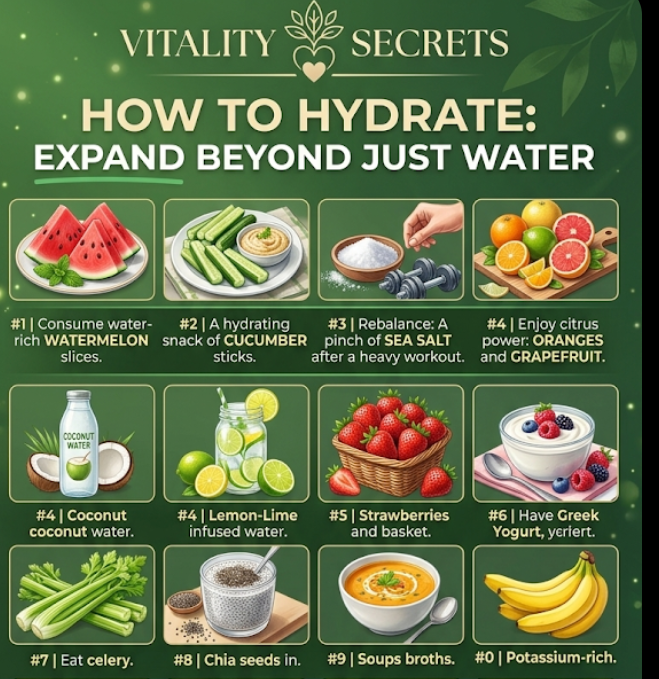
How to Hydrate Beyond Water: 21 Foods and Habits That Help
Drinking water is essential, but it’s not the only way your body gets and retains fluid. Many fruits, vegetables, and everyday foods have naturally high water content, and some also provide electrolytes like potassium, sodium, and magnesium, minerals that actually help your body hold onto and use that water effectively. Building more of these hydrating foods into your day is a simple, often overlooked way to support hydration, especially for people who struggle to drink enough plain water.
Below are 21 foods, drinks, and habits that support hydration beyond a glass of water, organized to help you build a more complete daily approach.
Why Hydration Is About More Than Just Water Intake
Proper hydration depends on both fluid intake and electrolyte balance. Electrolytes, minerals like sodium, potassium, and magnesium, help regulate how fluid moves in and out of your cells. This is part of why drinking large amounts of plain water without any electrolytes, especially after heavy sweating, doesn’t always fully restore hydration status. Pairing water-rich foods with electrolyte sources gives your body what it needs to actually use and retain the fluid you’re taking in.
High Water Content Fruits and Vegetables
Watermelon
Watermelon is about 92% water, making it one of the most hydrating fruits available, and it also provides electrolytes like potassium.
Cucumber
Cucumber is roughly 95% water, making it one of the most hydrating vegetables you can snack on, with very few calories.
Strawberries
Strawberries are around 91% water and also provide vitamin C and antioxidants alongside their hydrating properties.
Cantaloupe
Cantaloupe is another high-water-content melon, also rich in potassium and vitamin A.
Grapes
Grapes are convenient, portable, and provide meaningful water content along with natural sugars and antioxidants.
Tomatoes
Tomatoes are about 94% water and also provide lycopene, an antioxidant compound, alongside their hydrating benefits.
Kiwi
Kiwi provides good water content along with a strong dose of vitamin C and fiber.
Pineapple
Pineapple offers high water content along with bromelain, an enzyme that’s been studied for its potential digestive benefits.
Celery
Celery is about 95% water, making it one of the most hydrating vegetables, and it’s also a good source of dietary fiber.
Leafy Greens
Leafy greens like spinach and lettuce have high water content and also provide magnesium and potassium, supporting the electrolyte side of hydration.
Citrus and Flavor Boosters
Oranges and Grapefruit
Citrus fruits like oranges and grapefruit have high water content and provide potassium and vitamin C, making them a hydrating and nutrient-dense snack option.
Lemon or Lime in Water
Adding lemon or lime to water doesn’t add significant hydration on its own, but it can make plain water more appealing, which may encourage you to drink more of it throughout the day, an easy behavioral hack for anyone who struggles with plain water.
Electrolyte and Mineral-Rich Options
A Pinch of Sea Salt After Heavy Sweating
After significant sweating, whether from exercise, heat, or illness, adding a small pinch of sea salt to water or food can help replace sodium lost through sweat, supporting better fluid retention than water alone.
Coconut Water
Coconut water naturally contains potassium and other electrolytes, making it a popular choice for rehydrating after exercise or in hot weather.
Bananas
Bananas are a well-known source of potassium, an electrolyte that plays a key role in fluid balance and muscle function.
Electrolyte-Rich Foods After Exercise
Pairing water intake with electrolyte-rich foods after a workout, like a banana, a pinch of salt, or an electrolyte drink, helps replace what’s lost through sweat more effectively than water alone.
Mineral-Rich Foods in General
Building a diet that regularly includes mineral-rich foods, like leafy greens, nuts, seeds, and dairy, supports the electrolyte balance your body needs to use hydration effectively on an ongoing basis, not just after exercise.
Protein and Fat-Based Hydration Sources
Greek Yogurt
Greek yogurt has a naturally high water content and also provides protein, making it a filling, hydrating snack option.
Kefir
Kefir, a fermented dairy drink, provides both fluid and probiotics, adding a gut-health benefit alongside its hydrating properties.
Warm and Savory Hydration
Soups and Broths
Soups and broths are largely water-based and often contain added sodium and minerals, making them an effective way to combine fluid and electrolyte intake, especially useful when you’re sick or have a reduced appetite for solid food.
Herbal Tea
Herbal tea contributes to overall fluid intake and, unlike caffeinated beverages, doesn’t have the same mild diuretic effect, making it a reliable source of hydration, especially as a warm alternative when plain water feels unappealing.
A Simple Habit to Build In
Pair Fluids With Meals Throughout the Day
Rather than trying to drink large amounts of water all at once, pairing fluid intake with each meal, a glass of water with breakfast, lunch, and dinner, spreads hydration out more evenly across the day and is often easier to maintain consistently than relying on remembering to drink water at random times.
Also Worth Adding: Chia Seeds
Chia seeds absorb significant amounts of liquid and form a gel-like consistency, which some people find helps create a sense of fullness and hydration when added to water, smoothies, or oatmeal.
How to Build a More Hydrating Daily Routine
Start your day with a glass of water paired with a piece of hydrating fruit, like an orange or a handful of berries
Snack on cucumber, celery, or watermelon instead of drier, more processed snacks
Add a pinch of salt to water or food after a sweaty workout or on particularly hot days
Include a soup or broth-based meal on days when your appetite or thirst feels low
Keep herbal tea on hand as a warm, hydrating alternative to plain water
Pair a glass of water with every meal as a simple, repeatable habit that adds up over the day
Signs You May Need to Focus More on Hydration
- Dark yellow urine
- Persistent thirst
- Fatigue or low energy
- Headaches
- Dry lips or skin
- Dizziness, especially when standing up quickly
If you experience these signs frequently despite making an effort to hydrate, or if you have a medical condition that affects fluid balance, it’s worth discussing your hydration needs specifically with a doctor.
Frequently Asked Questions
Can I get enough hydration from food alone, without drinking water?
While water-rich foods contribute meaningfully to hydration, they generally aren’t sufficient on their own to meet total daily fluid needs for most people. Food and drinking water work best together, with food-based hydration acting as a helpful supplement rather than a full replacement.
Do I need added electrolytes if I’m not exercising heavily?
For most people going about a typical day without significant sweating, a balanced diet that includes some of the foods listed above generally provides sufficient electrolytes. Added electrolyte drinks or supplements are more specifically useful after heavy sweating, illness involving vomiting or diarrhea, or intense, prolonged exercise.
Does caffeine really dehydrate you?
Caffeinated beverages do have a mild diuretic effect, but research suggests that for people who consume caffeine regularly, this effect is fairly modest and doesn’t significantly offset the fluid contributed by the beverage itself. Herbal tea remains a good caffeine-free option if you’re specifically trying to maximize hydration.
How much water should I actually drink each day?
General hydration needs vary based on body size, activity level, climate, and overall health, so there’s no single number that applies to everyone. A common general guideline is to drink enough that your urine stays a pale yellow color throughout the day, adjusting intake up during exercise, heat, or illness.
This article is intended for general informational purposes and is not a substitute for professional medical advice. If you have a health condition that affects fluid balance, or concerns about your hydration needs, consult your healthcare provider.