
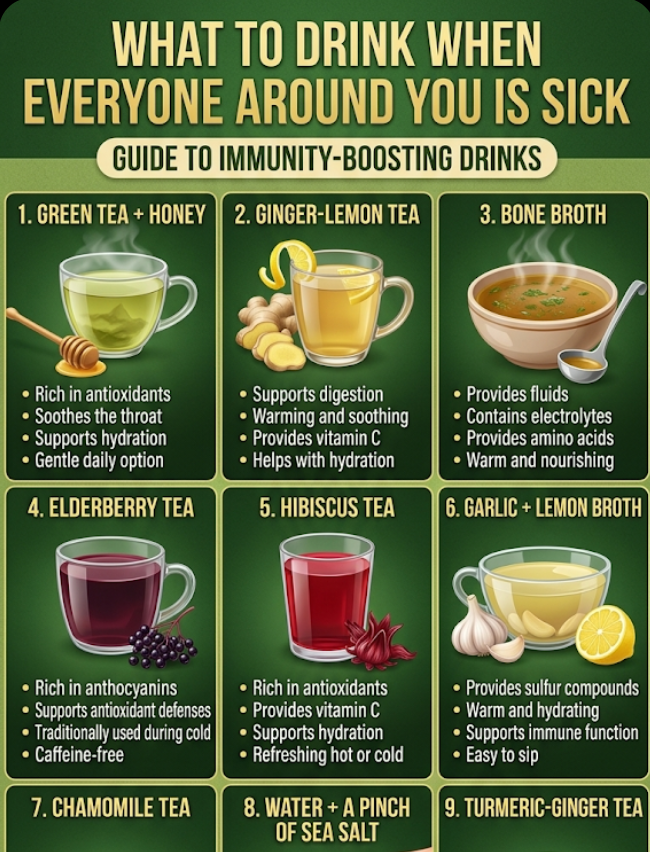
9 Comforting Drinks to Try When Everyone Around You Is Sick
When cold and flu season sweeps through your household, office, or friend group, reaching for something warm and comforting is often as much about self-care as it is about actual immune support. While no drink can prevent illness outright, several warm beverages genuinely do support hydration, provide soothing relief for a scratchy throat, and offer nutrients associated with healthy immune function, which makes them a reasonable, low-risk addition to your routine during a season when everyone around you seems to be sniffling.
Below, we break down 9 comforting drinks worth keeping in rotation, what’s actually behind each one, and how to use them as part of a broader approach to staying well.
Why These Drinks Can Genuinely Help
Staying hydrated is one of the most consistently recommended pieces of advice during cold and flu season, since adequate fluid intake helps thin mucus, soothe irritated throat tissue, and supports the body’s overall function while fighting off illness. Beyond hydration, several ingredients in these drinks, like the vitamin C in citrus, the sulfur compounds in garlic, and the antioxidants in elderberry and hibiscus, have research behind them for supporting general immune health, even if they aren’t a guaranteed way to prevent getting sick.
1. Green Tea and Honey
Green tea is rich in antioxidants, particularly catechins, which have been studied for their potential immune-supporting properties. Combined with honey, which soothes the throat and has research behind it for easing cough symptoms, this makes for a gentle daily option that’s easy to drink even with a mild sore throat.
Why it helps: The combination of antioxidants and honey’s soothing, coating effect on the throat offers both a comfort benefit and general antioxidant support.
2. Ginger-Lemon Tea
Ginger supports digestion and has a naturally warming, soothing quality, while lemon provides vitamin C and helps with hydration. Together, they create a bright, warming drink that many people find helpful when dealing with an upset stomach alongside cold symptoms.
Why it helps: Ginger’s soothing properties are particularly useful if nausea accompanies your symptoms, while the vitamin C from lemon supports your overall nutrient intake during illness.
3. Bone Broth
Bone broth provides fluids, contains electrolytes, and offers amino acids from the collagen and connective tissue used to make it, all wrapped in a warm, nourishing package that’s easy to consume even with a reduced appetite.
Why it helps: The combination of fluid, sodium, and other electrolytes makes bone broth a genuinely practical choice for supporting hydration when you’re not feeling up to eating much solid food.
4. Elderberry Tea
Elderberry is rich in anthocyanins, antioxidant compounds that give the berries their deep purple color, and it has been traditionally used during cold season for generations. Some research has specifically looked at elderberry extract in relation to reducing the duration and severity of cold and flu symptoms, though study sizes have generally been small.
Why it helps: Beyond its traditional use, elderberry’s antioxidant profile and caffeine-free nature make it a reasonable choice to sip throughout the day without worrying about overdoing your caffeine intake.
5. Hibiscus Tea
Hibiscus tea is rich in antioxidants and provides vitamin C compounds, supporting hydration while delivering a tart, refreshing flavor that can be enjoyed hot or cold depending on your preference and symptoms.
Why it helps: The vitamin C content and hydration support make hibiscus tea a solid option, and its refreshing quality can be a nice change of pace from heavier, warmer drinks if you’re dealing with a fever.
6. Garlic and Lemon Broth
Garlic provides sulfur compounds, most notably allicin, which have been studied for their potential role in supporting immune function, while lemon adds vitamin C and brightness to the broth. Together, this combination is warm, hydrating, and easy to sip even when your appetite is low.
Why it helps: This simple broth combines several immune-supportive ingredients into an easy-to-consume format, ideal for days when solid food feels unappealing.
7. Chamomile Tea
Chamomile tea promotes relaxation, supports better sleep, and is naturally caffeine-free, making it a helpful evening option specifically to support the rest your body needs to recover from illness.
Why it helps: Quality sleep is one of the most important factors in recovering from a cold or flu, and chamomile’s calming properties can help you wind down, especially if congestion or discomfort is making it harder to fall asleep.
8. Water With a Pinch of Sea Salt
Plain water with a small pinch of sea salt supports hydration and provides sodium, which can be especially helpful after sweating from a fever or if you’ve been dealing with reduced fluid intake.
Why it helps: This is a simple, inexpensive way to support electrolyte balance without needing a specialized product, particularly useful if you don’t have coconut water or an electrolyte drink on hand.
9. Turmeric-Ginger Tea
Turmeric provides curcumin compounds, rich in plant antioxidants and associated with supporting inflammatory balance, while ginger adds its own warming, soothing qualities. Together, they make a warming evening drink that pairs well with a wind-down routine.
Why it helps: The combination of anti-inflammatory and antioxidant compounds from both ingredients makes this a nourishing choice, particularly as a calming evening ritual alongside rest.
Building a Simple Sick-Day Drink Rotation
Morning: Green tea with honey or ginger-lemon tea
Midday: Bone broth or garlic and lemon broth, especially if solid food feels unappealing
Afternoon: Elderberry or hibiscus tea for a caffeine-free antioxidant boost
Evening: Chamomile tea or turmeric-ginger tea to support rest and recovery
Rotating through a few of these options throughout the day helps ensure consistent fluid intake, which matters more than any single “magic” drink when it comes to actually supporting your body through illness.
What These Drinks Can’t Do
It’s worth being clear that none of these drinks can cure a cold or flu, prevent illness outright, or replace medical treatment when needed. They’re best understood as comforting, hydrating additions to a broader approach that includes rest, proper nutrition, and medical care when symptoms warrant it. If you’re around people who are sick, these drinks won’t guarantee you won’t catch what they have, though staying well-hydrated and getting adequate rest does support your body’s ability to respond to illness if it does occur.
When to See a Doctor
While home comfort measures are appropriate for mild cold symptoms, you should see a doctor if you experience:
A fever above 103°F, or a fever that lasts more than a few days
Difficulty breathing or shortness of breath
Symptoms that improve and then suddenly worsen
Severe headache, sinus pain, or ear pain
Symptoms lasting more than 10 days without improvement
Underlying health conditions that put you at higher risk for complications
Frequently Asked Questions
Can elderberry actually shorten a cold?
Some research has looked at elderberry extract in relation to reducing the duration and severity of cold and flu symptoms, with modestly promising results, but studies have generally been small, and more research is needed before strong conclusions can be drawn. It’s reasonable to include as a comforting option, just not to view as guaranteed to work.
Is bone broth better than regular broth for hydration?
Both regular and bone broth provide fluids and electrolytes, which are the main hydration benefits during illness. Bone broth additionally provides amino acids from collagen, which may offer some added nutritional value, but regular broth is a perfectly reasonable substitute if that’s what you have on hand.
Can these drinks replace medication for cold or flu symptoms?
No, these drinks are meant to complement rest, proper nutrition, and medical treatment when needed, not replace them. If you’re dealing with more than mild symptoms, or if you have underlying health conditions, talk to a doctor about appropriate treatment.
Is it safe to drink several of these in one day?
For most healthy adults, rotating through several of these drinks throughout the day is generally safe and can help support consistent hydration. If you’re pregnant, breastfeeding, or taking medication, it’s worth checking with a doctor before significantly increasing your intake of more concentrated ingredients like elderberry extract or turmeric supplements specifically.
This article is intended for general informational purposes and is not a substitute for professional medical advice. If you or someone you’re caring for has severe or worsening symptoms, consult a healthcare provider.