
17 Essential Minerals and What They Actually Do in Your Body
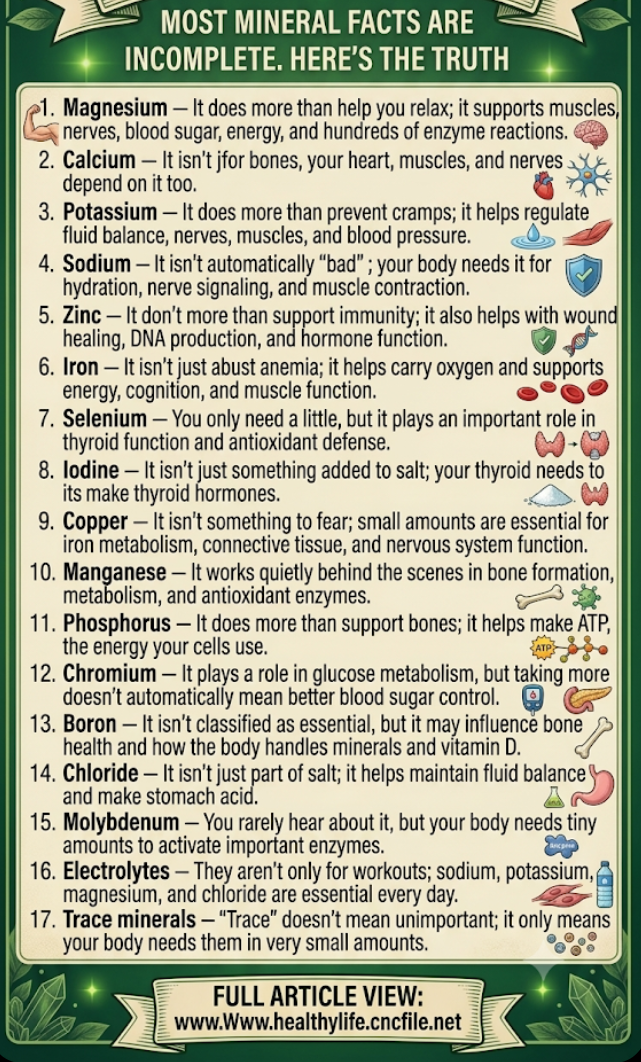
Most people know magnesium is associated with relaxation, calcium with bones, and iron with energy. But these common associations only tell part of the story. Nearly every essential mineral plays multiple roles in the body at once, supporting nerve function, hormone production, enzyme reactions, and energy metabolism in ways that rarely make it into the popular health conversation.
Below, we break down 17 essential minerals, moving past the oversimplified one-liners to explain what each one actually does, and why getting enough of all of them, not just the “famous” few, matters for overall health.
Why Minerals Matter More Than the Common Wisdom Suggests
Minerals are inorganic elements the body needs for a huge range of physiological processes, and unlike vitamins, they can’t be synthesized by the body, meaning they have to come from your diet. Many minerals also work together, influencing each other’s absorption and function, which is part of why focusing on a single “hero” mineral, like calcium for bones, misses a much bigger and more interconnected picture.
The 17 Essential Minerals
1. Magnesium
Magnesium does far more than help you relax. It supports muscle function, nerve signaling, healthy blood sugar regulation, energy production, and is involved in hundreds of enzyme reactions throughout the body, making it one of the most functionally important minerals overall.
2. Calcium
Calcium isn’t just for bones. While it’s essential for skeletal structure, your heart, muscles, and nerves all depend on calcium for proper function, including the electrical signaling that keeps your heartbeat regular and your muscles contracting correctly.
3. Potassium
Potassium does more than prevent cramps. It plays a central role in regulating fluid balance, supporting nerve signaling, enabling muscle contraction, and helping maintain healthy blood pressure, working closely alongside sodium to keep these systems balanced.
4. Sodium
Sodium isn’t automatically “bad.” While excessive sodium intake is a legitimate concern for blood pressure, your body genuinely needs sodium for proper hydration, nerve signaling, and muscle contraction, making complete avoidance neither realistic nor healthy.
5. Zinc
Zinc does more than support immunity. It also plays an important role in wound healing, DNA production, and hormone function, making it essential for growth, repair, and reproductive health, not just fighting off colds.
6. Iron
Iron isn’t just about anemia. Beyond helping carry oxygen throughout the body, iron supports energy production, cognitive function, and muscle function, which is part of why iron deficiency can cause such wide-ranging symptoms beyond fatigue alone.
7. Selenium
You only need a small amount of selenium, but it plays an important role in thyroid function and antioxidant defense, helping protect cells from oxidative damage while supporting the production of thyroid hormones.
8. Iodine
Iodine isn’t just something added to salt. Your thyroid gland needs iodine specifically to produce thyroid hormones, which regulate metabolism, energy, and numerous other bodily functions, making adequate iodine intake essential for thyroid health.
9. Copper
Copper isn’t something to fear. In appropriate small amounts, it’s essential for iron metabolism, connective tissue formation, and nervous system function, working alongside iron to support healthy red blood cell production.
10. Manganese
Manganese works quietly behind the scenes, playing a role in bone formation, metabolism, and antioxidant enzyme function, even though it rarely gets the attention that more well-known minerals receive.
11. Phosphorus
Phosphorus does more than support bones. It’s a key component in producing ATP, the primary energy currency your cells use to power nearly every cellular process, making it essential for overall energy metabolism.
12. Chromium
Chromium plays a role in glucose metabolism, but taking more doesn’t automatically mean better blood sugar control. Research on chromium supplementation for blood sugar management has produced mixed results, and adequate intake through diet is generally sufficient for most people.
13. Boron
Boron isn’t classified as an essential mineral in the traditional sense, but research suggests it may influence bone health and how the body handles other minerals and vitamin D, making it an area of ongoing scientific interest.
14. Chloride
Chloride isn’t just part of salt. It plays a key role in maintaining fluid balance throughout the body and is a necessary component in producing stomach acid, which is essential for proper digestion.
15. Molybdenum
You rarely hear about molybdenum, but your body needs tiny amounts of it to activate several important enzymes involved in processing certain amino acids and other compounds.
16. Electrolytes
Electrolytes aren’t only relevant during workouts. Sodium, potassium, magnesium, and chloride are essential every single day for maintaining fluid balance, nerve function, and muscle contraction, not just during exercise or dehydration.
17. Trace Minerals
“Trace” doesn’t mean unimportant. It simply means your body needs these minerals, like zinc, selenium, copper, iodine, manganese, and molybdenum, in very small amounts, but that doesn’t diminish how essential they are for numerous biological processes.
How to Get Enough of These Minerals Through Diet
Rather than trying to track each individual mineral, focusing on a varied, whole-foods-based diet naturally covers most of these needs:
Leafy greens and legumes provide magnesium, iron, and manganese
Dairy products and fortified alternatives provide calcium and phosphorus
Fruits and vegetables, especially bananas, potatoes, and leafy greens, provide potassium
Seafood, particularly shellfish, provides zinc, iodine, copper, and selenium
Whole grains and nuts provide magnesium, manganese, and chromium
Iodized salt or seaweed provides iodine
A variety of whole foods generally, rather than a restrictive diet, is the most reliable way to cover trace mineral needs like molybdenum and boron
Why Balance Matters More Than Focusing on One Mineral
Many minerals interact with and depend on each other. For example, calcium and magnesium work together in muscle function, iron and copper work together in red blood cell production, and sodium and potassium work together in fluid balance and nerve signaling. Overemphasizing one mineral while neglecting others can actually create imbalances, which is part of why a varied, whole-foods-based diet tends to serve overall mineral status far better than focusing heavily on any single nutrient.
Frequently Asked Questions
Do I need to take a mineral supplement to get enough of all of these?
For most healthy adults eating a varied diet, a supplement isn’t strictly necessary to meet mineral needs. Certain groups, such as pregnant individuals, older adults, or people with specific medical conditions or dietary restrictions, may benefit from targeted supplementation, which is best discussed with a healthcare provider or registered dietitian.
Can taking too much of a mineral be harmful?
Yes, several minerals, including iron, selenium, and manganese, can be harmful in excessive amounts, particularly from concentrated supplements rather than food sources. More is not automatically better, and megadosing certain minerals without medical guidance can cause real harm.
Why do some minerals only need to be consumed in tiny amounts?
Trace minerals like molybdenum, copper, and iodine are needed in very small quantities because they primarily function as cofactors, meaning small amounts are enough to activate the enzymes and hormones that depend on them. Needing less doesn’t mean they’re less essential to the processes they support.
How can I tell if I have a mineral deficiency?
Many mineral deficiencies share overlapping symptoms, like fatigue, muscle cramps, or brain fog, which makes self-diagnosis unreliable. A blood test ordered by your doctor is the most accurate way to identify a specific deficiency and determine an appropriate course of action.
This article is intended for general informational purposes and is not a substitute for professional medical or nutritional advice. If you suspect a mineral deficiency or are considering supplementation, consult your healthcare provider or a registered dietitian.