
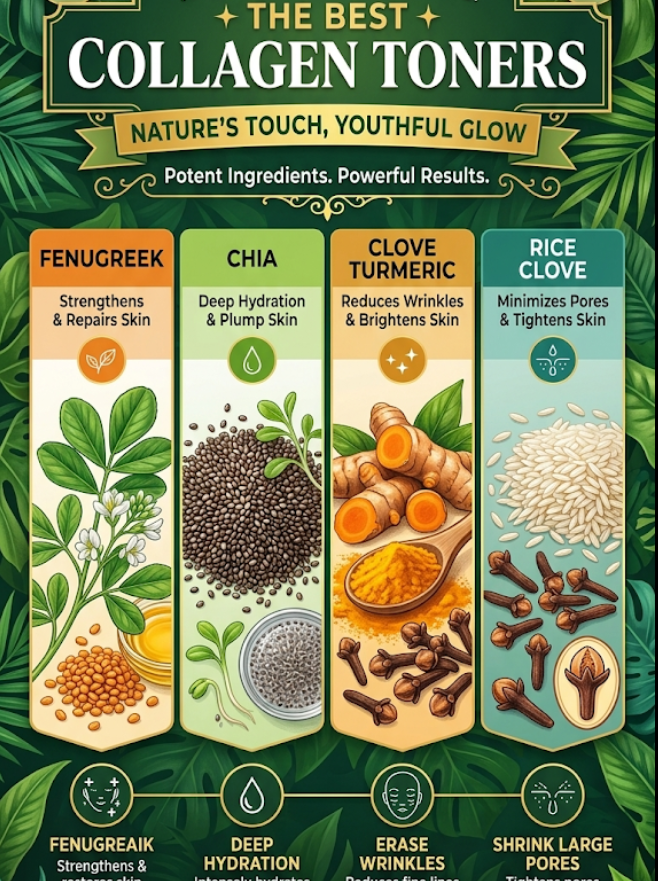
4 DIY Natural Toners for Glowing, Healthy-Looking Skin
Making your own facial toner at home using simple, natural ingredients is a fun, budget-friendly way to build a skincare ritual around whole-food ingredients you can actually recognize. Below are 4 DIY toner recipes built around fenugreek, chia seeds, turmeric and clove, and rice water, each offering a different benefit for the skin, from hydration to a brighter, smoother appearance.
Before diving into the recipes, it’s worth clearing up one common point of confusion in a lot of skincare content: none of these plant-based ingredients actually contain collagen. Collagen is a structural protein found in animal connective tissue, and no fruit, seed, herb, or spice naturally contains it. What these ingredients can offer is a mix of antioxidants, plant compounds, and hydrating properties that may support the skin’s overall appearance and health in other ways, which is a genuinely worthwhile goal, even if “collagen toner” isn’t a fully accurate description of what’s happening in the bottle.
What These Ingredients Can Realistically Offer
Antioxidants, which help protect skin cells from oxidative stress caused by environmental exposure
Hydration, particularly from ingredients like chia seeds and rice water, which can help skin appear more plump and supple
Mild soothing or brightening effects, associated with ingredients like turmeric
A pleasant, natural skincare ritual, which has value on its own, even separate from any specific active ingredient
These toners are best thought of as a gentle, natural addition to your skincare routine, not a replacement for proven treatments if you’re dealing with a specific skin concern like significant wrinkles, acne, or hyperpigmentation, which are often better addressed with dermatologist-recommended, clinically studied ingredients like retinoids, vitamin C serums, or professional treatments.
1. Fenugreek Toner (For Skin Repair and Strength)
Fenugreek seeds are rich in antioxidants and mucilage, a naturally gel-like substance that can have a soothing, softening effect on skin.
Ingredients
- 2 tablespoons fenugreek seeds
- 1 cup distilled water
- A small glass spray bottle
How to Make It
Soak the fenugreek seeds in distilled water overnight, or for at least 6 to 8 hours.
Strain the liquid into a clean bowl, discarding or saving the softened seeds for another use.
Pour the strained liquid into a clean spray bottle.
Store in the refrigerator and use within 3 to 4 days, since this toner has no added preservatives.
How to use it: Spray or apply with a cotton pad to clean skin, morning or evening, before moisturizer.
2. Chia Seed Toner (For Deep Hydration and Plumping)
Chia seeds form a gel-like consistency when soaked in water, largely due to their high soluble fiber content, which can help deliver a hydrating, slightly plumping sensation to the skin’s surface.
Ingredients
- 1 tablespoon chia seeds
- 1 cup water
- A small glass spray bottle
How to Make It
Combine the chia seeds and water in a jar, stirring well.
Let the mixture sit for 20 to 30 minutes until the chia seeds form a gel-like consistency.
Strain out the seeds using a fine mesh strainer or cheesecloth, keeping the gel-infused liquid.
Pour the strained liquid into a clean spray bottle and refrigerate, using within 3 to 4 days.
How to use it: Mist onto the face after cleansing for a hydrating boost, especially helpful for dry or dehydrated skin.
3. Turmeric and Clove Toner (For Brightening and a Smoother Appearance)
Turmeric contains curcumin, a compound with notable antioxidant properties, while clove contains eugenol, another antioxidant-rich compound. Together, they create a warm, spiced toner some people use for a brighter-looking complexion.
Ingredients
- 1/2 teaspoon ground turmeric (or a small piece of fresh turmeric)
- 3 to 4 whole cloves
- 1 cup water
How to Make It
Simmer the water with the cloves for 5 minutes, then remove from heat.
Stir in the turmeric and let the mixture steep and cool completely.
Strain thoroughly through a fine mesh strainer or coffee filter to remove all solid particles.
Pour into a clean spray bottle and refrigerate, using within 3 to 4 days.
How to use it: Apply sparingly with a cotton pad, since turmeric can temporarily stain skin and fabric. Consider doing a patch test first, and apply at night if you’re concerned about any temporary yellow tint.
4. Rice and Clove Toner (For Minimizing the Look of Pores)
Rice water has long been used in traditional skincare practices and is often associated with a smoother, more refined-looking complexion, while clove adds additional antioxidant support to the blend.
Ingredients
- 1/2 cup uncooked rice
- 1 cup water
- 3 to 4 whole cloves
How to Make It
Rinse the rice once, then soak it in the water along with the cloves for 30 minutes.
Gently swirl and agitate the rice to help release its starches into the water.
Strain out the rice and cloves, keeping the cloudy, starchy liquid.
Pour into a clean spray bottle and refrigerate, using within 3 to 4 days.
How to use it: Apply with a cotton pad after cleansing, focusing on areas where pores tend to appear more visible, like the nose and cheeks.
Tips for Using DIY Toners Safely
Always patch test a new toner on a small area of skin, like your inner forearm, and wait 24 hours before applying it to your face, to check for any irritation or allergic reaction.
Use distilled or filtered water rather than tap water to reduce the risk of introducing bacteria or minerals that could irritate skin.
Store DIY toners in the refrigerator and discard them after 3 to 4 days, since homemade toners lack the preservatives that commercial products use to prevent bacterial growth.
Avoid the eye area, especially with the turmeric and clove toner, since clove’s active compounds can be irritating to sensitive skin and the eye area specifically.
Introduce one new toner at a time, rather than layering several at once, so you can identify what’s working (or not) for your skin.
Setting Realistic Expectations
It’s worth being upfront that DIY toners like these are a gentle, natural addition to a skincare routine, not a clinically proven treatment for specific skin concerns like deep wrinkles, significant hyperpigmentation, or enlarged pores, which have a genetic and structural component that topical treatments, natural or otherwise, can’t fully change. If you have a specific skin concern you’re hoping to address more seriously, a dermatologist can recommend evidence-based options, and there’s nothing wrong with combining a fun, natural DIY ritual with your dermatologist-recommended routine.
Frequently Asked Questions
Do any of these ingredients actually contain collagen?
No. Collagen is a protein found only in animal connective tissue, so no plant-based ingredient, including fenugreek, chia, turmeric, clove, or rice, naturally contains collagen. These ingredients may offer other benefits, like antioxidants and hydration, but they don’t add collagen to your skin.
Can DIY toners replace my regular skincare routine?
DIY toners are best used as an addition to, not a replacement for, a basic skincare routine that includes cleansing, moisturizing, and sun protection. If you have specific skin concerns, evidence-based ingredients like retinoids, vitamin C, or niacinamide, often recommended by a dermatologist, generally have more robust research behind them.
Why do homemade toners need to be refrigerated and used quickly?
Because these toners are made with water and natural ingredients without added preservatives, they’re more susceptible to bacterial growth than commercial products. Refrigerating them and using them within 3 to 4 days helps reduce this risk, but always discard any toner that develops an off smell, unusual color, or visible mold.
Will the turmeric toner stain my skin?
Turmeric can leave a temporary yellow tint on skin, especially with prolonged contact or overuse. Using a small amount, applying at night, and washing it off in the morning can help minimize this effect, and doing a patch test first is a good way to see how your skin reacts.
This article is intended for general informational purposes related to DIY beauty and skincare. If you have a skin condition, sensitive skin, or specific skincare concerns, consult a dermatologist before trying new topical ingredients.