
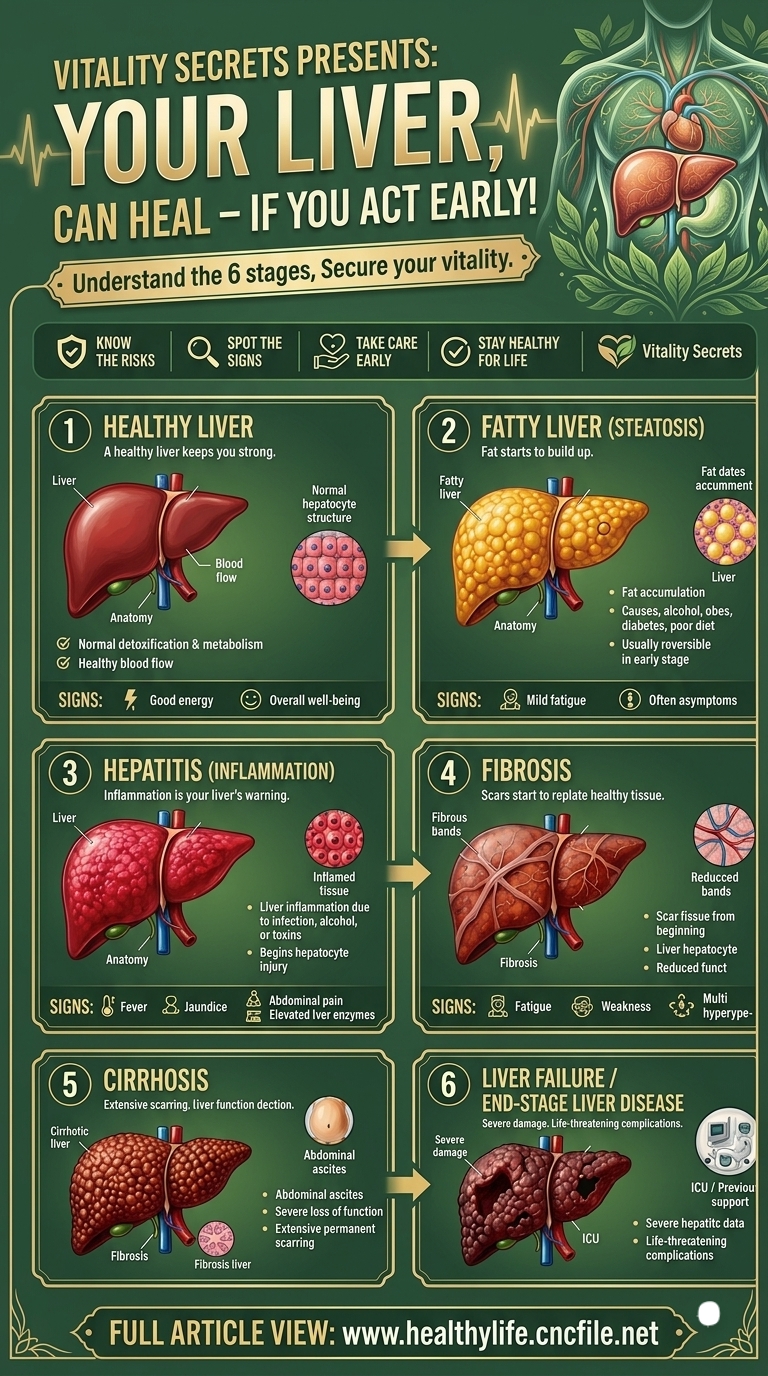
The 6 Stages of Liver Disease: What to Know and When to Act
The liver is one of the body’s most resilient organs, capable of regenerating and even reversing early damage under the right conditions. But liver disease often progresses quietly, without obvious symptoms, which is part of why it’s sometimes called a “silent” condition until it reaches a more advanced stage. Understanding how liver disease typically progresses, from a healthy liver all the way to liver failure, can help you recognize warning signs earlier and take action while the liver still has the ability to heal.
Below, we walk through the 6 general stages of liver disease progression, the signs associated with each, and what tends to happen at each point along the way.
Why Early Action Matters
The liver has a remarkable capacity for regeneration, and damage in the earliest stages, particularly fatty liver, is often reversible with lifestyle changes. However, as scarring accumulates in later stages, the damage becomes progressively harder, and eventually impossible, to reverse. This is why understanding the early warning signs and risk factors is so important: the earlier liver disease is caught, the more treatment options and the better the long-term outlook tends to be.
Stage 1: Healthy Liver
A healthy liver maintains normal detoxification and metabolism, supports healthy blood flow, and functions as one of the body’s primary filtering organs, processing toxins, producing bile for digestion, and regulating numerous metabolic processes.
Signs of a healthy liver: Good energy levels and overall well-being, without the fatigue or digestive symptoms that can accompany liver dysfunction.
Stage 2: Fatty Liver (Steatosis)
Fatty liver disease occurs when fat begins to accumulate in liver cells. This can be caused by several factors, including alcohol use, obesity, diabetes, and a poor diet, and it’s increasingly common, affecting a significant portion of adults, many of whom are unaware they have it.
Signs of fatty liver: This stage is often asymptomatic, meaning many people feel no different at all. When symptoms do occur, they tend to be mild, such as fatigue or a vague sense of discomfort in the upper right abdomen.
The good news: Fatty liver is usually reversible in its early stage with lifestyle changes, including weight loss, reduced alcohol intake, and improved diet, which is exactly why catching it early matters so much.
Stage 3: Hepatitis (Inflammation)
If fatty liver isn’t addressed, or if the liver is exposed to ongoing damage from infection, alcohol, or toxins, inflammation can develop. This inflammatory response, known broadly as hepatitis, represents the liver’s warning signal that something is actively causing injury to its cells.
Signs of hepatitis: Fever, jaundice (yellowing of the skin or eyes), abdominal pain, and elevated liver enzymes on bloodwork are common indicators at this stage. Hepatitis can result from viral infections (like hepatitis B or C), heavy alcohol use, certain medications, or autoimmune conditions.
Stage 4: Fibrosis
When inflammation persists without being addressed, the liver begins forming scar tissue in a process called fibrosis. Scar tissue starts to replace healthy liver tissue, and this scarring gradually reduces the liver’s blood circulation and overall function.
Signs of fibrosis: Fatigue, weakness, and mild hypertension symptoms can develop as the liver’s function becomes more compromised. Fibrosis can sometimes still be slowed or partially reversed with treatment at this stage, though it requires addressing the underlying cause directly.
Stage 5: Cirrhosis
Cirrhosis represents extensive, widespread scarring of the liver, at which point liver function has typically declined significantly. Unlike the earlier stages, cirrhosis generally involves permanent scarring that cannot be reversed, though further progression can often still be slowed with proper treatment and lifestyle changes.
Signs of cirrhosis: Abdominal ascites (fluid buildup in the abdomen), severe loss of liver function, and extensive, permanent scarring are hallmark features of this stage. Other symptoms can include easy bruising, confusion, and significant fatigue.
Stage 6: Liver Failure / End-Stage Liver Disease
The final stage represents severe, extensive liver damage with life-threatening complications. At this point, the liver can no longer perform its essential functions, and this stage often requires intensive medical care, including hospitalization, and in some cases, a liver transplant may be the only viable long-term treatment option.
Signs of liver failure: Severe hepatic dysfunction and life-threatening complications, often requiring ICU-level care and close monitoring by a medical team.
Common Risk Factors Across These Stages
Several factors are consistently linked to liver disease progression at various stages:
Excessive alcohol use — One of the most significant and well-established contributors to liver damage at every stage
Obesity and metabolic conditions — Including type 2 diabetes, which is strongly linked to fatty liver disease
Viral hepatitis — Hepatitis B and C are leading causes of chronic liver inflammation and long-term damage worldwide
Certain medications and toxins — Some medications, when misused or combined inappropriately, can contribute to liver injury
Poor diet — Diets high in processed foods and added sugar are associated with increased risk of fatty liver disease
Genetic and autoimmune factors — Some liver conditions have a genetic or autoimmune basis unrelated to lifestyle
How to Support Liver Health at Any Stage
Limit alcohol intake, or avoid it entirely if you have any existing liver condition
Maintain a healthy weight through balanced diet and regular physical activity
Get vaccinated against hepatitis A and B if you haven’t already, and get tested for hepatitis C if you have risk factors
Be mindful of medication use, including over-the-counter pain relievers like acetaminophen, which can be harmful to the liver in excessive amounts
Eat a balanced diet rich in vegetables, fruits, whole grains, and lean protein, while limiting processed foods and added sugar
Get regular checkups, including liver enzyme testing, especially if you have risk factors like obesity, diabetes, or heavy alcohol use
When to See a Doctor
- You should see a doctor promptly if you experience:
- Persistent fatigue that doesn’t improve with rest
- Yellowing of the skin or eyes (jaundice)
- Abdominal pain or swelling
- Easy bruising or bleeding
- Dark urine or pale stools
- Unexplained nausea or loss of appetite
Many of these symptoms can overlap with other conditions, so a proper medical evaluation, including bloodwork and possibly imaging, is the only reliable way to determine whether liver disease is the underlying cause.
Frequently Asked Questions
Can fatty liver disease really be reversed?
Yes, in many cases fatty liver, the earliest stage of liver disease, is reversible with sustained lifestyle changes like weight loss, reduced alcohol intake, and improved diet, especially when caught and addressed early. This is one of the main reasons early detection matters so much.
Is cirrhosis always fatal?
Not necessarily. While the scarring in cirrhosis is permanent, many people with cirrhosis live for years with proper medical management, and further progression can often be slowed significantly by addressing the underlying cause and following medical guidance closely. Some people with advanced cirrhosis are also candidates for liver transplant.
How is liver disease diagnosed?
Liver disease is typically diagnosed through a combination of blood tests (checking liver enzymes and function), imaging like ultrasound or MRI, and in some cases a liver biopsy to assess the extent of damage or scarring.
Can you have liver disease without knowing it?
Yes, this is common, especially in the earlier stages like fatty liver, which is frequently asymptomatic. This is part of why routine bloodwork and regular checkups are valuable, particularly for people with known risk factors like obesity, diabetes, or heavy alcohol use.
This article is intended for general informational purposes and is not a substitute for professional medical advice, diagnosis, or treatment. If you have concerns about your liver health or risk factors for liver disease, consult your healthcare provider for proper evaluation and testing.