
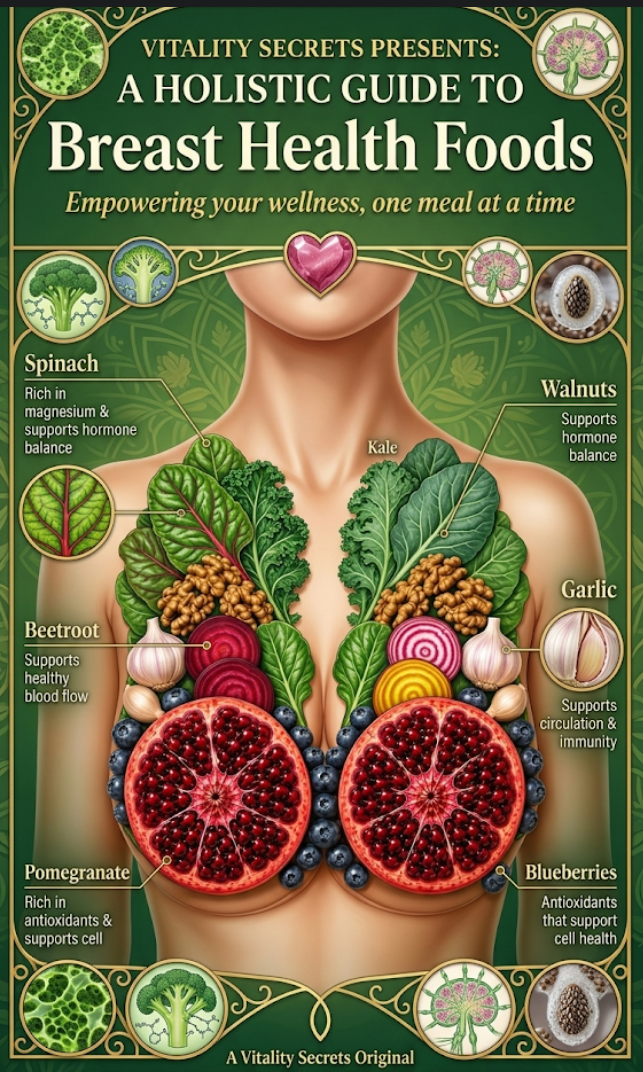
6 Foods That May Support Breast Health
Diet is just one piece of a much larger picture when it comes to breast health, alongside factors like genetics, hormones, regular screening, and overall lifestyle. That said, certain foods have been studied for compounds that may support hormone balance, healthy circulation, and cellular health, all of which play a role in overall wellness. Building more of these nutrient-dense foods into your regular diet is a reasonable, low-risk habit that supports general health, though it’s important to understand what the research does and doesn’t say.
Below, we break down 6 foods commonly associated with supporting breast and overall health, along with what’s actually behind each claim.
An Important Note Before We Start
No single food or diet can prevent breast cancer or guarantee breast health on its own. The foods below are linked to broader health benefits, like antioxidant support, hormone balance, and healthy circulation, that are part of an overall healthy eating pattern associated with better health outcomes generally. They are not a substitute for regular screening, clinical breast exams, mammograms as recommended by your doctor, or medical care. If you have specific concerns about breast health, family history, or symptoms like lumps, changes in skin texture, or nipple discharge, talk to your doctor rather than relying on diet alone.
The 6 Foods
1. Spinach
Spinach is rich in magnesium and is associated with supporting hormone balance. Magnesium plays a role in hundreds of processes in the body, including those involved in hormone regulation, and leafy greens like spinach are also a good source of folate and other micronutrients tied to overall cellular health.
How to use it: Add spinach to salads, smoothies, omelets, or sautéed as a simple side dish.
2. Walnuts
Walnuts are associated with supporting hormone balance, largely thanks to their omega-3 fatty acid content and plant-based lignans, compounds that have been studied in relation to hormone metabolism. Walnuts are also a good source of healthy fats and antioxidants more broadly.
How to use it: Add walnuts to oatmeal, salads, or yogurt, or enjoy a small handful as a snack.
3. Beetroot
Beetroot is associated with supporting healthy blood flow, largely due to its natural nitrate content, which the body converts into nitric oxide, a compound that helps relax and widen blood vessels. Healthy circulation supports oxygen and nutrient delivery to tissues throughout the body.
How to use it: Roast beets as a side dish, add them to salads, or blend them into a smoothie.
4. Garlic
Garlic is associated with supporting circulation and immunity, thanks to sulfur compounds like allicin, which have been studied for their antioxidant and cardiovascular benefits. A well-functioning immune system and healthy circulation both support overall tissue health.
How to use it: Use fresh garlic generously in sauces, marinades, roasted vegetables, and proteins.
5. Pomegranate
Pomegranate is rich in antioxidants and is associated with supporting cell health. Pomegranates contain punicalagins and other polyphenols that have been studied for their antioxidant properties, which help the body manage oxidative stress at the cellular level.
How to use it: Eat pomegranate seeds on their own, sprinkle them over salads, or blend them into a smoothie.
6. Blueberries
Blueberries provide antioxidants that support cell health, largely due to their high concentration of anthocyanins, the compounds responsible for their deep blue color. These antioxidants have been widely studied for their potential role in protecting cells from oxidative damage.
How to use it: Add blueberries to oatmeal, smoothies, or yogurt, or enjoy them fresh or frozen as a simple snack.
Building These Foods Into an Overall Healthy Diet
Rather than focusing on any single food in isolation, these six foods work best as part of a broader, balanced eating pattern. Some ways to build them into your routine:
Start the day with a spinach and berry smoothie, combining leafy greens with antioxidant-rich fruit
Keep walnuts on hand for a quick, satisfying snack or salad topping
Roast beets and garlic together as an easy, flavorful side dish
Add pomegranate seeds to salads or yogurt for a burst of antioxidants and texture
Choose whole foods over supplements when possible, since whole foods provide a broader range of beneficial compounds working together
The Bigger Picture: What Actually Supports Breast Health
Diet is one part of a much larger picture. Other well-established factors that play a meaningful role in breast health include:
Regular screening, including clinical breast exams and mammograms as recommended by your doctor based on your age and risk factors
Maintaining a healthy weight, since body fat can influence hormone levels
Limiting alcohol intake, which has been consistently linked to increased breast cancer risk
Staying physically active, which is associated with lower risk in multiple large studies
Not smoking
Knowing your family history and discussing personal risk factors with your doctor, since some people may benefit from earlier or more frequent screening
Frequently Asked Questions
Can eating these foods prevent breast cancer?
No single food or food group can prevent breast cancer. These foods are associated with general health benefits, like antioxidant support and healthy circulation, that are part of an overall healthy diet linked to better health outcomes. Prevention and risk reduction involve a combination of factors, including genetics, screening, and broader lifestyle habits.
How often should I get a mammogram?
Mammogram recommendations vary based on age, personal risk factors, and family history, so this is best discussed directly with your doctor. General population guidelines differ between medical organizations, which is another reason a personalized conversation with your healthcare provider matters.
Are there specific foods I should avoid for breast health?
Diets consistently high in processed foods, added sugar, and excessive alcohol are generally associated with poorer health outcomes overall, including some research connecting alcohol specifically to increased breast cancer risk. Moderation and an overall balanced diet matter more than eliminating any single food.
Should I take supplements instead of eating these foods?
Whole foods are generally preferred over supplements when possible, since they provide a broader combination of nutrients, fiber, and beneficial compounds working together, rather than an isolated compound in concentrated form. If you’re considering supplements for a specific concern, it’s worth discussing with your doctor first.
This article is intended for general informational purposes and is not a substitute for professional medical advice, screening, or treatment. If you have concerns about breast health, family history, or symptoms, consult your healthcare provider.