
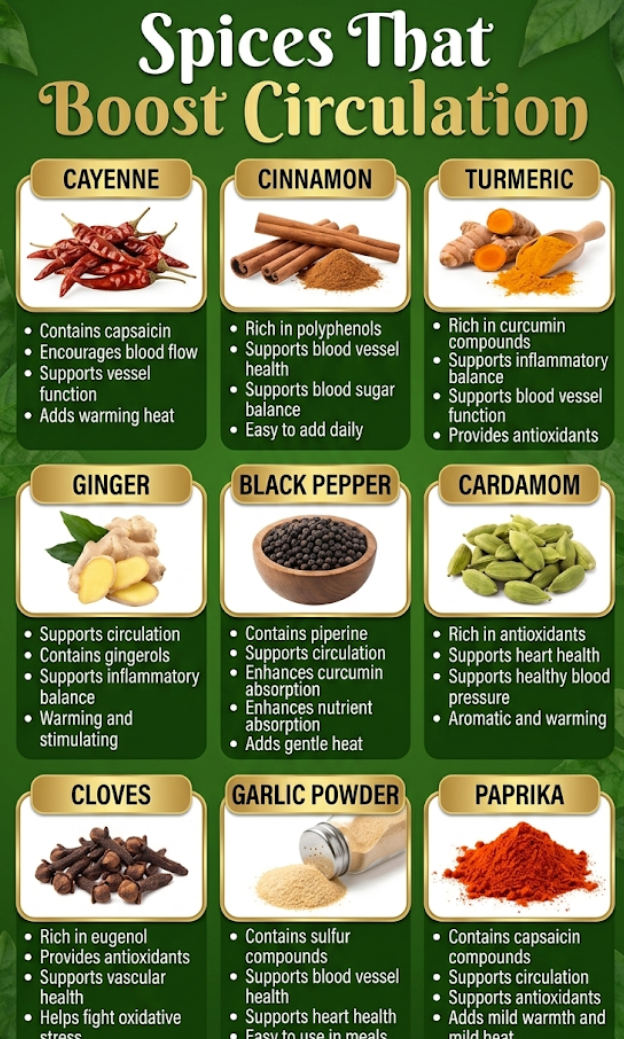
9 Spices That May Support Healthy Circulation
Good circulation is essential for delivering oxygen and nutrients throughout the body, and while movement and hydration play the biggest roles in supporting healthy blood flow, certain spices have also been studied for compounds that may support vessel health, blood flow, and cardiovascular function. Many of these spices are already sitting in your kitchen cabinet, making them one of the easiest additions to a circulation-supportive diet.
Below, we break down 9 spices commonly associated with supporting healthy circulation, the compounds behind each one, and simple ways to add more of them to your everyday cooking.
How Spices May Support Circulation
Several of the spices below share a few common threads: many contain compounds that support healthy blood vessel function, some have a mild warming or vasodilating effect, and many are rich in antioxidants that help protect blood vessels from oxidative stress over time. Together, these effects make certain spices a reasonable, low-risk addition to a diet focused on supporting cardiovascular and circulatory health, alongside other well-established habits like regular movement, adequate hydration, and not smoking.
The 9 Spices
1. Cayenne
Cayenne pepper contains capsaicin, the compound responsible for its heat, which has been studied for its potential to encourage blood flow and support healthy vessel function. The natural warming sensation associated with capsaicin is part of why it’s often mentioned specifically in relation to circulation.
How to use it: Add a pinch of cayenne to soups, chili, marinades, or even hot chocolate for a subtle kick.
2. Cinnamon
Cinnamon is rich in polyphenols and has been studied for its potential to support blood vessel health and healthy blood sugar balance, two factors that are closely connected to overall circulatory health. It’s also one of the easiest spices to add to your diet daily, given how well it pairs with both sweet and savory dishes.
How to use it: Sprinkle cinnamon into coffee, oatmeal, smoothies, or roasted vegetables.
3. Turmeric
Turmeric is rich in curcumin compounds, which have been extensively studied for their antioxidant and anti-inflammatory properties. Turmeric is associated with supporting inflammatory balance and blood vessel function, and provides broad antioxidant support that may help protect the vascular system over time.
How to use it: Add turmeric to soups, rice dishes, or golden milk lattes, ideally paired with black pepper to enhance absorption.
4. Ginger
Ginger contains gingerols, compounds studied for their potential to support circulation and inflammatory balance. Its naturally warming, stimulating quality is part of why ginger has traditionally been associated with promoting healthy blood flow.
How to use it: Use fresh ginger in stir-fries, teas, soups, or smoothies.
5. Black Pepper
Black pepper contains piperine, a compound studied for its ability to support circulation and significantly enhance the absorption of other beneficial compounds, most notably curcumin from turmeric. Pairing black pepper with turmeric is one of the most well-documented spice combinations for improving nutrient absorption.
How to use it: Add black pepper to turmeric-based dishes specifically to boost curcumin absorption, or use it as a general everyday seasoning.
6. Cardamom
Cardamom is rich in antioxidants and has been studied for its potential role in supporting heart health and healthy blood pressure. Its warm, aromatic quality also makes it a popular addition to both sweet and savory dishes.
How to use it: Use cardamom in coffee, tea, rice dishes, or baked goods.
7. Cloves
Cloves are rich in eugenol, a compound with notable antioxidant properties. They’re associated with supporting vascular health and helping fight oxidative stress, which plays a role in protecting blood vessels from damage over time.
How to use it: Add whole or ground cloves to spiced teas, baked goods, or slow-cooked dishes.
8. Garlic Powder
Garlic contains sulfur compounds, most notably allicin, which have been studied for their potential to support blood vessel health and heart health. Garlic powder is a convenient, shelf-stable way to add these compounds to meals easily and consistently.
How to use it: Use garlic powder in spice blends, marinades, roasted vegetables, or as an easy all-purpose seasoning.
9. Paprika
Paprika contains capsaicin compounds, similar to cayenne, though generally in a milder form depending on the variety. It’s associated with supporting circulation and provides antioxidants, adding mild warmth and heat without overwhelming a dish.
How to use it: Use paprika to season roasted potatoes, meats, or stews, or choose smoked paprika for an additional layer of flavor.
How to Build These Spices Into Your Daily Diet
Create a warming spice blend using cayenne, cinnamon, ginger, and black pepper for a versatile all-purpose seasoning
Pair turmeric with black pepper consistently to maximize curcumin absorption
Add garlic powder and paprika to your everyday cooking rotation, since both are easy, shelf-stable staples
Brew warming spice teas, like ginger or cinnamon tea, as a simple daily ritual
Combine several of these spices in one dish, such as a curry or spiced stew, to layer multiple beneficial compounds into a single meal
A Simple Circulation-Supportive Spice Blend
Combining several of these spices into one all-purpose blend makes it easy to use them consistently:
- 1 tablespoon ground cinnamon
- 1 tablespoon ground ginger
- 1 tablespoon garlic powder
- 1 teaspoon ground turmeric
- 1 teaspoon ground black pepper
- 1/2 teaspoon cayenne pepper
Mix and store in an airtight container, then use it to season roasted vegetables, proteins, soups, and stews throughout the week.
Other Habits That Support Healthy Circulation
Spices can be a helpful addition to your diet, but they work best alongside other well-established circulation-supportive habits:
Regular movement, especially activities that engage the legs, like walking
Staying adequately hydrated throughout the day
Not smoking, since smoking is one of the most significant risk factors for impaired circulation
Managing blood pressure and cholesterol through diet, activity, and medical care when needed
Avoiding long periods of sitting or standing still, taking movement breaks throughout the day
Frequently Asked Questions
Can spices alone fix poor circulation?
No. Spices may offer supportive compounds as part of an overall healthy diet, but they aren’t a standalone treatment for circulation problems. If you’re experiencing persistent symptoms like cold hands and feet, numbness, or leg pain with walking, these should be evaluated by a doctor rather than managed with diet alone.
Is it safe to eat cayenne or paprika every day?
For most healthy adults, moderate daily use of cayenne and paprika in cooking is generally considered safe. People with certain digestive conditions, like acid reflux or ulcers, may want to use spicy foods like cayenne more cautiously, since capsaicin can sometimes aggravate these conditions.
Why is black pepper paired with turmeric specifically?
Piperine, the active compound in black pepper, has been shown in research to significantly increase the bioavailability of curcumin, turmeric’s primary active compound, which is otherwise poorly absorbed on its own. This is one of the most well-documented spice pairings in nutrition research.
Can these spices interact with blood pressure or blood thinning medications?
Some of these spices, particularly ginger, garlic, and turmeric in concentrated or supplement form, can interact with blood thinning medications or affect blood pressure. If you take medication for blood pressure or blood clotting, talk to your doctor before significantly increasing your intake, especially in supplement form.
This article is intended for general informational purposes and is not a substitute for professional medical advice. If you have concerns about circulation or take medication, consult your healthcare provider before making significant changes to your diet.