
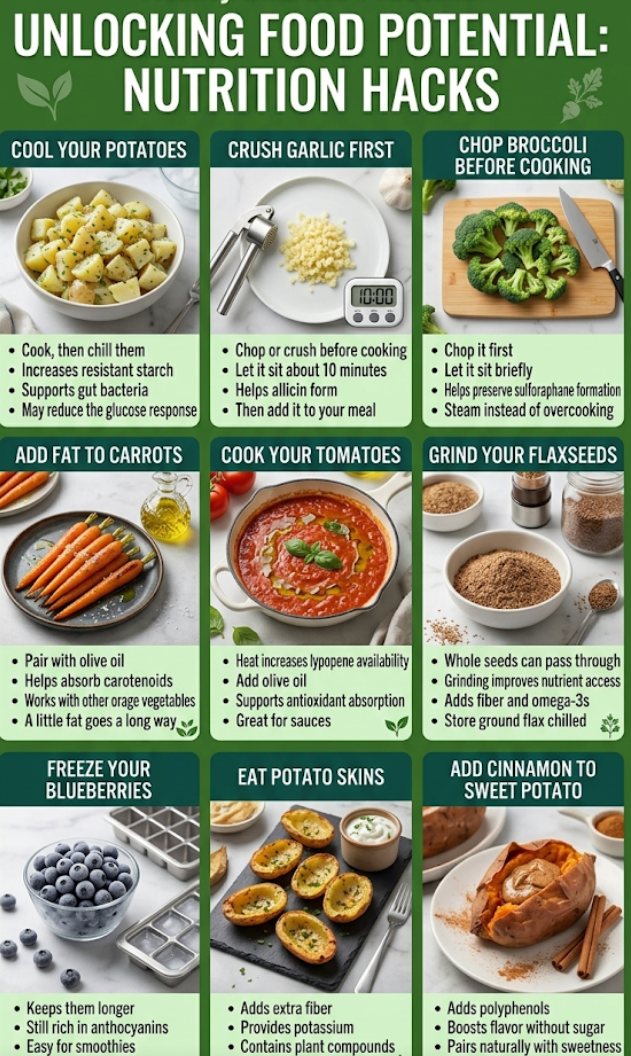
10 Smart Food Hacks You Should Know (Backed by Nutrition Science)
Small changes in how you prep and cook everyday ingredients can make a real difference in the nutrients you actually get from them. It’s not about buying anything new or overhauling your diet, it’s about simple timing tricks, pairing choices, and prep methods that help your body absorb more nutrients, preserve beneficial compounds, and reduce food waste along the way.
Below are 10 practical food hacks, each explained with the “why” behind it, so you can start using them in your kitchen right away.
1. Cool Your Potatoes After Cooking
When potatoes are cooked and then chilled, some of their digestible starch converts into resistant starch, a type of starch that behaves more like fiber in the body. Resistant starch is associated with supporting gut bacteria and may help produce a gentler glucose response compared to eating potatoes hot, right off the stove.
How to use this hack: Cook potatoes as usual, then let them cool in the refrigerator for a few hours or overnight before eating. This works well for potato salad, or simply reheating chilled boiled potatoes the next day.
2. Crush or Chop Garlic Before Cooking, and Let It Rest
When garlic is chopped or crushed, it triggers an enzymatic reaction that forms allicin, one of garlic’s most studied beneficial compounds. Letting crushed or chopped garlic sit for about 10 minutes before cooking gives this reaction time to fully develop, since cooking garlic too quickly after cutting can reduce how much allicin actually forms.
How to use this hack: Chop or crush your garlic first, set it aside for about 10 minutes while you prep other ingredients, then add it to your dish.
3. Chop Broccoli Before Cooking, and Let It Sit Briefly
Similar to garlic, chopping broccoli activates an enzyme called myrosinase, which helps form sulforaphane, a compound broccoli is particularly known for. Letting chopped broccoli sit for a few minutes before cooking helps preserve this sulforaphane formation, and steaming instead of boiling or overcooking helps retain more of broccoli’s nutrients overall.
How to use this hack: Chop your broccoli first and let it rest briefly on the cutting board, then steam it rather than boiling it for the best nutrient retention.
4. Add Fat to Carrots
Carrots are rich in beta-carotene, a carotenoid your body converts into vitamin A, but carotenoids are fat-soluble, meaning they’re better absorbed when eaten alongside a source of fat. Pairing carrots with olive oil helps your body absorb significantly more of these beneficial compounds than eating carrots alone.
How to use this hack: Drizzle carrots with olive oil before roasting, or toss raw carrots in a dressing that contains oil. This same principle applies to other orange and dark leafy vegetables rich in carotenoids.
5. Cook Your Tomatoes
Raw tomatoes contain lycopene, a powerful antioxidant, but heat actually increases how available lycopene is for your body to absorb. Cooking tomatoes, especially with a bit of olive oil, meaningfully boosts antioxidant absorption compared to eating them raw.
How to use this hack: Simmer tomatoes into a sauce with olive oil rather than only eating them fresh, and don’t shy away from cooked tomato dishes as a nutrient-dense option.
6. Grind Your Flaxseeds
Whole flaxseeds have a hard outer shell that can pass through the digestive system largely intact, meaning many of their nutrients never get absorbed. Grinding flaxseeds breaks down that shell, significantly improving access to their fiber and omega-3 fatty acids.
How to use this hack: Grind flaxseeds in a small coffee or spice grinder, then store the ground flax in the refrigerator, since ground flax is more prone to going rancid than whole seeds.
7. Freeze Your Blueberries
Freezing blueberries helps them keep longer without spoiling, and they remain rich in anthocyanins, the antioxidant compounds responsible for their deep color, even after freezing. This makes frozen blueberries a practical, lower-waste option that’s still nutritionally valuable.
How to use this hack: Keep a bag of frozen blueberries on hand for smoothies, oatmeal, or baking, and freeze fresh blueberries yourself if you notice them starting to turn before you’ll use them.
8. Eat the Potato Skin
Potato skins add extra fiber, provide potassium, and contain additional plant compounds that aren’t as concentrated in the flesh alone. Skipping the skin means missing out on a meaningful portion of the potato’s overall nutritional value.
How to use this hack: Scrub potatoes well before cooking to remove dirt, then leave the skin on for roasting, baking, or mashing, rather than peeling it away.
9. Add Cinnamon to Sweet Potatoes
Cinnamon adds polyphenols and boosts flavor without needing added sugar, making it an easy way to enhance both the nutritional value and taste of sweet potatoes. It pairs naturally with the vegetable’s inherent sweetness, making added sugar largely unnecessary.
How to use this hack: Sprinkle cinnamon over roasted or baked sweet potatoes instead of reaching for brown sugar or maple syrup, for an easy everyday upgrade.
10. Think in Terms of Pairings and Timing, Not Just Ingredients
The common thread across most of these hacks is simple: how and when you prepare food often matters just as much as what you’re eating. Letting garlic and broccoli rest after chopping, pairing fat-soluble nutrients with a source of fat, and choosing cooking methods that preserve rather than degrade nutrients are all small, low-effort adjustments that add up over time.
How to Build These Hacks Into Your Routine
Batch cook and chill potatoes ahead of time so resistant starch has time to form before you eat them
Chop garlic and broccoli a few minutes before you actually need them, rather than tossing them directly into the pan
Keep a good olive oil on hand for drizzling over carrots, tomatoes, and other carotenoid-rich vegetables
Store ground flaxseed in the fridge in a small airtight container so it’s ready to add to breakfast
Keep both fresh and frozen blueberries stocked, using the fresh ones first and reaching for frozen once fresh ones start to turn
Frequently Asked Questions
Does the potato cooling hack work with all types of potatoes?
Yes, the resistant starch effect applies broadly across potato varieties, though the exact amount of resistant starch formed can vary slightly. The key factor is cooking and then cooling, not the specific type of potato.
How long should I let chopped garlic sit before cooking it?
Around 10 minutes is generally recommended to allow enough time for allicin to form, though even a shorter rest is better than none. Cooking garlic immediately after chopping significantly limits how much allicin has a chance to develop.
Is frozen produce really as nutritious as fresh?
In many cases, yes. Produce that’s frozen shortly after harvest often retains comparable, and sometimes even higher, levels of certain nutrients compared to fresh produce that has spent days in transit and storage before reaching your kitchen.
Do I need to peel vegetables like carrots and potatoes for these hacks to work?
No, and in the case of potato skins specifically, keeping the skin on actually adds nutritional value. For carrots, a good scrub is generally sufficient, and peeling is more a matter of personal preference than a nutritional requirement.
This article is intended for general informational purposes and is not a substitute for professional nutrition or medical advice. If you have specific dietary needs or health concerns, consult a registered dietitian or your healthcare provider.