
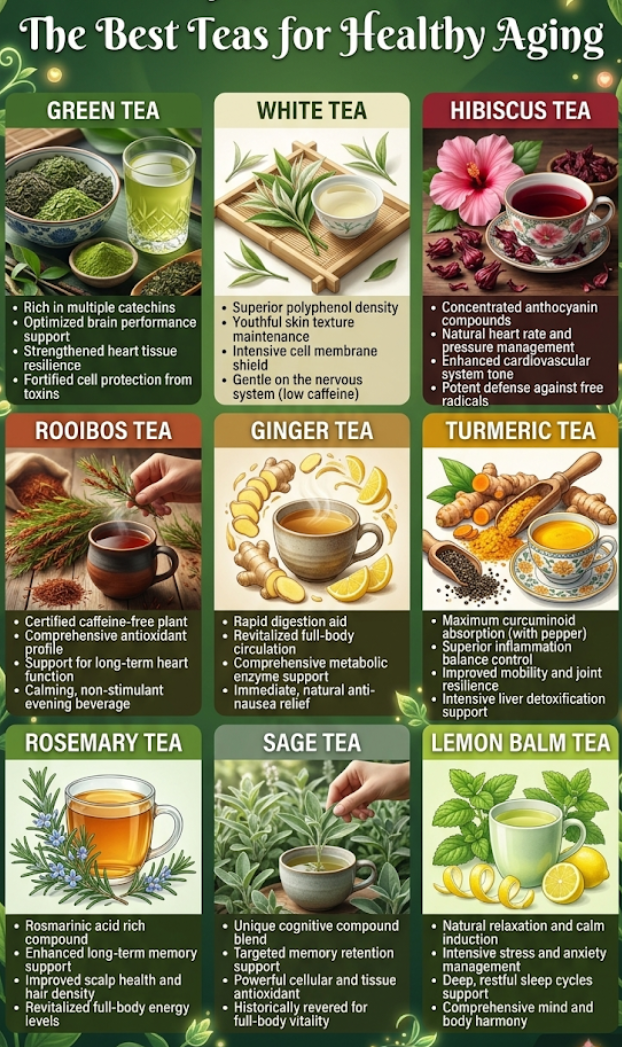
9 Best Teas for Healthy Aging
A daily cup of tea is one of the simplest, most enjoyable rituals you can build into your routine, and it happens to come with real nutritional benefits. Many teas, both from the traditional tea plant and from herbal infusions, are rich in polyphenols, antioxidants, and other plant compounds that have been studied for their potential role in supporting brain health, heart health, circulation, inflammation, and stress management, all factors closely tied to how well we age.
Below, we break down 9 teas commonly associated with healthy aging, the specific compounds behind each one, and simple tips for making them part of your daily routine.
Why Tea Matters for Healthy Aging
Tea leaves and herbs are naturally rich in polyphenols, plant compounds with antioxidant properties that help the body manage oxidative stress. Over time, oxidative stress is thought to contribute to cellular aging and is a factor researchers look at in relation to chronic disease risk. Beyond the antioxidant angle, different teas also bring their own unique benefits, from caffeine-free calm to circulation support, making tea one of the more versatile additions to a health-conscious daily routine.
The 9 Best Teas
1. Green Tea
Green tea is rich in catechins, a category of antioxidant polyphenols that has been extensively studied. It’s associated with supporting brain health and heart health, and helps protect cells from oxidative stress, making it one of the most researched teas for healthy aging overall.
How to use it: Steep green tea for 2 to 3 minutes in water just below boiling to avoid bitterness, and enjoy it in the morning or early afternoon due to its moderate caffeine content.
2. White Tea
White tea is the least processed of all true teas and is rich in polyphenols. It’s associated with supporting skin health and helping protect cells, and is naturally lower in caffeine than many other teas, making it a gentler option for those sensitive to caffeine.
How to use it: Steep white tea gently in water around 175°F for a delicate flavor, avoiding boiling water, which can make it taste flat.
3. Hibiscus Tea
Hibiscus tea is rich in anthocyanins, the same category of antioxidant pigment found in berries. It’s associated with supporting healthy blood pressure and blood vessel health, and provides a strong dose of antioxidants in every deep red cup.
How to use it: Steep dried hibiscus petals in hot water for 5 minutes, or enjoy it chilled over ice for a naturally tart, refreshing drink.
4. Rooibos Tea
Rooibos is naturally caffeine-free and rich in antioxidants, making it a popular choice for those looking to cut back on caffeine without giving up a warm, comforting cup. It’s associated with supporting heart health and makes a gentle option for an evening routine.
How to use it: Steep rooibos for 5 to 7 minutes, since it’s more forgiving than true teas and won’t turn bitter with a longer steep time.
5. Ginger Tea
Ginger tea is associated with supporting digestion and circulation, and it provides natural anti-inflammatory compounds. It’s also commonly used to help with nausea, making it a versatile everyday tea as well as a helpful one when digestion feels off.
How to use it: Simmer fresh ginger slices in water for 10 minutes, or steep a ginger tea bag for a quicker version.
6. Turmeric Tea
Turmeric tea is rich in curcumin compounds, which have been widely studied for their antioxidant properties. It’s associated with supporting inflammatory balance and joint comfort, making it a popular choice for those looking to build more anti-inflammatory foods into their routine.
How to use it: Whisk ground turmeric into hot water or milk with a pinch of black pepper, which helps improve curcumin absorption.
7. Rosemary Tea
Rosemary tea is rich in rosmarinic acid, a polyphenol also found in several other culinary herbs. It’s associated with supporting brain health, provides antioxidants, and is linked to supporting healthy circulation, making it a well-rounded addition to a healthy aging routine.
How to use it: Steep a few sprigs of fresh or a spoonful of dried rosemary in hot water for 5 to 10 minutes.
8. Sage Tea
Sage tea is rich in polyphenols and provides solid antioxidant support. It’s associated with supporting cognitive health and has traditionally been used specifically in the context of healthy aging, making it one of the more historically significant teas on this list.
How to use it: Steep fresh or dried sage leaves in hot water for 5 minutes; a little goes a long way given sage’s strong, earthy flavor.
9. Lemon Balm Tea
Lemon balm tea is known for supporting relaxation and helping with stress management. It’s associated with supporting restful sleep and provides antioxidant plant compounds, making it a popular choice for an evening wind-down routine.
How to use it: Steep fresh or dried lemon balm leaves for 5 to 7 minutes, and enjoy it in the evening as part of a calming bedtime routine.
How to Build a Daily Tea Routine
Morning: Green tea or white tea, both of which offer a moderate, steady source of caffeine paired with antioxidants
Midday: Ginger tea or turmeric tea, which pair well with a meal and support digestion
Afternoon: Hibiscus tea or rosemary tea, either hot or iced, as a caffeine-free pick-me-up
Evening: Rooibos, sage, or lemon balm tea, all of which are naturally caffeine-free and support a calm wind-down before bed
You don’t need to drink all 9 teas every day. Rotating through a few favorites based on the time of day and how you’re feeling is a simple, sustainable way to build the habit long-term.
Tips for Getting the Most From Your Tea
Use fresh, high-quality tea or herbs when possible, since older, stale tea loses potency over time
Avoid boiling water for delicate teas like white and green tea, since overly hot water can make them bitter and may degrade some antioxidant compounds
Steep for the recommended time, since under-steeping reduces flavor and potential benefits, while over-steeping can introduce bitterness
Pair turmeric tea with black pepper to significantly improve the absorption of curcumin
Be mindful of caffeine timing, saving green and white tea for earlier in the day if you’re sensitive to caffeine’s effect on sleep
Frequently Asked Questions
Which tea has the most antioxidants?
Green tea and hibiscus tea are both particularly well studied for their antioxidant content, though the exact levels vary based on how the tea is grown, processed, and brewed. Rather than focusing on a single “best” tea, rotating through several different teas provides a broader range of beneficial plant compounds.
Can I drink herbal teas like rooibos and lemon balm every day?
Yes, for most healthy adults, daily consumption of common herbal teas like rooibos, lemon balm, and sage is generally considered safe. If you’re pregnant, breastfeeding, or taking medication regularly, it’s worth checking with your doctor first, since some herbal teas can interact with certain medications.
Does tea really support healthy aging, or is this overstated?
The plant compounds in tea, like catechins, anthocyanins, and rosmarinic acid, are genuinely well studied for their antioxidant and anti-inflammatory properties, and tea consumption has been associated with various health outcomes in population studies. That said, tea works best as one part of an overall healthy lifestyle, not as a standalone solution for aging or disease prevention.
What’s the best time of day to drink caffeinated tea like green or white tea?
Generally, morning to early afternoon is best for caffeinated teas, since consuming caffeine too close to bedtime, even in the more moderate amounts found in tea, can interfere with sleep quality for many people.
This article is intended for general informational purposes and is not a substitute for professional medical advice. If you have a health condition or take medication, consult your healthcare provider before making significant changes to your diet or tea intake.