
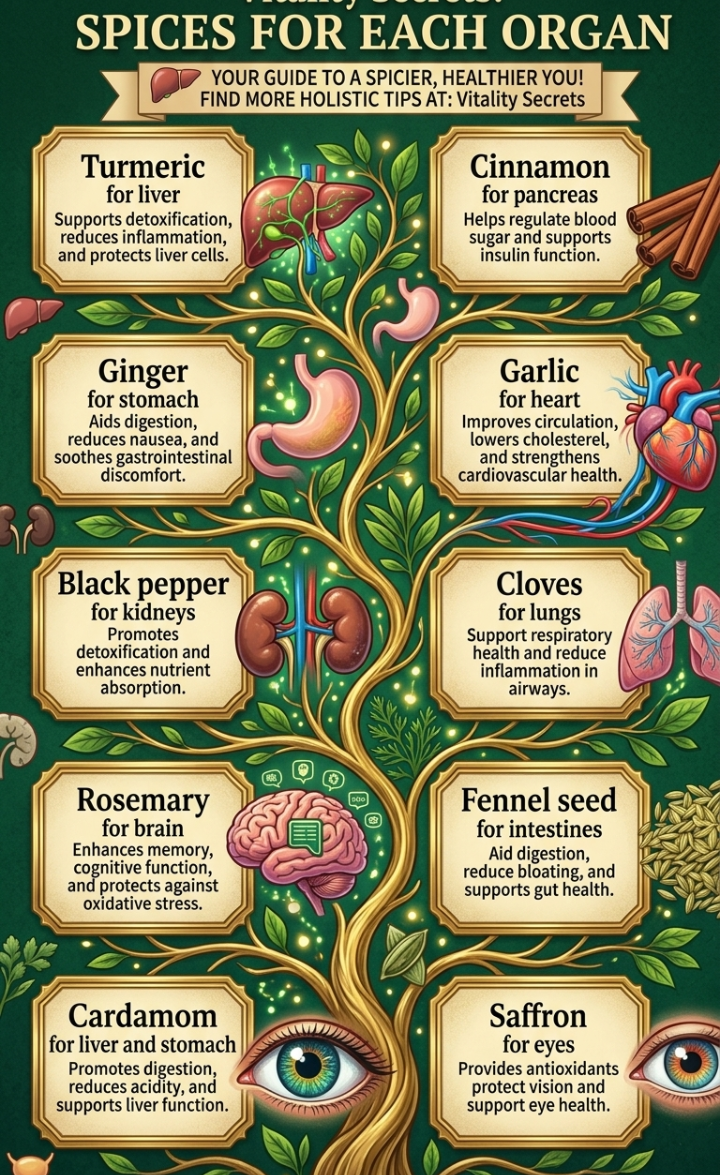
12 Spices Linked to Supporting Different Body Systems
Long before spices were prized purely for flavor, many cultures used them as part of traditional wellness practices, and modern nutrition research has since taken a real interest in the specific plant compounds behind many everyday spices. While no spice can replace medical treatment or act as a cure, a growing body of research has looked at how compounds like curcumin, gingerol, and allicin may support various body systems as part of an overall healthy diet.
Below, we break down 12 common spices, the body systems they’re most associated with, and what the research actually suggests, along with a note on how to think about these claims responsibly.
An Important Note on How to Read This List
Spices are concentrated sources of beneficial plant compounds, but “supports the liver” or “supports the heart” doesn’t mean a spice treats a liver or heart condition. Most of the research behind these associations comes from cell studies, animal studies, or small human trials, often using much higher concentrated doses than you’d get from cooking. Think of these spices as a reasonable, low-risk addition to an already healthy, balanced diet, not as a substitute for medical care, especially if you have a diagnosed condition affecting any of the organs mentioned below.
The 12 Spices
1. Turmeric : Associated with Liver Support
Turmeric contains curcumin, a compound studied for its antioxidant and anti-inflammatory properties. Some research has looked at curcumin’s potential role in supporting the body’s natural detoxification processes and protecting liver cells from oxidative stress, though curcumin is also poorly absorbed on its own and is often paired with black pepper to improve bioavailability.
How to use it: Add turmeric to soups, rice, roasted vegetables, or golden milk lattes, ideally with a pinch of black pepper.
2. Cinnamon : Associated with Pancreas Support
Cinnamon has been studied for its potential to help regulate blood sugar and support healthy insulin function. Some research suggests certain cinnamon compounds may modestly improve insulin sensitivity, though the effect size varies across studies and cinnamon should not be used as a replacement for prescribed diabetes management.
How to use it: Sprinkle cinnamon into oatmeal, coffee, smoothies, or baked goods.
3. Ginger — Associated with Stomach Support
Ginger is one of the more well-researched spices for digestive comfort. It’s commonly used to aid digestion, reduce nausea, and soothe general gastrointestinal discomfort, with research supporting its use for nausea related to motion sickness, pregnancy, and chemotherapy in particular.
How to use it: Use fresh ginger in stir-fries, teas, soups, or smoothies.
4. Garlic — Associated with Heart Support
Garlic contains allicin, a sulfur compound studied for its potential to improve circulation, support healthy cholesterol levels, and strengthen cardiovascular health overall. Multiple studies have looked at garlic’s modest effects on blood pressure and cholesterol when consumed regularly as part of the diet.
How to use it: Use fresh garlic generously in sauces, marinades, roasted vegetables, and proteins.
5. Black Pepper — Associated with Kidney Support
Black pepper contains piperine, a compound studied primarily for its ability to enhance nutrient absorption, particularly of compounds like curcumin from turmeric. Some research has also looked at piperine’s antioxidant properties, though evidence specifically connecting black pepper to kidney detoxification is limited compared to its well-documented role in nutrient absorption.
How to use it: Pair black pepper with turmeric-based dishes to enhance absorption, or use it as a general all-purpose seasoning.
6. Cloves — Associated with Lung Support
Cloves contain eugenol, a compound with notable antioxidant and anti-inflammatory properties. Some traditional and preliminary research has looked at clove’s potential role in supporting respiratory health and reducing airway inflammation, though this remains an area with more limited human research.
How to use it: Add whole or ground cloves to spiced teas, baked goods, or slow-cooked dishes.
7. Rosemary — Associated with Brain Support
Rosemary has been studied for its potential cognitive benefits, including memory support. Research has looked at rosemary’s aroma and active compounds, like rosmarinic acid and carnosic acid, in relation to memory performance and protection against oxidative stress in brain cells.
How to use it: Use fresh or dried rosemary in roasted meats, potatoes, and vegetables, or brew it as a tea.
8. Fennel Seed — Associated with Intestinal Support
Fennel seed has traditionally been used to aid digestion, reduce bloating, and support overall gut comfort. Some research supports fennel’s use for digestive discomfort, and it’s a common after-meal remedy in several cultures.
How to use it: Chew a small amount of fennel seed after meals, or brew it as a tea.
9. Cardamom — Associated with Liver and Stomach Support
Cardamom has been used traditionally to promote digestion and reduce acidity, and some research has looked at its potential role in supporting liver function through its antioxidant compounds, though human research remains limited.
How to use it: Add cardamom to coffee, tea, rice dishes, or baked goods.
10. Saffron — Associated with Eye Support
Saffron is rich in antioxidant compounds, including crocin and safranal, which have been studied for their potential to protect vision and support overall eye health. Some clinical research has specifically looked at saffron’s role in supporting eye health in the context of age-related conditions, though this remains an active area of study.
How to use it: Use a small pinch of saffron threads in rice dishes, soups, or teas, since a little goes a long way both in flavor and cost.
11. Coriander — Associated with Bladder Support
Coriander seed has traditionally been used to support urinary and digestive health, though the specific research connecting coriander to bladder function is more limited compared to other spices on this list, and much of the evidence remains preliminary or based on traditional use.
How to use it: Use ground coriander in curries, roasted vegetables, and spice blends.
12. Nutmeg — Associated with Nervous System Support
Nutmeg contains compounds that have been studied in small doses for potential calming effects on the nervous system. It’s worth noting that nutmeg is toxic in large amounts, so it should always be used sparingly, in the small quantities typical of cooking.
How to use it: Use a small pinch of nutmeg in baked goods, warm milk, or spiced beverages.
How to Build Spices Into Your Daily Diet
Cook with spices generously, rather than treating them as an occasional garnish
Pair complementary spices, like turmeric with black pepper, to enhance absorption
Make a spice blend you enjoy and reach for regularly, so it becomes a consistent part of your cooking rather than a one-time effort
Use fresh spices when possible, since they tend to have a stronger concentration of active compounds than older, long-stored dried versions
Remember that spices work best as part of an overall healthy diet, not as a substitute for vegetables, fruit, protein, and other whole foods
Frequently Asked Questions
Can spices actually detoxify organs like the liver or kidneys?
The idea of spices directly “detoxifying” organs is often oversimplified in popular health content. The liver and kidneys already have their own built-in detoxification systems, and while certain spices contain antioxidant compounds that may support these organs’ normal function, no spice removes toxins from the body on its own.
Is it safe to use these spices every day?
For most healthy adults, using these spices in normal cooking amounts is generally considered safe. A few, like nutmeg, are only safe in small amounts and can be harmful in large doses, so moderation matters even with spices that have a good safety profile.
Do I need supplements to get these benefits, or is cooking with the spice enough?
Most of the research behind spices like turmeric uses concentrated extracts at doses far higher than what you’d get from cooking. Culinary amounts are a reasonable, low-risk way to incorporate these compounds into your diet, but if you’re considering a concentrated supplement for a specific health concern, it’s worth discussing with a healthcare provider first.
Can these spices interact with medications?
Yes, some spices, particularly turmeric, ginger, and garlic in concentrated or supplement form, can interact with blood thinners and other medications. If you take prescription medication regularly, check with your doctor or pharmacist before significantly increasing your intake of any of these spices, especially in supplement form.
This article is intended for general informational purposes and is not a substitute for professional medical advice. If you have a health condition or take medication, consult your healthcare provider before using spices medicinally or in supplement form.