
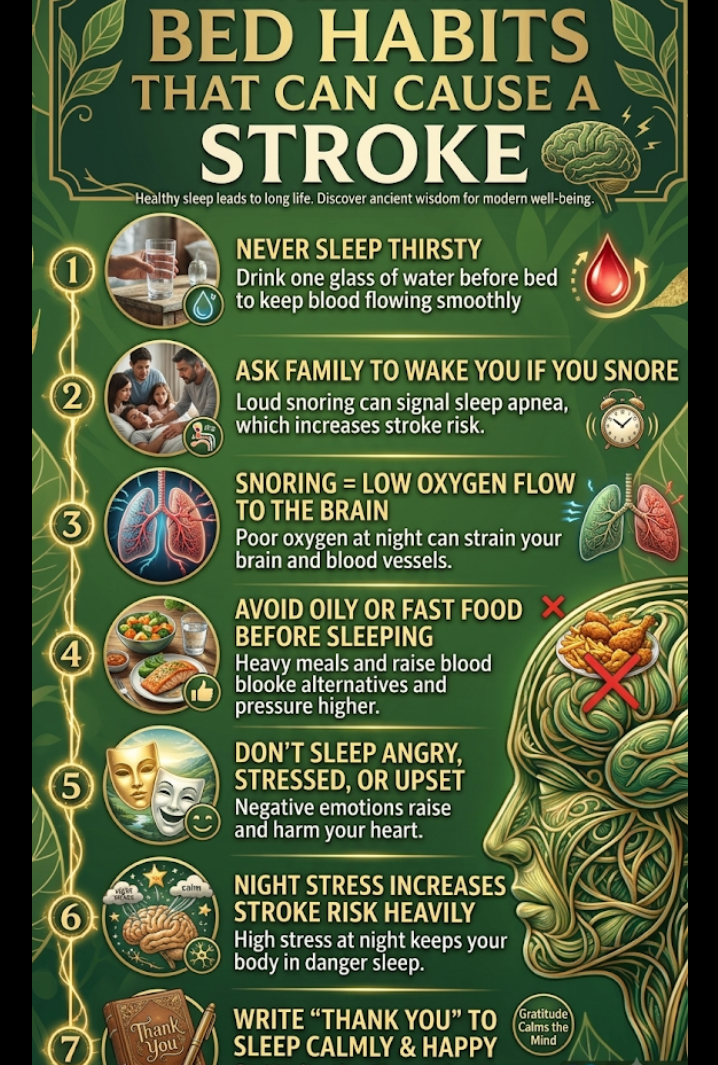
7 Bedtime Habits Linked to Stroke Risk (And What to Do Instead)
Stroke risk is shaped by many factors working together over years, things like blood pressure, cholesterol, weight, activity level, and underlying conditions such as diabetes or atrial fibrillation. But a handful of everyday nighttime habits are also connected to some of these same risk factors, particularly sleep apnea, high blood pressure, and chronic stress. Paying attention to how you sleep, and the small routines around bedtime, is one more piece of a much bigger picture when it comes to supporting long-term brain and heart health.
Below, we walk through 7 bedtime habits that are worth paying attention to, what the research actually connects them to, and simple, realistic changes you can make starting tonight.
An Important Note Before We Start
Stroke is a serious medical event, and no single nighttime habit causes or prevents one on its own. The habits below are associated with known, well-established stroke risk factors, primarily high blood pressure, sleep apnea, and chronic stress, rather than being direct, independent causes of stroke themselves. If you have concerns about your personal stroke risk, especially if you have high blood pressure, heart disease, diabetes, or a family history of stroke, talk to your doctor about a proper risk assessment rather than relying on general lifestyle information alone.
1. Going to Bed Dehydrated
The connection: Mild dehydration can cause blood to become slightly more concentrated, and some research has looked at hydration status as one of many small factors that may influence blood clotting and circulation, particularly overnight when you go several hours without drinking fluids.
What to try instead: Drink a glass of water in the hour or so before bed, and aim for consistent hydration throughout the day rather than trying to catch up all at once in the evening. If you wake up frequently to urinate at night, talk to your doctor about the right hydration timing for you.
2. Ignoring Loud Snoring
The connection: Loud, frequent snoring can be a sign of obstructive sleep apnea, a condition in which breathing repeatedly stops and starts during sleep. Sleep apnea is a well-documented, independent risk factor for stroke, since it’s associated with high blood pressure, irregular heart rhythms, and reduced oxygen levels overnight.
What to try instead: If a partner or family member has noticed loud snoring, gasping, or pauses in your breathing while you sleep, bring it up with your doctor. Sleep apnea is diagnosable and treatable, often with a sleep study and, if needed, a CPAP machine or other intervention.
3. Not Addressing Low Oxygen From Snoring
The connection: The repeated drops in blood oxygen that occur with untreated sleep apnea put extra strain on the cardiovascular system over time, which is part of why sleep apnea is so strongly linked to increased stroke risk in research.
What to try instead: This point reinforces the one above: snoring on its own isn’t necessarily dangerous, but snoring paired with gasping, choking, or daytime fatigue warrants a conversation with a healthcare provider about screening for sleep apnea.
4. Eating Heavy, Fatty, or Fast Food Close to Bedtime
The connection: Large, heavy meals eaten shortly before bed can temporarily raise blood pressure and interfere with sleep quality, and diets consistently high in saturated fat and sodium are linked to higher blood pressure and cholesterol over time, both established stroke risk factors.
What to try instead: Try to finish larger meals at least a few hours before bed, and lean toward lighter, lower-sodium options in the evening if you do need a snack. This is more about your overall dietary pattern than any single late-night meal.
5. Going to Bed Angry, Stressed, or Upset
The connection: Chronic stress is associated with elevated blood pressure and increased inflammation, both of which are connected to cardiovascular risk over time. While the idea of falling asleep upset isn’t itself a proven stroke trigger, ongoing unresolved stress and poor sleep quality together can compound cardiovascular strain.
What to try instead: Build a short wind-down routine before bed, like journaling, a few minutes of deep breathing, or simply naming what’s bothering you rather than suppressing it. You don’t need to fully resolve every stressor before sleep, but taking a few minutes to acknowledge it can reduce the mental load you’re carrying into the night.
6. Carrying High Stress Into Nighttime
The connection: Nighttime is when the body is meant to shift into a lower-stress, restorative state. Chronically elevated stress hormones at night have been studied in relation to poor sleep quality, elevated blood pressure, and disrupted heart rate variability, all of which play a role in longer-term cardiovascular health.
What to try instead: Consider a consistent pre-bed routine that signals to your body it’s time to downshift, such as dimming lights, limiting screens, and avoiding stimulating conversations or work in the hour before bed.
7. Skipping Gratitude or Reflection Before Sleep
The connection: While gratitude practices are not a direct stroke-prevention tool, research on gratitude journaling and reflective writing has shown associations with lower stress levels and improved sleep quality, both of which support the broader goal of a calmer, more restorative nightly routine.
What to try instead: Try writing down one or two things you’re grateful for, or simply reflecting on them mentally, as part of your wind-down routine. This is a low-effort habit that supports the same stress-reduction goals as the other items on this list.
Known Stroke Risk Factors Worth Knowing
While bedtime habits can play a supporting role, the most well-established, medically recognized stroke risk factors include:
- High blood pressure
- Atrial fibrillation and other heart rhythm disorders
- High cholesterol
- Diabetes
- Smoking
- Obesity and physical inactivity
- Sleep apnea
- Family history and age
If you have one or more of these risk factors, addressing them directly with your doctor is far more impactful than any single bedtime habit on its own.
Recognizing the Signs of a Stroke
Because stroke is a medical emergency, it’s worth knowing the warning signs regardless of your risk level. A commonly used method is the acronym FAST:
Face drooping on one side
Arm weakness, especially on one side
Speech difficulty or slurred speech
Time to call emergency services immediately if any of these signs appear
If you or someone near you experiences these symptoms, call emergency services right away. Fast treatment significantly improves outcomes.
Building a Better Bedtime Routine
Rather than trying to overhaul your entire evening overnight, consider starting with one or two of these habits:
Keep a glass of water on your nightstand
Ask a partner or family member to flag loud snoring or breathing pauses
Shift your last big meal earlier in the evening
Spend five minutes journaling or reflecting before turning off the lights
Build a wind-down routine that helps signal to your body that the day is done
Frequently Asked Questions
Can poor sleep habits actually cause a stroke?
Poor sleep habits alone don’t directly cause a stroke, but they’re connected to well-established risk factors like high blood pressure, sleep apnea, and chronic stress, all of which do meaningfully raise stroke risk over time.
How do I know if my snoring is a sign of sleep apnea?
Signs that snoring may be related to sleep apnea include loud, frequent snoring, gasping or choking sounds during sleep, daytime fatigue despite a full night’s sleep, and morning headaches. A sleep study is the only way to get a definitive diagnosis.
Does eating late at night raise stroke risk directly?
There’s no strong evidence that eating late at night directly raises stroke risk on its own. However, consistently eating heavy, high-sodium, high-fat meals, especially close to bedtime, is linked to higher blood pressure and cholesterol over time, both of which are established risk factors.
Is gratitude journaling backed by real research, or is it just a wellness trend?
Gratitude and reflective journaling have been studied in relation to stress reduction and sleep quality, with modest but real associations found in multiple studies. It’s not a medical treatment, but it’s a low-risk, evidence-informed addition to a bedtime routine.
This article is intended for general informational purposes and is not a substitute for professional medical advice, diagnosis, or treatment. If you have risk factors for stroke or notice warning signs, seek immediate medical attention and consult your healthcare provider for personalized guidance.