
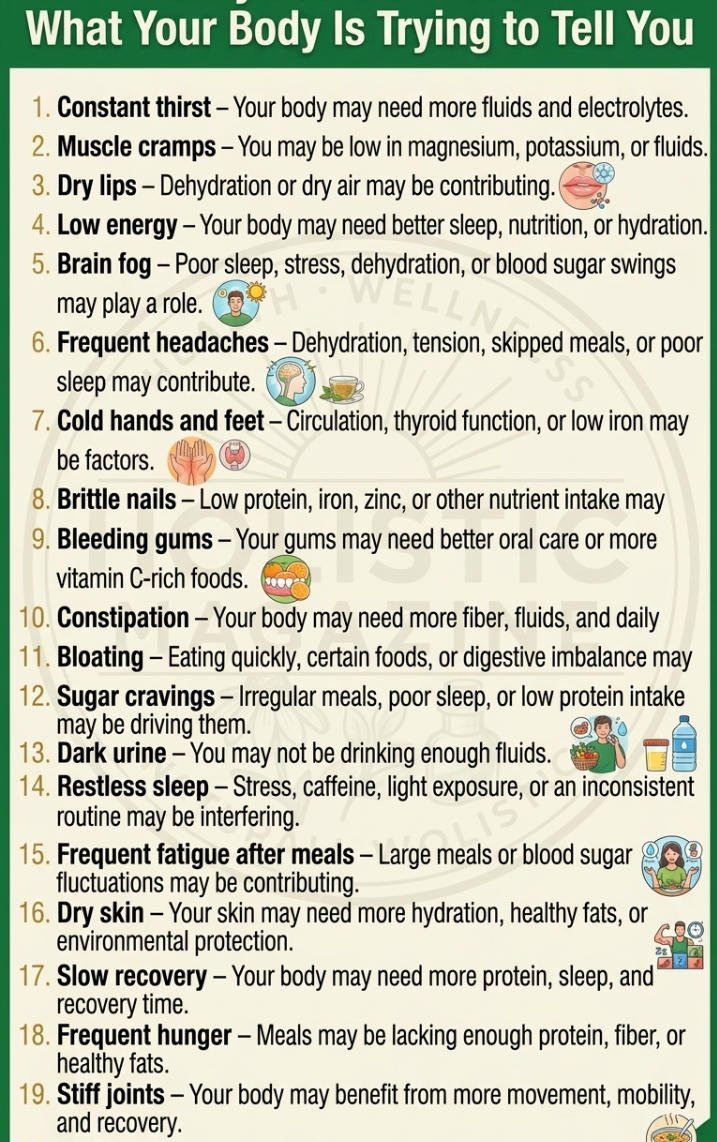
♦ 20 Signs Your Body Is Trying to Tell You Something
Your body is remarkably good at sending small signals long before anything becomes a bigger problem. Persistent thirst, cracked lips, cold hands, or that afternoon energy crash aren’t just random annoyances, they’re often your body’s way of flagging that something needs attention, whether that’s more water, better sleep, more nutrients, or simply more rest.
Below are 20 common signs worth paying attention to, along with what they may indicate and simple, practical steps you can take in response. This list is meant to help you notice patterns in your own body, not to diagnose any specific condition.
Why These Signals Matter
Many everyday symptoms are dismissed as “just part of life,” when they’re often connected to something specific, like hydration, sleep quality, nutrient intake, or stress levels. Paying attention to these patterns over time, rather than in isolation, can help you make small adjustments before minor imbalances become bigger issues. That said, persistent or severe symptoms should always be discussed with a healthcare provider, since many of these signs can overlap with underlying medical conditions that need proper evaluation.
The 20 Signs
1. Constant Thirst
Ongoing thirst may signal that your body needs more fluids and electrolytes, especially if you’ve been sweating, consuming caffeine or alcohol, or simply not drinking enough water throughout the day.
What may help: Increase water intake, add electrolytes on high-activity days, and monitor how your thirst changes as you adjust your fluid intake.
2. Muscle Cramps
Frequent cramping can point to low magnesium, potassium, or fluid levels, particularly after exercise or in hot weather.
What may help: Stay hydrated, include magnesium and potassium-rich foods like leafy greens and bananas, and stretch before and after activity.
3. Dry Lips
Dry, cracked lips are commonly linked to dehydration or dry air, especially during winter months or in air-conditioned environments.
What may help: Drink more water, use a humidifier if indoor air is dry, and apply a moisturizing lip balm.
4. Low Energy
Persistent low energy may point to a need for better sleep, improved nutrition, or more consistent hydration, rather than simply needing more caffeine.
What may help: Prioritize a consistent sleep schedule, eat balanced meals with protein and fiber, and check that you’re drinking enough water throughout the day.
5. Brain Fog
Trouble concentrating or feeling mentally “cloudy” can be influenced by poor sleep, chronic stress, dehydration, or blood sugar swings from skipped meals or high-sugar eating patterns.
What may help: Stabilize meal timing, reduce added sugar, prioritize sleep quality, and stay hydrated throughout the day.
6. Frequent Headaches
Headaches are often connected to dehydration, muscle tension, skipped meals, or poor sleep, particularly when they show up as a recurring pattern rather than a one-time occurrence.
What may help: Track your headache triggers, stay consistently hydrated, avoid skipping meals, and address neck or shoulder tension if present.
7. Cold Hands and Feet
Cold extremities can be related to circulation, thyroid function, or low iron levels, especially if the coldness is persistent rather than just tied to a chilly room.
What may help: Move regularly throughout the day, and speak with a doctor if cold hands and feet are persistent, since thyroid and iron levels are best assessed with bloodwork.
8. Brittle Nails
Nails that break or peel easily may reflect low protein, iron, zinc, or other nutrient intake.
What may help: Ensure adequate protein intake, include iron and zinc-rich foods like lean meats, legumes, and seeds, and give new nail growth several months to reflect dietary changes.
9. Bleeding Gums
Gums that bleed during brushing or flossing may need better oral care or more vitamin C-rich foods in your diet.
What may help: Improve daily brushing and flossing habits, increase vitamin C intake through foods like citrus and bell peppers, and see a dentist if bleeding persists.
10. Constipation
Irregular bowel movements often point to a need for more fiber, more fluids, and more consistent daily movement.
What may help: Increase fiber-rich foods like vegetables, fruit, and whole grains, drink more water, and build in regular physical activity.
11. Bloating
Bloating can result from eating too quickly, certain trigger foods, or a broader digestive imbalance.
What may help: Slow down while eating, chew thoroughly, and pay attention to whether specific foods consistently trigger bloating.
12. Sugar Cravings
Frequent sugar cravings may be driven by irregular meals, poor sleep, or insufficient protein intake throughout the day.
What may help: Eat regular, balanced meals with adequate protein, prioritize consistent sleep, and notice whether cravings ease as meal timing becomes more regular.
13. Dark Urine
Dark urine is one of the more direct signs that you may not be drinking enough fluids.
What may help: Increase water intake and monitor urine color as a simple daily hydration check, aiming for a pale yellow color.
14. Restless Sleep
Trouble staying asleep can be influenced by stress, caffeine intake, light exposure, or an inconsistent sleep routine.
What may help: Limit caffeine later in the day, reduce screen exposure before bed, and aim for a consistent sleep and wake time.
15. Frequent Fatigue After Meals
Feeling unusually tired after eating may be related to large meal portions or blood sugar fluctuations, particularly after high-carbohydrate meals eaten without enough protein or fiber.
What may help: Balance meals with protein, fiber, and healthy fats, and consider smaller, more frequent meals if large meals consistently leave you drained.
16. Dry Skin
Skin that feels persistently dry may need more hydration, healthy fats, or additional environmental protection, especially in colder or drier climates.
What may help: Increase water intake, include healthy fats like olive oil and avocado in your diet, and use a moisturizer suited to your skin type.
17. Slow Recovery
Taking longer than expected to recover from workouts or minor illness may point to a need for more protein, more sleep, or more overall recovery time.
What may help: Prioritize protein intake, allow adequate rest between intense workouts, and treat sleep as a core part of your recovery routine, not an afterthought.
18. Frequent Hunger
Feeling hungry again shortly after eating may mean your meals aren’t providing enough protein, fiber, or healthy fats to keep you satisfied.
What may help: Build meals around a protein source, a fiber-rich carbohydrate, and a healthy fat, rather than relying on refined carbohydrates alone.
19. Stiff Joints
Ongoing joint stiffness may benefit from more regular movement, mobility work, and recovery time.
What may help: Incorporate daily mobility exercises, avoid long periods of sitting without movement, and allow adequate recovery time after intense activity.
20. Feeling Run-Down
A general sense of being run-down is often your body’s way of asking for more rest, better nourishment, and reduced stress.
What may help: Evaluate your sleep quality, nutrition, and stress levels together rather than in isolation, since these three factors are closely connected and often improve together.
How to Use This List
Rather than treating each sign in isolation, look for patterns. If you’re experiencing several signs from this list at once, such as low energy, brain fog, and sugar cravings together, they often point back to a shared root cause, like inconsistent sleep, dehydration, or irregular eating patterns. Addressing the foundational habits, hydration, sleep, balanced nutrition, and movement, tends to improve multiple signals at once rather than treating each symptom separately.
When to See a Doctor
While many of these signs can improve with simple lifestyle adjustments, you should see a healthcare provider if:
Symptoms are severe, sudden, or worsening
A sign persists for several weeks despite lifestyle changes
You experience multiple symptoms together that concern you
You have a known health condition that could be related, such as thyroid disease, diabetes, or anemia
Bloodwork and a proper medical evaluation are the only reliable way to confirm whether something like low iron, thyroid dysfunction, or a nutrient deficiency is actually behind your symptoms.
Frequently Asked Questions
Can dehydration really cause headaches and brain fog?
Yes, mild dehydration is a well-documented contributor to both headaches and difficulty concentrating, and symptoms often improve within a couple hours of adequate rehydration.
How do I know if my symptoms are diet-related versus a medical condition?
Diet and lifestyle-related symptoms often improve within days to weeks of consistent changes like better hydration, sleep, and balanced meals. If symptoms persist despite these changes, it’s worth discussing with a doctor, since bloodwork can rule out or confirm an underlying condition.
Which sign should I address first if I have several at once?
Hydration and sleep are usually the most foundational, since they influence energy, brain fog, headaches, and cravings simultaneously. Starting there often creates a ripple effect that improves several other signs at once.
Is it normal to experience a few of these signs occasionally?
Yes, occasional symptoms like mild fatigue or a headache here and there are common and not necessarily cause for concern. It’s the persistent or recurring pattern of a symptom that’s more worth paying attention to.
This article is intended for general informational purposes and is not a substitute for professional medical advice, diagnosis, or treatment. If you have persistent or concerning symptoms, consult your healthcare provider.