
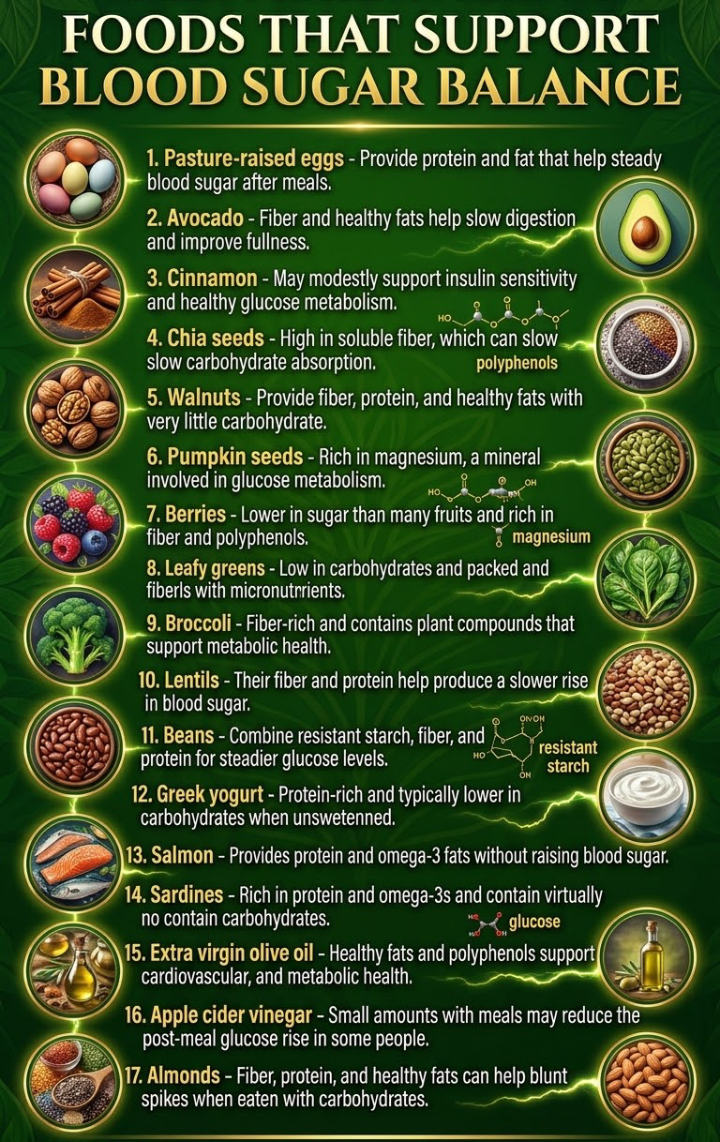
17 Foods That Support Blood Sugar Balance (And Why They Work)
Keeping blood sugar steady throughout the day plays a major role in how you feel your energy, your mood, your focus, and even how hungry you get between meals. While no single food is a magic fix, building meals around ingredients that are rich in fiber, protein, and healthy fats can help slow digestion, reduce post-meal glucose spikes, and support better metabolic health over time.
Below is a breakdown of 17 foods commonly recommended for supporting healthy blood sugar balance, along with the specific reasons each one may help.
Why Blood Sugar Balance Matters
When you eat foods that are quickly digested, like refined carbohydrates and sugary snacks, blood sugar can spike rapidly and then crash, often leaving you tired, irritable, or hungry again soon after eating. Over time, frequent blood sugar spikes are also linked to increased risk for insulin resistance and other metabolic concerns.
Foods that are higher in fiber, protein, and healthy fat tend to be digested more slowly, which helps glucose enter the bloodstream at a steadier pace. Pairing carbohydrates with these foods, rather than eating them alone, is one of the simplest strategies for more stable energy throughout the day.
The 17 Foods
1. Pasture-Raised Eggs
Eggs are a concentrated source of protein and fat, both of which slow digestion and help prevent the rapid glucose spike that can come from a carbohydrate-heavy breakfast. Pasture-raised eggs also tend to have a more favorable fatty acid profile than conventional eggs.
2. Avocado
Avocado is rich in fiber and monounsaturated fat, a combination that slows how quickly a meal is digested and helps you feel fuller for longer, which can reduce the likelihood of overeating carbohydrates later in the day.
3. Cinnamon
Some research suggests cinnamon may modestly support insulin sensitivity and healthy glucose metabolism, though the effect is generally mild. It’s an easy, low-risk addition to oatmeal, coffee, or baked goods.
4. Chia Seeds
Chia seeds are exceptionally high in soluble fiber, which forms a gel-like substance in the digestive tract that can slow the absorption of carbohydrates, helping to blunt post-meal blood sugar spikes.
5. Walnuts
Walnuts combine fiber, plant-based protein, and healthy fats while containing very little carbohydrate, making them a good option for a blood-sugar-friendly snack on their own or paired with fruit.
6. Pumpkin Seeds
Pumpkin seeds are a notably good source of magnesium, a mineral that plays a direct role in how the body metabolizes glucose and regulates insulin function.
7. Berries
Compared to many other fruits, berries are relatively lower in sugar while being rich in fiber and polyphenols, plant compounds that have been studied for their potential role in supporting healthy metabolic function.
8. Leafy Greens
Leafy greens like spinach, kale, and romaine are low in carbohydrates and packed with fiber and micronutrients, making them one of the most blood-sugar-friendly foods you can add to a plate in large quantities.
9. Broccoli
Broccoli is another fiber-rich, low-carbohydrate vegetable that also contains plant compounds studied for their potential to support overall metabolic health.
10. Lentils
Lentils combine fiber and plant protein in a way that helps produce a slower, steadier rise in blood sugar compared to more refined carbohydrate sources, making them a smart substitute for white rice or pasta in some meals.
11. Beans
Beans contain a mix of resistant starch, fiber, and protein, a combination that helps promote steadier glucose levels after eating compared to simple starches.
12. Greek Yogurt
Unsweetened Greek yogurt is protein-rich and typically lower in carbohydrates than regular yogurt, making it a filling option that’s less likely to spike blood sugar, especially when flavored varieties with added sugar are avoided.
13. Salmon
Salmon provides high-quality protein and omega-3 fats without contributing any carbohydrates to a meal, meaning it won’t raise blood sugar on its own and can help balance out higher-carbohydrate foods on the same plate.
14. Sardines
Like salmon, sardines are rich in protein and omega-3 fatty acids and contain virtually no carbohydrates, making them an affordable, blood-sugar-friendly source of healthy fat and protein.
15. Extra Virgin Olive Oil
Extra virgin olive oil provides healthy monounsaturated fats and polyphenols that support cardiovascular and metabolic health, and using it in place of more processed cooking oils and fats is a simple upgrade with research behind it.
16. Apple Cider Vinegar
Some studies suggest that consuming a small amount of apple cider vinegar with a meal may modestly reduce the post-meal blood sugar rise in some people, though it should always be diluted and is not a substitute for a balanced diet.
17. Almonds
Almonds provide fiber, protein, and healthy fats, and eating them alongside a carbohydrate-containing food, such as fruit or toast, can help blunt the glucose spike that would otherwise come from the carbohydrate alone.
How to Build a Blood-Sugar-Friendly Plate
A simple way to apply this list is to think in terms of balance rather than restriction. At each meal, try to include:
A protein source eggs, salmon, sardines, or Greek yogurt
A healthy fat avocado, olive oil, walnuts, or almonds
A fiber-rich carbohydrate lentils, beans, berries, or leafy greens
A smaller portion of any refined or starchy carbohydrate, paired with the above rather than eaten alone
This kind of plate structure slows digestion naturally, without requiring you to track or eliminate entire food groups.
Additional Tips for Supporting Healthy Blood Sugar
Don’t skip meals. Long gaps between eating can lead to larger blood sugar swings once you do eat.
Move after meals. Even a short 10 to 15 minute walk after eating can help muscles use glucose more efficiently.
Prioritize sleep. Poor sleep is linked to reduced insulin sensitivity, even in otherwise healthy individuals.
Stay hydrated. Dehydration can concentrate blood sugar levels and make readings appear higher than they otherwise would be.
Limit sugary beverages. Liquid sugar is absorbed quickly and tends to cause a sharper spike than sugar eaten as part of a meal with fiber and fat.
Frequently Asked Questions
Can these foods replace medication for blood sugar management?
No. These foods may support healthy blood sugar balance as part of an overall diet, but they are not a substitute for medication, insulin, or any treatment prescribed by a healthcare provider. Always follow your doctor’s guidance for managing diagnosed conditions like diabetes or prediabetes.
How much apple cider vinegar should I take with meals?
Most research uses small amounts, generally around one to two teaspoons diluted in water, taken shortly before or with a meal. Undiluted vinegar can irritate the throat and erode tooth enamel, so it should always be diluted.
Are all carbohydrates bad for blood sugar?
No. Fiber-rich carbohydrates like lentils, beans, vegetables, and berries digest more slowly and have a much gentler effect on blood sugar than refined carbohydrates like white bread, sugary cereal, or soda.
How quickly can these foods affect blood sugar?
Individual meals can influence blood sugar within a couple of hours, but the more meaningful benefits of a blood-sugar-friendly diet tend to build over weeks and months of consistent eating patterns, not from any single meal or food.
This article is intended for general informational purposes and is not a substitute for professional medical advice. If you have concerns about blood sugar, diabetes, or prediabetes, consult your healthcare provider before making significant dietary changes.