
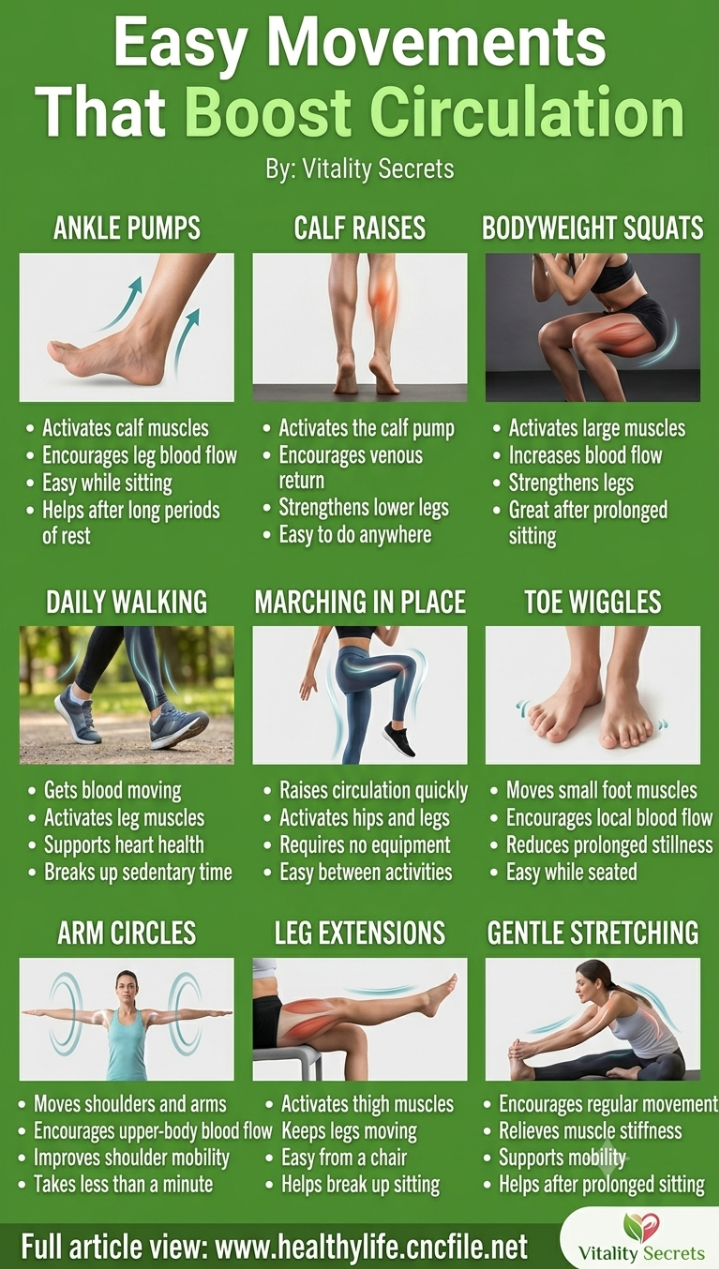
9 Easy Movements That Boost Circulatio (No Equipment Needed)
If you spend long hours sitting at a desk, traveling, or recovering from an illness or injury, you’ve probably felt it: heavy legs, cold feet, or that stiff, sluggish feeling that comes from staying still too long. The good news is that you don’t need a gym membership or fancy equipment to get your blood moving again. These 9 simple movements can be done almost anywhere at your desk, in front of the TV, or during a work break and they’re an easy, low-impact way to support healthy circulation throughout the day.
Below, we break down each movement, how it helps blood flow, and why it belongs in your daily routine.
Why Circulation Matters
Good blood circulation carries oxygen and nutrients to your muscles, organs, and tissues, while helping remove waste products from the body. When you sit or stand still for long stretches, blood can pool in the lower legs, making you feel stiff, tired, or swollen. Regular movement even small, gentle movement helps keep blood flowing efficiently, particularly in the legs and feet, where circulation issues are most commonly felt.
These movements are especially useful for people who:
Sit at a desk for most of the day
Travel frequently on long flights or car rides
Are recovering from surgery or a period of bed rest
Stand for long shifts at work
Simply want to build more movement into a sedentary day
As always, if you have a diagnosed circulation condition such as deep vein thrombosis, peripheral artery disease, or chronic venous insufficiency, talk to your doctor before starting a new movement routine, since your needs may be different from general guidance.
1. Ankle Pumps
Sitting or lying down, simply flex your foot up toward your shin, then point your toes down, repeating in a slow, controlled pumping motion.
Benefits:
Activates the calf muscles
Encourages leg blood flow
Easy to do while sitting
Helpful after long periods of rest, such as after surgery or a long flight
Ankle pumps are one of the most recommended movements for people on bed rest or recovering from procedures, since they can be done without standing up or using any equipment.
2. Calf Raises
Stand with your feet hip-width apart and slowly rise up onto your toes, then lower back down with control. You can hold onto a wall or chair for balance if needed.
Benefits:
Activates the calf pump, which helps push blood back up toward the heart
Encourages venous return
Strengthens the lower legs
Easy to do almost anywhere, including at a standing desk
The calf muscles are sometimes called the body’s “second heart” because of how effectively they help pump blood upward against gravity.
3. Bodyweight Squats
Stand with feet shoulder-width apart and lower your body as if sitting into a chair, keeping your chest up, then push back up to standing.
Benefits:
Activates large muscle groups in the legs and glutes
Increases blood flow throughout the lower body
Strengthens the legs over time
Especially useful after prolonged sitting
Because squats engage some of the largest muscles in the body, they’re one of the more effective movements on this list for quickly getting blood moving.
4. Daily Walking
A brisk walk around the block, through a park, or even pacing indoors counts.
Benefits:
Gets blood moving throughout the entire body
Activates the leg muscles rhythmically
Supports overall heart health
Breaks up long periods of sedentary time
Walking is one of the simplest and most sustainable ways to support circulation long-term, and it requires no special skill or equipment just consistency.
5. Marching in Place
Standing in one spot, lift your knees alternately as if marching, swinging your arms naturally with the movement.
Benefits:
Raises circulation quickly
Activates the hips and legs
Requires no equipment
Great to slot in between other activities or tasks
This is a great option when you’re short on space or time but still want a quick burst of movement to wake up tired legs.
6. Toe Wiggles
While seated or lying down, simply wiggle your toes, spreading them apart and curling them in a repeated motion.
Benefits:
Moves the small muscles of the feet
Encourages local blood flow to the extremities
Reduces the effects of prolonged stillness
Can be done discreetly while seated, even in a meeting
Toe wiggles are especially useful for people who are seated for extended periods, like during travel or desk work, since they can be done without drawing attention.
7. Arm Circles
Extend your arms out to the sides and make small to large circles, switching direction after 15 to 20 seconds.
Benefits:
Moves the shoulders and arms
Encourages upper-body blood flow
Improves shoulder mobility
Takes less than a minute to complete
While much circulation advice focuses on the legs, upper-body movement matters too, especially for people who type or sit hunched over a desk for hours at a time.
8. Leg Extensions
Sitting in a chair, extend one leg straight out in front of you, hold briefly, then lower it back down. Alternate legs.
Benefits:
Activates the thigh muscles
Keeps the legs moving even while seated
Easy to do from a chair, including at a desk
Helps break up long stretches of sitting
This movement is a favorite for office workers because it can be done discreetly under a desk without leaving your seat.
9. Gentle Stretching
Simple stretches, like reaching toward your toes while seated or standing, or a gentle standing forward fold, help lengthen tight muscles.
Benefits:
Encourages regular movement throughout the day
Relieves muscle stiffness
Supports overall mobility
Especially helpful after long periods of sitting or inactivity
Stretching won’t replace more active movement, but it’s a gentle way to close out a movement break and release tension that builds up from staying still.
How Often Should You Do These Movements?
For most people, aiming to break up sitting every 30 to 60 minutes with 2 to 5 minutes of movement is a reasonable target. You don’t need to do all 9 movements every time even one or two, done consistently throughout the day, can make a noticeable difference in how your legs and feet feel by the end of the day.
A simple approach:
At your desk: Ankle pumps, toe wiggles, leg extensions, and arm circles
Standing breaks: Calf raises, marching in place, gentle stretching
Longer breaks: A short walk or a set of bodyweight squats
Tips for Building a Circulation-Friendly Routine
Set a reminder. A recurring timer every hour is an easy way to build the habit without having to think about it.
Pair movement with existing habits. Try a set of calf raises while waiting for coffee to brew, or ankle pumps while on a phone call.
Stay hydrated. Proper hydration supports healthy blood volume and circulation.
Elevate your legs when resting. Propping your feet up above heart level for a few minutes can help reduce pooling in the lower legs.
Wear supportive, comfortable footwear, especially if you’re on your feet for long stretches.
When to See a Doctor
Occasional stiffness or heaviness in the legs after sitting is common and usually improves with movement. However, you should talk to a healthcare provider if you experience:
Persistent swelling in one leg
Skin discoloration, warmth, or pain in the calf
Numbness or tingling that doesn’t resolve
Leg pain that worsens with walking and improves with rest
These can sometimes be signs of an underlying circulation issue that needs medical evaluation rather than general exercise.
Frequently Asked Questions
What is the fastest way to improve circulation in the legs?
Movement that engages the calf muscles, such as calf raises or walking, is generally the quickest way to encourage blood flow back up toward the heart, since the calf muscles act as a pump that supports venous return.
Can I do these movements at my desk without anyone noticing?
Yes: ankle pumps, toe wiggles, and leg extensions are all discreet enough to do while seated at a desk or during a meeting.
How long should a circulation movement break last?
Even 2 to 5 minutes of movement every 30 to 60 minutes can help. Consistency throughout the day matters more than the length of any single break.
Are these movements safe for older adults?
Most of these movements are low-impact and generally safe for older adults, but anyone with balance concerns, joint pain, or a diagnosed health condition should check with a doctor or physical therapist before starting a new routine.
This article is intended for general informational purposes and is not a substitute for professional medical advice. If you have ongoing circulation concerns, consult your healthcare provider.