
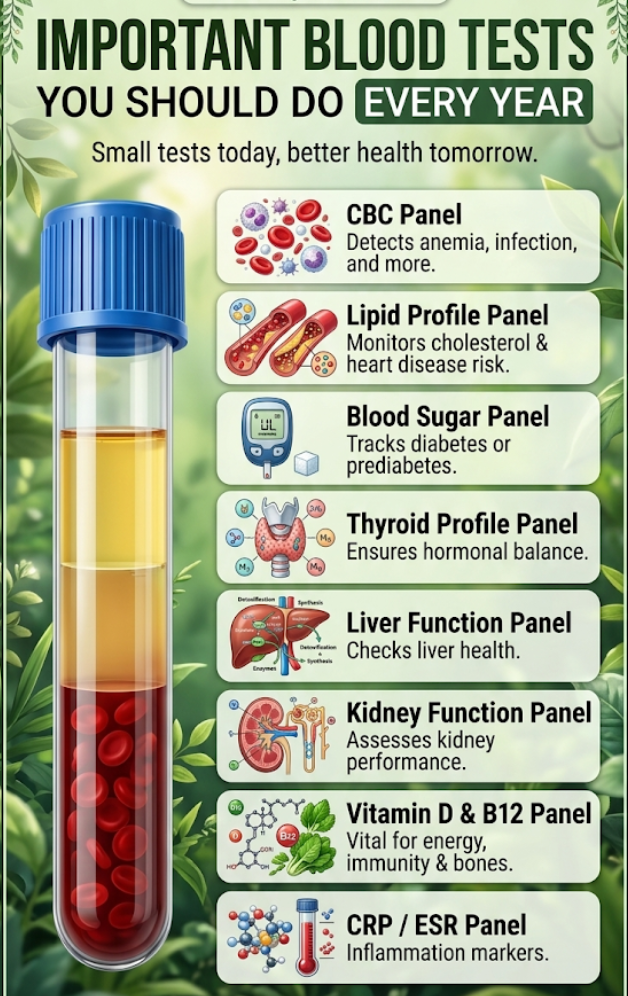
8 Important Blood Tests You Should Consider Getting Every Year
Many health conditions develop gradually and quietly, often without any noticeable symptoms until they’ve progressed significantly. Routine annual bloodwork is one of the most effective tools for catching these changes early, when they’re generally easier to manage and treat. Rather than waiting until something feels wrong, a yearly blood panel gives you and your doctor a clear, objective picture of what’s actually happening inside your body.
Below, we walk through 8 important blood tests commonly recommended for annual checkups, what each one actually measures, and why it matters.
Why Annual Bloodwork Matters
Bloodwork offers a level of insight that symptoms alone often can’t provide. Conditions like prediabetes, early kidney dysfunction, or a nutrient deficiency can exist for a long time before causing symptoms you’d actually notice day to day. Annual testing establishes a baseline for your individual health, so any changes over time become much easier to identify and address, rather than only discovering a problem once it’s more advanced. That said, not every test is necessary for every person every single year, your doctor can help determine which tests make the most sense based on your age, risk factors, and personal health history.
1. Complete Blood Count (CBC)
What it detects: Anemia, infection, and more.
A CBC measures several components of your blood, including red blood cells, white blood cells, and platelets. It can reveal anemia (often related to iron, B12, or other deficiencies), signs of infection or inflammation, and certain blood disorders. Because it covers so much ground in a single test, a CBC is often considered one of the foundational panels in routine bloodwork.
2. Lipid Profile
What it monitors: Cholesterol and heart disease risk.
A lipid profile measures total cholesterol, LDL (“bad”) cholesterol, HDL (“good”) cholesterol, and triglycerides. These markers are key indicators of cardiovascular risk, and tracking them over time helps you and your doctor assess whether diet, exercise, or medication adjustments might be needed to support long-term heart health.
3. Blood Sugar (Fasting Glucose and HbA1c)
What it tracks: Diabetes or prediabetes.
Fasting glucose measures your blood sugar at a single point in time, while HbA1c reflects your average blood sugar over roughly the past 2 to 3 months, offering a more complete picture of blood sugar control. Together, these tests are essential for catching prediabetes and diabetes early, often well before symptoms would otherwise prompt a visit to the doctor.
4. Thyroid Profile (TSH, T3, T4)
What it ensures: Hormonal balance.
The thyroid gland regulates metabolism, energy, and numerous other bodily functions through the hormones it produces. A thyroid panel, typically starting with TSH (thyroid-stimulating hormone) and sometimes including T3 and T4, can identify an underactive or overactive thyroid, both of which can cause a wide range of symptoms, from fatigue and weight changes to mood shifts, that are easy to attribute to other causes.
5. Liver Function Test (LFT)
What it checks: Liver health.
Liver function tests measure enzymes and proteins that indicate how well your liver is functioning. Elevated liver enzymes can be an early sign of conditions like fatty liver disease, which is often reversible when caught early, making this test particularly valuable given how common and under-diagnosed fatty liver disease has become.
6. Kidney Function Test (KFT)
What it assesses: Kidney performance.
Kidney function tests, which typically include markers like creatinine and BUN (blood urea nitrogen), assess how effectively your kidneys are filtering waste from your blood. Since kidney disease often has no symptoms in its early stages, this test is an important way to catch declining kidney function before it becomes more serious.
7. Vitamin D and B12
What they’re vital for: Energy, immunity, and bones.
Vitamin D supports bone health, immune function, and has been studied in relation to mood and overall well-being, while vitamin B12 is essential for nerve function and red blood cell production. Deficiencies in both are relatively common, particularly in people with limited sun exposure, older adults, and those following a vegan or vegetarian diet, and both are easily correctable once identified.
8. CRP / ESR (Inflammation Markers)
What they measure: Inflammation markers.
C-reactive protein (CRP) and erythrocyte sedimentation rate (ESR) are both general markers of inflammation in the body. While they don’t pinpoint a specific cause on their own, elevated levels can prompt further investigation into underlying issues, ranging from infection to chronic inflammatory conditions, making them a useful piece of the broader diagnostic puzzle.
How Often Should You Get These Tests?
For most healthy adults without significant risk factors, an annual comprehensive panel covering these areas is a reasonable general guideline, though your doctor may recommend more or less frequent testing based on your individual situation. People with existing conditions, like diabetes or thyroid disease, or those with risk factors like a family history of heart disease, may need certain tests more frequently to closely monitor their status.
How to Prepare for Bloodwork
Fast if required, particularly for glucose and lipid panels, which typically require 8 to 12 hours without food, though water is usually fine
Stay hydrated, since good hydration can make blood draws easier and more comfortable
Bring a list of current medications and supplements, since some can affect test results
Schedule for the morning if fasting is required, so you’re not going without food for an extended period during the day
Ask your doctor which specific tests are relevant to you, since not everyone needs every test annually
What to Do With Your Results
Once you receive your results, review them with your doctor rather than trying to interpret them entirely on your own, since reference ranges can vary between labs and individual context matters significantly. If any results fall outside the normal range, your doctor can help determine whether further testing, lifestyle changes, or treatment is appropriate, and can help you understand whether a single abnormal result is a genuine concern or simply normal individual variation.
Frequently Asked Questions
Do I need all 8 of these tests every single year?
Not necessarily. While these are commonly recommended tests for general health monitoring, your doctor can help tailor which tests make sense for you based on your age, risk factors, family history, and any existing health conditions.
Can I request these tests myself, or do I need a specific reason?
In most cases, you can request annual bloodwork as part of a routine physical or wellness visit, without needing a specific symptom or concern. Many doctors recommend baseline testing simply as part of preventive care, even for people who feel completely healthy.
What should I do if one of my results comes back abnormal?
A single abnormal result isn’t necessarily cause for alarm, since results can be affected by factors like recent meals, hydration, stress, or timing. Your doctor can help interpret the result in context and determine whether repeat testing or further evaluation is needed.
Are there other tests I should consider beyond these 8?
Depending on your age, sex, family history, and risk factors, your doctor may recommend additional tests, such as specific hormone panels, cancer screening markers, or more detailed cardiovascular risk assessments. This list represents a solid general foundation, but it’s not necessarily exhaustive for every individual.
This article is intended for general informational purposes and is not a substitute for professional medical advice. Talk to your doctor about which blood tests are appropriate for your individual health needs.