
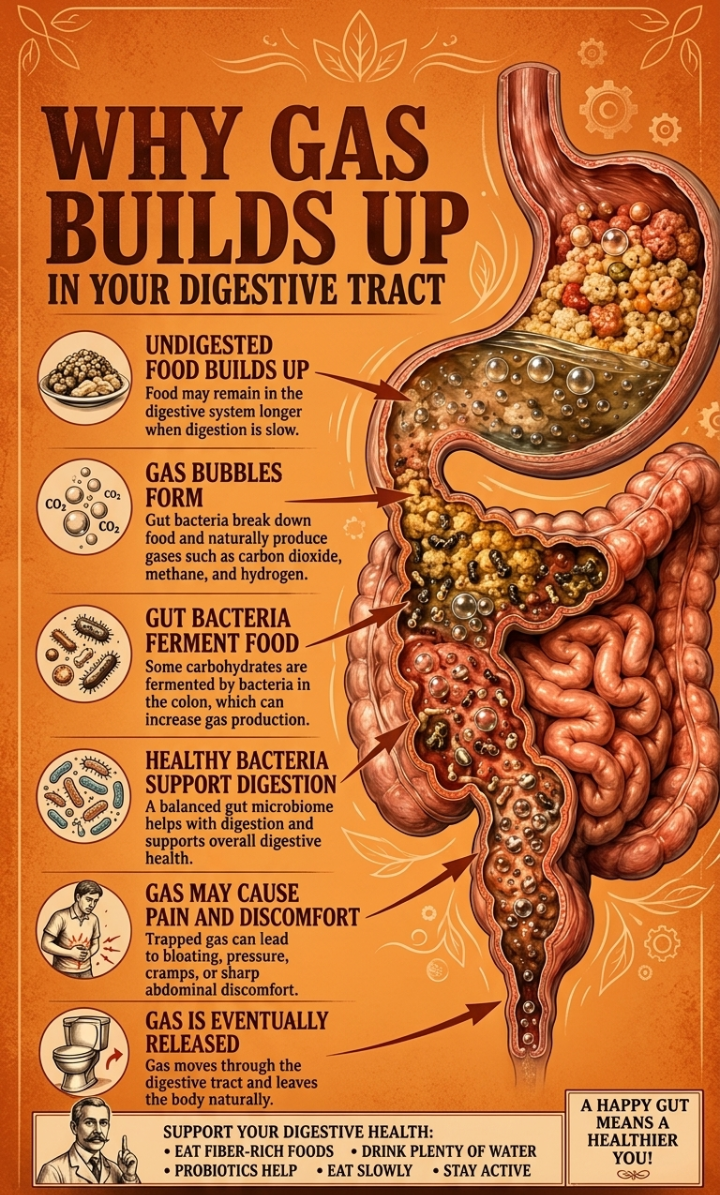
Why Gas Builds Up in Your Digestive Tract (And How to Support a Healthier Gut)
Everyone deals with gas, it’s a completely normal part of how the digestive system works. But when it becomes frequent, painful, or paired with noticeable bloating, it’s worth understanding exactly what’s happening inside your gut and why. Gas doesn’t come from nowhere: it’s the natural byproduct of digestion, gut bacteria, and how your body processes the food you eat.
Below, we break down the full journey of how gas builds up in the digestive tract, from the moment food enters your stomach to the moment gas is finally released, along with practical, evidence-based ways to support a healthier, more comfortable gut.
The Journey of Gas Through Your Digestive Tract
1. Undigested Food Builds Up
Digestion begins in the stomach and continues through the small intestine, but not everything gets fully broken down along the way. When digestion is slower, whether due to the type of food eaten, eating too quickly, or individual differences in gut function, food can remain in the digestive system longer than expected. This extended transit time sets the stage for more fermentation and gas production further down the line.
2. Gas Bubbles Form
As food moves through the digestive tract, gut bacteria get to work breaking it down. This natural bacterial process produces gases, primarily carbon dioxide, methane, and hydrogen, as a normal byproduct of digestion. Small amounts of gas are constantly forming this way, which is a healthy sign that your gut bacteria are actively doing their job.
3. Gut Bacteria Ferment Food
Not all carbohydrates are fully digested and absorbed in the small intestine. Some, particularly certain fibers and sugars, travel further into the colon, where resident bacteria ferment them. This fermentation process is a normal and even beneficial part of digestion, but it does increase gas production, especially with foods that are naturally higher in fermentable carbohydrates, like beans, certain vegetables, and some whole grains.
4. Healthy Bacteria Support Digestion
A balanced gut microbiome, the community of trillions of bacteria living in your digestive tract, plays a central role in how smoothly digestion runs overall. When the microbiome is well-balanced, it supports more efficient digestion and helps regulate gas production. An imbalanced microbiome, on the other hand, can contribute to excess gas, bloating, and digestive discomfort.
5. Gas May Cause Pain and Discomfort
When gas builds up faster than it can move through and exit the digestive tract, it can become trapped, leading to bloating, pressure, cramping, or sharp abdominal discomfort. This is usually temporary and resolves on its own, but frequent or severe trapped gas can be uncomfortable enough to disrupt daily life.
6. Gas Is Eventually Released
Eventually, gas continues moving through the digestive tract and is released from the body, either as burping earlier in the digestive process or as flatulence once it reaches the lower digestive tract. This is the natural, healthy conclusion of the process, and passing gas regularly (most people do so multiple times a day) is a normal sign that your digestive system is functioning as it should.
Why Some People Experience More Gas Than Others
Gas production varies significantly from person to person, and several factors can influence how much gas you produce and how comfortable that process feels:
Diet composition: Diets higher in fermentable fibers, like beans, lentils, cruciferous vegetables, and certain whole grains, naturally produce more gas during digestion
Eating habits : Eating quickly, talking while eating, or drinking carbonated beverages can introduce extra swallowed air into the digestive tract
Gut microbiome balance : The specific mix of bacteria in your gut influences how much and what type of gas is produced
Food sensitivities : Conditions like lactose intolerance can significantly increase gas production when trigger foods are consumed
Digestive speed : Slower digestion allows more time for fermentation and gas buildup before food fully moves through the system
How to Support Your Digestive Health
Supporting a healthier, more comfortable digestive process comes down to a handful of consistent, practical habits:
Eat Fiber-Rich Foods
Fiber supports regular digestion and feeds beneficial gut bacteria, but it’s worth increasing fiber gradually rather than all at once, since a sudden jump in fiber intake can temporarily increase gas as your gut adjusts.
Drink Plenty of Water
Adequate hydration supports smoother digestion and helps prevent the kind of sluggish digestive transit that can contribute to excess fermentation and gas buildup.
Let Probiotics Help
Probiotic-rich foods, like yogurt, kefir, sauerkraut, and kimchi, or a probiotic supplement, can help support a more balanced gut microbiome, which plays a direct role in how efficiently your body processes food and manages gas production.
Eat Slowly
Eating too quickly increases the amount of air you swallow along with your food, which can contribute directly to gas and bloating. Slowing down, chewing thoroughly, and avoiding talking with a full mouth can meaningfully reduce swallowed air.
Stay Active
Physical activity, even something as simple as a short walk after eating, helps stimulate healthy digestive motility, supporting the movement of food and gas through the digestive tract more efficiently.
When Gas and Bloating May Signal Something More
Occasional gas and bloating are normal, but you should talk to a healthcare provider if you experience:
Gas or bloating that is severe, persistent, or worsening over time
Significant changes in bowel habits alongside gas
Unexplained weight loss
Blood in your stool
Gas paired with intense or ongoing abdominal pain
Symptoms that consistently follow specific foods, which may point to an intolerance or sensitivity worth investigating
These symptoms don’t necessarily mean something serious is happening, but they’re worth a proper evaluation rather than managing on your own indefinitely.
Frequently Asked Questions
Is it normal to pass gas multiple times a day?
Yes, passing gas somewhere between roughly 10 and 20 times a day is generally considered normal and is simply a sign that digestion, and the gut bacteria involved in it, are functioning as expected.
Why do beans and certain vegetables cause more gas?
Beans and vegetables like broccoli, cabbage, and Brussels sprouts contain fermentable carbohydrates that aren’t fully broken down in the small intestine. When they reach the colon, gut bacteria ferment them, producing more gas than foods with less fermentable fiber.
Can drinking water actually reduce bloating?
Yes, adequate hydration supports smoother, more regular digestion, which helps reduce the kind of slow digestive transit that contributes to excess fermentation and trapped gas.
Should I avoid fiber if I have a lot of gas?
Not necessarily. Fiber is essential for healthy digestion long-term, but if you’re not used to a high-fiber diet, increasing your intake gradually, rather than all at once, allows your gut bacteria to adjust with less temporary gas and bloating.
How long does trapped gas discomfort usually last?
Trapped gas discomfort typically resolves within a few hours as it continues moving through the digestive tract, though gentle movement, like walking, can often help speed up the process.
This article is intended for general informational purposes and is not a substitute for professional medical advice. If you experience persistent, severe, or concerning digestive symptoms, consult your healthcare provider.