
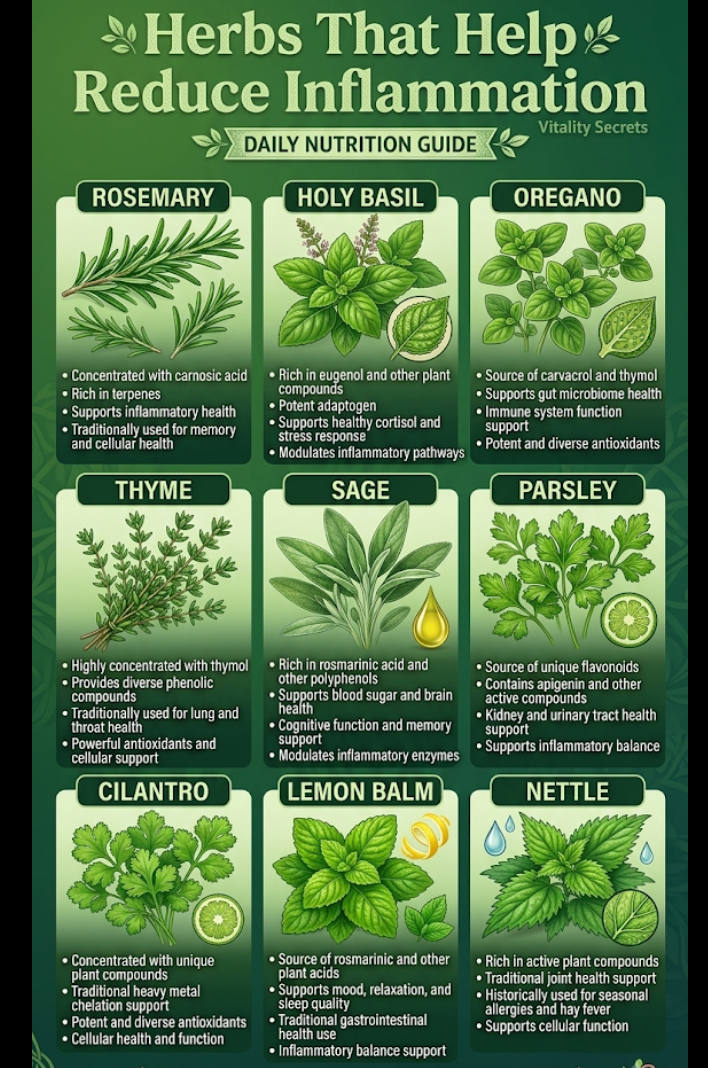
9 Herbs That Help Reduce Inflammation Naturally
Chronic, low-grade inflammation is increasingly recognized as a factor connected to a wide range of long-term health concerns, and diet is one of the most accessible ways to help support the body’s natural inflammatory balance. While no single herb is a cure-all, many common kitchen herbs are rich in antioxidants, polyphenols, and other plant compounds that have been studied for their potential role in supporting cellular health, immune function, and a healthy inflammatory response.
The best part is that these herbs are already familiar. You likely have several sitting in your spice cabinet or growing on a windowsill right now. Below, we break down 9 herbs commonly associated with inflammatory balance, the specific compounds behind each one, and simple ways to add more of them to your daily meals.
Why Herbs Matter for Inflammatory Balance
Herbs are concentrated sources of plant compounds, things like flavonoids, polyphenols, and essential oils, that have antioxidant properties. Antioxidants help neutralize free radicals, unstable molecules that can contribute to cellular stress and, over time, to chronic inflammation. Because herbs are used in small amounts but packed with these compounds, they offer an easy, low-calorie way to add meaningful nutritional value to your everyday cooking.
It’s worth noting that supporting inflammatory balance through diet is different from treating a diagnosed inflammatory condition. These herbs work best as part of a broader healthy eating pattern, not as a replacement for medical treatment.
The 9 Herbs
1. Rosemary
Rosemary is rich in rosmarinic acid, a polyphenol studied for its antioxidant properties. It provides broad antioxidant support, is associated with supporting inflammatory balance, and may support cellular health thanks to its concentration of protective plant compounds.
How to use it: Add fresh or dried rosemary to roasted vegetables, potatoes, chicken, or a simple olive oil and herb marinade.
2. Holy Basil
Also known as tulsi, holy basil is rich in unique plant compounds and has long been used in traditional wellness practices. It provides antioxidant support, is associated with supporting a healthy stress response, and may support inflammatory balance.
How to use it: Holy basil is most commonly brewed as a tea, though it can also be used fresh in cooking similar to regular basil.
3. Oregano
Oregano is rich in carvacrol, one of its primary active compounds, and provides strong antioxidant support. It’s associated with supporting immune health and inflammatory balance, making it a staple in many Mediterranean-style eating patterns.
How to use it: Sprinkle dried oregano over pizza, pasta sauces, roasted vegetables, or a simple vinaigrette.
4. Thyme
Thyme contains thymol, a compound known for its antioxidant activity. It’s associated with supporting immune function and inflammatory balance, and it’s one of the easiest herbs to keep on hand since it’s widely available both fresh and dried.
How to use it: Add thyme to soups, roasted meats, beans, or egg dishes for an earthy, savory flavor.
5. Sage
Sage is rich in polyphenols and offers solid antioxidant support. It’s associated with supporting cellular health and inflammatory balance, and has a distinctive, slightly peppery flavor that pairs especially well with fall and winter dishes.
How to use it: Use sage in stuffing, roasted squash, brown butter sauces, or brewed as a simple herbal tea.
6. Parsley
Often treated as just a garnish, parsley is actually rich in flavonoids and provides meaningful antioxidant support. It’s associated with supporting cellular health and contains apigenin, a compound of particular interest in ongoing nutrition research.
How to use it: Use fresh parsley generously in salads, grain bowls, chimichurri, or as a finishing herb over roasted vegetables and proteins.
7. Cilantro
Cilantro provides antioxidant support and is rich in plant compounds. It’s associated with supporting cellular health and inflammatory balance, and brings a bright, fresh flavor to a wide range of dishes.
How to use it: Add fresh cilantro to salsas, tacos, rice dishes, or noodle bowls just before serving to preserve its flavor and nutrients.
8. Lemon Balm
Lemon balm contains rosmarinic acid, the same compound found in rosemary, and provides solid antioxidant support. It’s associated with supporting relaxation and inflammatory balance, making it a popular choice for calming herbal teas.
How to use it: Steep fresh or dried lemon balm as a tea, or add finely chopped fresh leaves to salads and fruit dishes for a light lemony note.
9. Nettle
Nettle is rich in polyphenols and offers notable antioxidant support. It has traditionally been used for joint support and is associated with supporting inflammatory balance, making it a popular addition to herbal wellness routines.
How to use it: Nettle is most commonly consumed as a tea using dried nettle leaf, since raw fresh nettle needs to be handled carefully due to its natural sting.
How to Build These Herbs Into Your Daily Routine
You don’t need to overhaul your entire diet to benefit from these herbs. A few simple strategies:
Cook with fresh herbs generously, rather than treating them as an afterthought or garnish
Rotate a daily herbal tea, such as lemon balm, sage, or holy basil, into your evening routine
Make an herb-forward dressing or marinade using several of these herbs together with olive oil, another ingredient studied for its own anti-inflammatory polyphenols
Grow a small kitchen herb garden, even a windowsill setup, to keep fresh herbs on hand and encourage more frequent use
Combine herbs with other anti-inflammatory foods, like berries, leafy greens, and fatty fish, for a more comprehensive dietary approach
A Simple Anti-Inflammatory Herb Blend
Combining several of these herbs into one all-purpose seasoning blend is an easy way to use them consistently:
- 2 tablespoons dried rosemary
- 2 tablespoons dried oregano
- 2 tablespoons dried thyme
- 1 tablespoon dried sage
- 1 tablespoon dried parsley
Mix and store in an airtight container, then use it to season roasted vegetables, proteins, soups, and marinades throughout the week.
Frequently Asked Questions
Do dried herbs offer the same benefits as fresh herbs?
Dried herbs are often more concentrated than fresh herbs by weight, since the water content has been removed, so they can still provide meaningful antioxidant value. Fresh herbs tend to offer a brighter flavor and are ideal for finishing dishes, while dried herbs work well for longer cooking times.
Can herbs alone reduce chronic inflammation?
Herbs can be a supportive part of an overall anti-inflammatory eating pattern, but they work best alongside other factors like a balanced diet, regular physical activity, adequate sleep, and stress management. They are not a standalone treatment for diagnosed inflammatory conditions.
Is it safe to drink herbal teas like holy basil or nettle every day?
For most healthy adults, moderate daily consumption of common culinary and herbal teas is generally considered safe. However, certain herbs can interact with medications or aren’t recommended during pregnancy, so it’s worth checking with a healthcare provider if you have a medical condition, take medication regularly, or are pregnant or breastfeeding.
Which herb has the strongest evidence for supporting inflammatory balance?
Rosemary and oregano are among the most studied culinary herbs for their antioxidant and anti-inflammatory compounds, largely due to their high concentrations of rosmarinic acid and carvacrol, respectively. That said, using a variety of herbs together, rather than relying on just one, offers a broader range of beneficial plant compounds.
This article is intended for general informational purposes and is not a substitute for professional medical advice. If you have a health condition or take medication, consult your healthcare provider before making significant changes to your diet or using herbs medicinally.